Area Real Estate News & Market Trends

You’ll find our blog to be a wealth of information, covering everything from local market statistics and home values to community happenings. That’s because we care about the community and want to help you find your place in it. Please reach out if you have any questions at all. We’d love to talk with you!

March 12, 2026

Why Townhomes Are Popular with Today’s First-Time Buyers

Buying your first home can feel frustrating when the numbers don’t line up the way you expected. You may know you’re ready but finding something that fits your life and your budget is the hard part.

That’s where townhomes come in.

Townhomes are becoming a bigger part of today’s housing supply, and that shift is opening doors for first-time buyers in a way we haven’t seen in years. That’s because they offer a more realistic path to step into homeownership without stretching yourself too thin, especially in a market where affordability can still feel tight.

There Are More Townhomes To Choose From

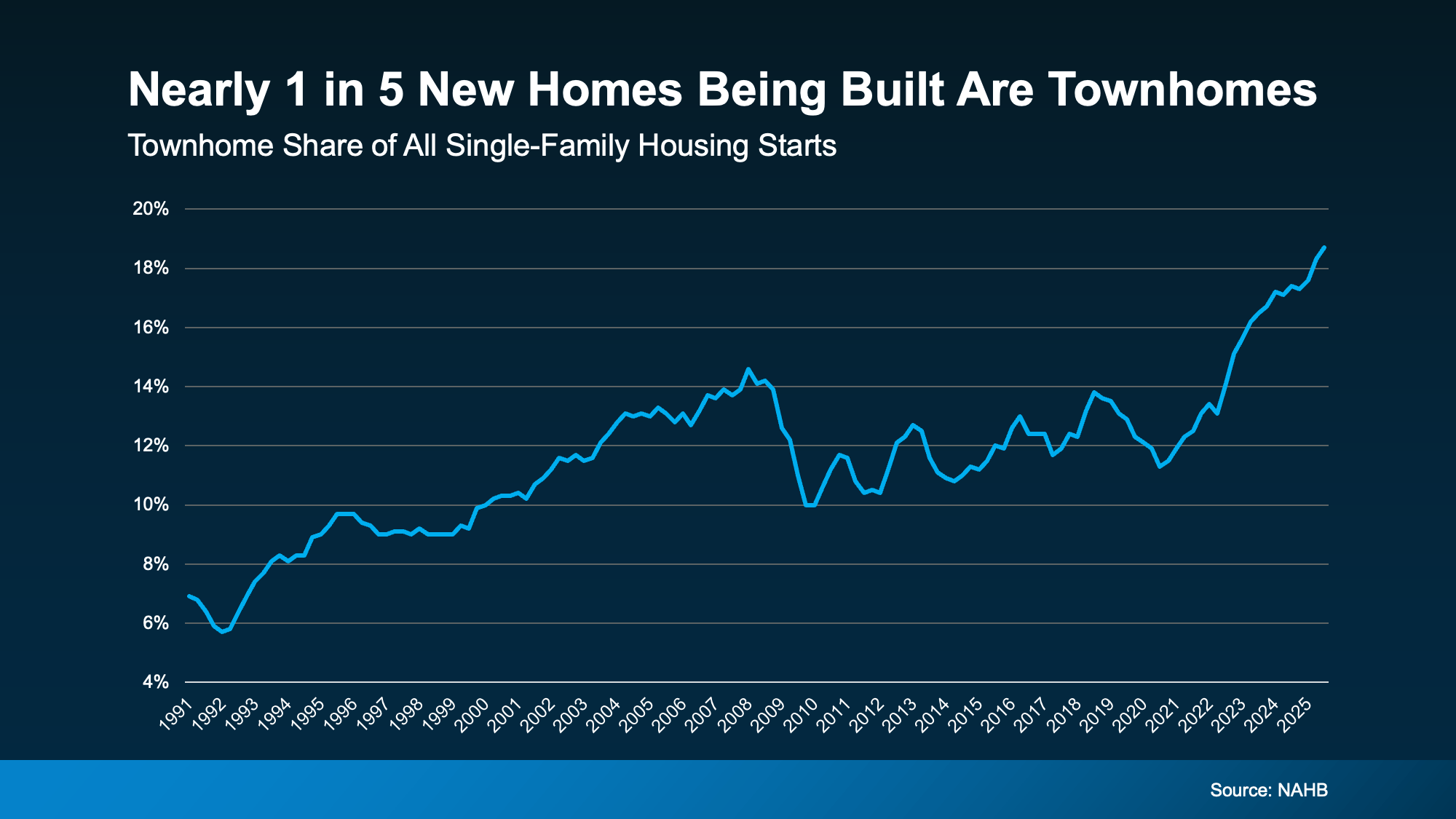
Builders are building more townhomes than they have in decades. In fact, when you look at data from the National Association of Home Builders (NAHB), nearly 1 in 5 new single-family homes being built today is a townhome. That's the highest share on record (see graph below):

a graph of a number of houses

To put that in perspective, just a decade ago, townhomes made up closer to 1 in 10 new construction homes.

That gives today’s buyers far more townhome options than they had in the past. And that’s a really good thing.

Townhomes are one of the best ways for first-time buyers to finally get their foot in the door. And seeing that there’s more available for sale means one thing: you may have more opportunity to break into the market than you think.

Here’s why they’re such a popular choice for buyers like you.

Townhomes Tend To Be More Affordable

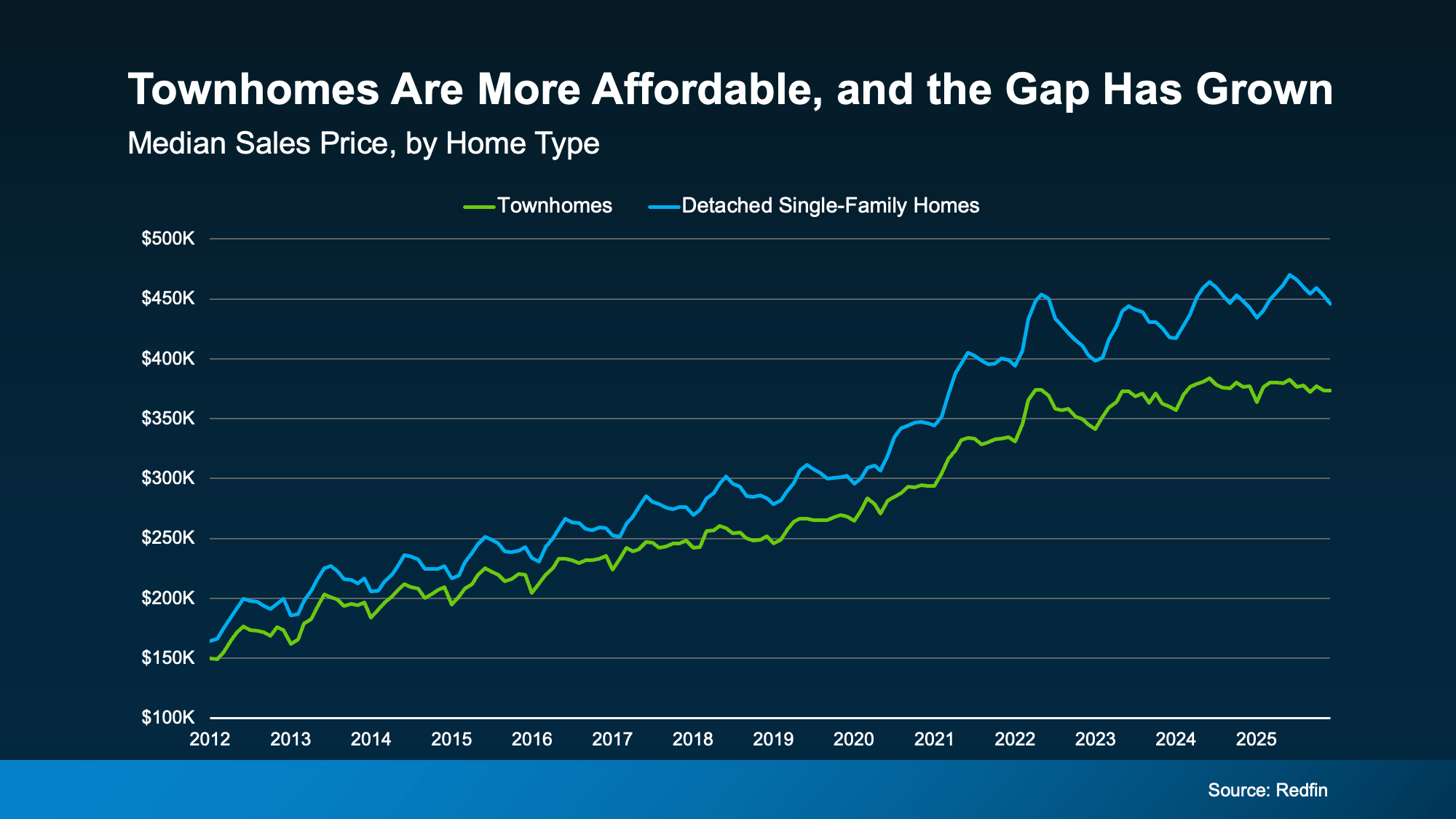
While prices vary by market, Redfin data shows townhomes are typically priced lower than detached single-family homes nationally. And that gap has grown in recent years as the supply of this type of home has grown too (see graph below):

a graph of a number of housesThere are two main reasons you may find a better deal on a townhome today. 

Reason #1: Size 

Townhomes are usually smaller by design. Most modern townhomes fall in the 1,300–1,500 square foot range, which helps keep prices, and monthly payments, lower. Basically, it works like this. Since they usually have a smaller footprint, they’re cheaper to build, and that makes them less expensive to buy, too. Ali Wolf, Chief Economist at NewHomeSourceexplains how this helps buyers:

With the high cost of housing across the country, townhomes have emerged as a vital, more accessible entry point into homeownership. They are often priced lower than detached houses, offering buyers – especially first-timers, young professionals, and those downsizing – the chance to build equity without breaking the bank.”

Reason #2: Builder Motivation

And here’s another thing working in your favor. With more inventory than in recent years, homebuilders are motivated to sell what they’ve already built.

So, many may be more willing to negotiate, whether that means price flexibility, closing cost help, or potentially throwing in upgrades. According to the National Association of Realtors (NAR):

. . . home builders say they’re ready to attract more first-time home buyers. They’re responding to affordability pressures through lower cost homes and builder incentives. About 40% of builders cut prices on newly built homes at the end of last year . . . Roughly two-thirds of builders also offered additional incentives, like mortgage rate buydowns.”

Bottom Line

If buying your first home feels just out of reach, the right option might not be a different timeline. It might be a different type of home.

If you want to talk through whether a townhome makes sense for you or see what’s available in our area, let’s connect.

The information contained, and the opinions expressed, in this article are not intended to be construed as investment advice. Keeping Current Matters, Inc. does not guarantee or warrant the accuracy or completeness of the information or opinions contained herein. Nothing herein should be construed as investment advice. You should always conduct your own research and due diligence and obtain professional advice before making any investment decision. Keeping Current Matters, Inc. will not be liable for any loss or damage caused by your reliance on the information or opinions contained herein.

Posted in Real Estate
March 9, 2026

Living in Coyote Creek Vail AZ: Homes, Land & Lifestyle

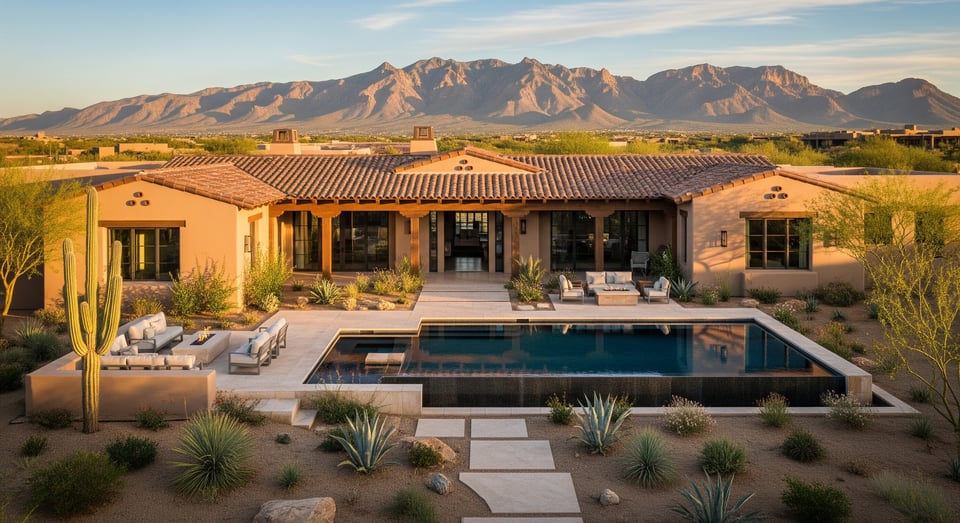
Imagine starting your day with the Rincon Mountains glowing pink and tall saguaros framing the horizon. You breathe in quiet desert air, then plan a morning hike before the sun warms the sand. If you crave privacy, views, and easy access to open space, life in Coyote Creek near Vail can be a great fit. This guide walks you through daily rhythms, climate, outdoor access, homes and lots, and the practical checks you should make before you buy. Let’s dive in.

Coyote Creek at a glance

Coyote Creek sits in the Vail and southeast Tucson area, tucked in the Sonoran Desert with wide views toward the Rincon Mountains and Coronado National Forest. You are a short drive from regional landmarks like Saguaro National Park East, Cienega Creek’s riparian corridors, and Colossal Cave Mountain Park. Many residents commute west into Tucson for work or healthcare. Drive times to central Tucson typically range from about 20 to 40 minutes depending on your exact location and traffic.

Weather and seasons

The Sonoran Desert brings hot summers, mild winters, and a distinct monsoon season that usually spans June through September. Expect afternoon thunderstorms, localized heavy rain, lightning, and the occasional dust storm. The most comfortable months for strenuous outdoor activity are often October through May, while summer outings happen early in the morning. For a deeper look at regional climate patterns, review the NOAA climate normals resources.

A day in the life

Mornings

Sunrise is prime time. You might sip coffee as quail cross your patio, then walk quiet neighborhood streets or head to nearby trailheads. Families typically follow Vail Unified School District schedules, with drop‑offs shaping morning routines. Many kids and adults alike lean into outdoor and equestrian activities.

Midday and afternoons

Remote and hybrid work are common, especially for buyers who value acreage and privacy. It helps to confirm broadband options by address before you buy. When you need a break, you can choose from short hikes, birding along riparian areas near Cienega Creek, mountain biking, or guided cave tours at Colossal Cave Mountain Park.

Evenings and weekends

With lower light levels than central Tucson, stargazing is a favorite way to end the day. Weekends often include drives to trailheads, scenic loops, and time in Saguaro National Park East. You set your pace, whether that means a long hike, a picnic at a park, or a quiet evening on the patio.

Trails, parks, and equestrian access

Coyote Creek places you near public lands and trail networks that define the Vail lifestyle. Saguaro National Park’s Rincon Mountain District offers desert trails and scenic drives. Colossal Cave delivers hiking, horseback riding, and guided cavern tours. Riparian corridors around Cienega Creek draw birders and wildlife watchers. Many Vail‑area communities support equestrian interests, but rules vary. If you plan to keep horses, verify county zoning and any community restrictions about corrals, bridle paths, and riding in shared areas.

Homes, lots, and custom builds

Coyote Creek attracts buyers seeking single‑family homes that blend with the desert setting. In the Vail area, you will find custom and semi‑custom architecture that leans Southwestern, ranch, or contemporary with native landscaping. Lot sizes vary, and many custom neighborhoods offer larger parcels than you typically see in central Tucson. Because parcel details can differ, your best move is to confirm lot dimensions and build history with county records.

Design rules and HOAs

If a given property is within a homeowners association, you will want to review CC&Rs, Architectural Review Committee standards, exterior lighting and landscape guidelines, rental rules, and any recent meeting minutes. If there is no HOA, county zoning and setback rules still apply. Ask for site plans and any previously approved designs, and review ARC timelines if you plan to build or remodel. Early document review helps you avoid delays and aligns your design with community standards.

Utilities and connectivity

Utility setups can change from parcel to parcel in unincorporated areas. Confirm your water source, whether the property is on sewer or a septic system, power provider, natural gas availability, and capacity for solar or a pool. For electricity, many parcels in the region are served by Tucson Electric Power, but you should always verify by address. Internet options may include cable, DSL in some corridors, fixed‑wireless, or satellite. Check availability with provider tools or the FCC National Broadband Map to confirm speed and service type.

Access, grading, and natural hazards

Monsoon rains make drainage and grading important when you build or buy. Before you commit, pull a parcel’s flood status from the FEMA Flood Map Service Center and consult the Pima County Regional Flood Control District for local floodplain layers. Wildland‑urban interface conditions also warrant attention. Ask local fire officials about defensible space and landscaping choices that reduce fire risk.

Services, commutes, and daily errands

You will handle daily errands in the Vail corridor and head into Tucson for larger retail and specialty care. Major hospitals and specialty clinics are in the Tucson metro. Police services for unincorporated areas are provided by the Pima County Sheriff’s Office, while fire and EMS coverage depend on the local fire district that serves your parcel. If commute time is a priority, test drive your route during the hours you care about most.

Schools and enrollment

The Vail area is served by the Vail Unified School District. Because attendance boundaries and program capacity can change, it is wise to confirm assignments and enrollment steps directly with the district. Start with the Vail Unified School District website and boundary resources. Use neutral, up‑to‑date information to plan your school research.

Is Coyote Creek right for you?

You will likely enjoy Coyote Creek if you want space, views, and a direct connection to the outdoors. The tradeoffs are part of the charm and the due diligence. Utilities can vary by parcel, monsoon season shapes design choices, and you may drive farther for some services. If that balance works for you, the lifestyle pays off with quiet nights, desert light, and room to create a home that fits you.

Quick due diligence checklist

  • Verify HOA status and request the full packet: CC&Rs, ARC guidelines, fee schedule, meeting minutes, and any reserve study.
  • Pull parcel maps and lot dimensions from county records, plus any recorded easements or right‑of‑way issues.
  • Confirm utilities by address: water source, sewer or septic, electricity provider, natural gas, and internet options with tested speeds.
  • Ask for topographic information, a geotechnical report if available, and any existing site drainage or grading plan.
  • Check FEMA flood zones and Pima County floodplain layers, and ask about recent runoff events.
  • Review permitting and building history, including prior grading or approved plans.
  • Clarify rules on exterior lighting, solar, fencing, equestrian use, and rentals if applicable.
  • Talk to neighbors about road maintenance, trash service, wildlife patterns, and seasonal differences.

Start your Coyote Creek search

When you want a custom lot or a premium resale that takes full advantage of the terrain and views, it helps to work with a local steward. Our team blends development know‑how with boutique brokerage service so you can choose the right parcel, builder, and design path with confidence. To tour available lots and homes or to map out your build timeline, connect with Debbie G. Backus for tailored guidance.

FAQs

What is the climate like in Coyote Creek near Vail?

  • It is classic Sonoran Desert with hot summers, mild winters, and a June to September monsoon that brings afternoon storms, localized heavy rain, and lightning.

How close is Coyote Creek to Saguaro National Park East?

  • You are a short regional drive from Saguaro National Park’s Rincon Mountain District, with access to hiking trails, scenic loops, and desert viewpoints.

Are there HOAs in Coyote Creek?

  • Many Vail‑area neighborhoods use HOAs, but specifics vary by parcel, so ask the seller or agent if an HOA applies and request CC&Rs, ARC standards, and the fee schedule.

What utilities and internet options are typical?

  • Utility setups differ by lot; confirm water, sewer or septic, power, and gas by address, and check provider tools or the FCC map for internet types and speeds.

Which schools serve the Vail area around Coyote Creek?

  • Properties in this area are served by the Vail Unified School District, but you should verify current attendance boundaries and enrollment directly with the district.

What should I check about flood or fire risk before buying?

  • Review FEMA flood status, consult Pima County floodplain layers, and ask local fire officials about defensible space, landscaping, and seasonal hazard considerations.
Posted in Real Estate
March 6, 2026

Home Insurance Costs Are Rising: How Buyers Can Prepare

Buying a home is one of the biggest purchases you’ll ever make. And homeowner’s insurance is what protects that investment. Think of it as your safety net. NerdWallet explains it:

  • Covers Repairs and Rebuilding Costs: If your home is damaged by fire, storms, or other covered events, it helps pay for repairs and possibly even a full rebuild, if that’s deemed necessary.
  • Protects Your Belongings: It can also cover personal items like furniture, electronics, jewelry, and clothing if they’re stolen or damaged.
  • Provides Liability Coverage: And, if someone gets injured on your property, your policy can help cover medical bills or legal expenses.

But that peace of mind does come with a cost, and lately those costs have been rising.

Why Home Insurance Premiums Are Going Up

There are a number of factors causing insurance premiums to rise today. But, in the simplest sense, here’s what’s driving prices up according to the Insurance Research Council (IRC).

Severe weather events and natural disasters are happening increasingly often, leading to more claims. At the same time, homebuilding materials and labor are more expensive. So, when it comes time to work on those claims, insurers have to manage higher costs to repair or rebuild the affected homes.

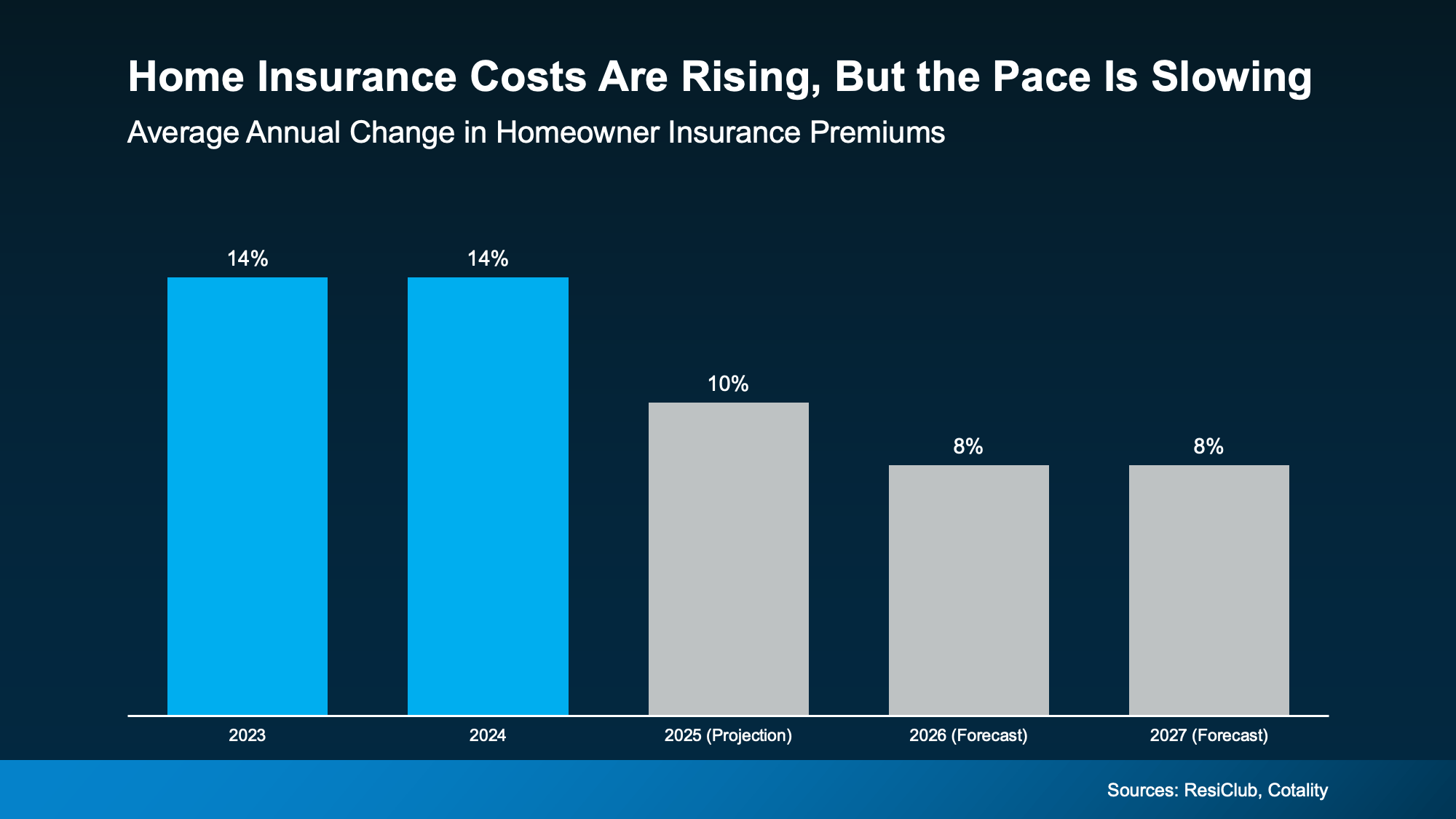
That combination adds up to higher premiums. You can see how it’s climbed recently in the graph below. Each bar marks the percentage increase in insurance costs for that calendar year.

a graph of a graph showing the cost of homeowner insuranceThe good news is, the annual pace of the increase may be starting to ease according to ResiClub and Cotality. By their count:

  • In 2023 and 2024, insurance costs went up 14% a year.
  • In 2025, they rose about 10%.
  • And in 2026 and 2027, it’s expected to go up about 8% each year.

That’s still an increase, but at least the pace is slowing down. And here's another silver lining.

While insurance costs are rising, mortgage rates are falling. And that can help offset some of this expense. As Michael Gaines, Senior VP of Capital Markets, Cardinal Financial, explains:

Rising taxes and insurance do create pressure, but they don’t erase the benefits of a lower rate . . . A small rate improvement, paired with the right loan program and smart planning, can still make homeownership possible . . . It’s less about one factor canceling another out, and more about helping buyers layer the right solutions together.”

Costs Are Going To Be Different Depending on Where You Buy

So how much do you need to budget for this? It depends on the price point and location of house, the coverage you need, and more. And just like with everything else in real estate, costs vary by area.

You can get a rough idea of your state’s typical premiums in the map below:

So, What Can You Do About It?

Generally speaking, your first insurance payment will be wrapped into your closing costs. But after that, it’ll become a recurring expense. That’s why knowing these premiums are rising is so important. It helps you factor that into your budget, so you go in with a full picture of what you can comfortably afford.

If you’re crunching the numbers and trying to find other ways to save, here are a few tips from Insurify and NerdWallet that can help you get the best insurance price possible:

  • Shop Around – Compare quotes from multiple companies.
  • Bundle Policies – Combine home and auto for discounts.
  • Ask About Discounts – Don’t miss out on savings you may qualify for.
  • Highlight Upgrades – Features like a new roof or storm windows can cut costs.
  • Improve Your Credit – A stronger credit score can mean better premiums.

Bottom Line

If you’re thinking about buying a home, don’t forget to plan ahead for your homeowner’s insurance.

While costs are rising, knowing what to expect and how to shop around can make a big difference as you’re budgeting for your purchase. Because this isn’t coverage you’ll want to skimp on. It’s your best protection for what’s likely your biggest investment.

The information contained, and the opinions expressed, in this article are not intended to be construed as investment advice. Keeping Current Matters, Inc. does not guarantee or warrant the accuracy or completeness of the information or opinions contained herein. Nothing herein should be construed as investment advice. You should always conduct your own research and due diligence and obtain professional advice before making any investment decision. Keeping Current Matters, Inc. will not be liable for any loss or damage caused by your reliance on the information or opinions contained herein.

Posted in Real Estate
March 3, 2026

Why That House Sitting on the Market Deserves a Look

When you see a house that’s been sitting on the market for a while, the reaction is almost automatic. You start thinking:

  • What’s wrong with it?

  • Why hasn’t anyone bought it yet?

  • Am I missing something?

That mindset made sense a few years ago. But in today’s market, you may actually miss out.

More Time on Market Isn't Automatically a Concern Anymore

A few years ago, homes sold in just a matter of days. Sometimes, hours. Anything that lingered longer than that raised concerns. But that’s no longer the baseline.

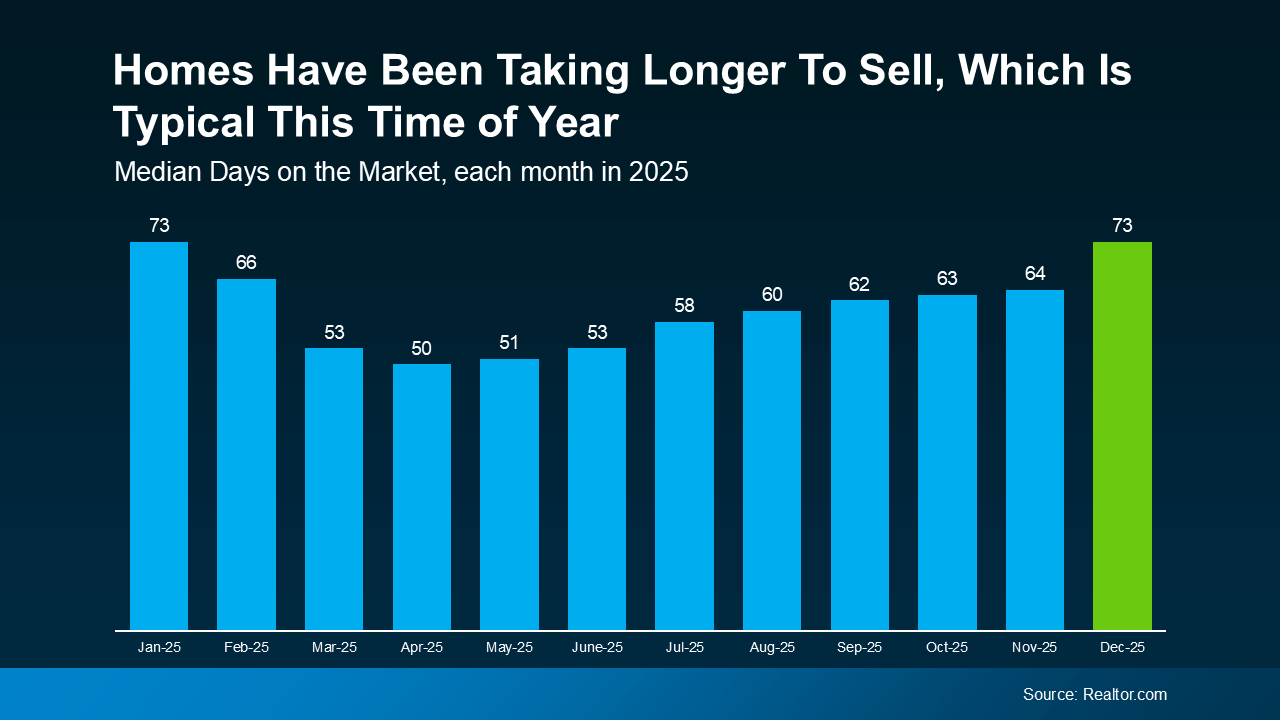
Inventory has grown. Buyers have more choices. And homes are taking longer to sell across the board. Those are some of the reasons why the typical time it takes a home to sell has climbed this year:

a graph of blue bars

And it’s not that 73 days is slow. That’s actually pretty normal for this time of year. It just feels slow because you heard so much about houses being snapped up in the buying frenzy a few years ago.

That shift alone explains a lot of what you’re seeing. It’s not necessarily that there’s anything wrong with the house itself. Although, let’s be honest, sometimes that is the case.

Most of the time today, a house that’s taking longer to sell simply means:

  • There are a lot of homes for sale in that area

  • The seller priced a little too high at first

  • The home didn’t photograph as well online

  • Buyers passed it over for flashier listings nearby

  • The timing just wasn’t right when it first hit the market

None of those are necessarily deal-breakers.

What Buyers Often Get Wrong About These Listings

Because even though you may assume a house that hasn’t sold must have hidden issues, the reality is, that’s not always the case. And, if the house does have issues, it'll show up quickly in your inspection.

That’s information you can use to negotiate. Not a reason to walk away automatically. And in many cases, that’s where buyers find the best deals.

The key is knowing which homes that have been sitting for a while are worth a second look – and which ones aren’t. That’s why working with a local agent makes a real difference. They’ll be able to look at disclosures and more to help you uncover hidden gems other buyers may overlook. 

Bottom Line

A home sitting on the market isn’t always a warning sign. Sometimes it’s an overlooked opportunity.

If you want help identifying which homes are worth a second look (and which ones to skip), let’s talk. 

The information contained, and the opinions expressed, in this article are not intended to be construed as investment advice. Keeping Current Matters, Inc. does not guarantee or warrant the accuracy or completeness of the information or opinions contained herein. Nothing herein should be construed as investment advice. You should always conduct your own research and due diligence and obtain professional advice before making any investment decision. Keeping Current Matters, Inc. will not be liable for any loss or damage caused by your reliance on the information or opinions contained herein.

Posted in Real Estate
Feb. 28, 2026

Home Updates That Actually Pay You Back When You Sell

Planning to sell this spring? While you may be tempted to hold off until the first blooms or the spring showers hit, that's actually waiting too long to get started by today’s standards.

Buyers have more options than they did a few years ago. So, it's worth it to tackle repairs now and make sure your house is set up to stand out. Because you don’t want to be caught scrambling right before the spring rush. Or, running out of time to do the work your house really needs. 

The key is focusing on updates that actually matter. And that’s exactly where return-on-investment (ROI) data comes in handy.

Which Projects Tend to Pay Off?

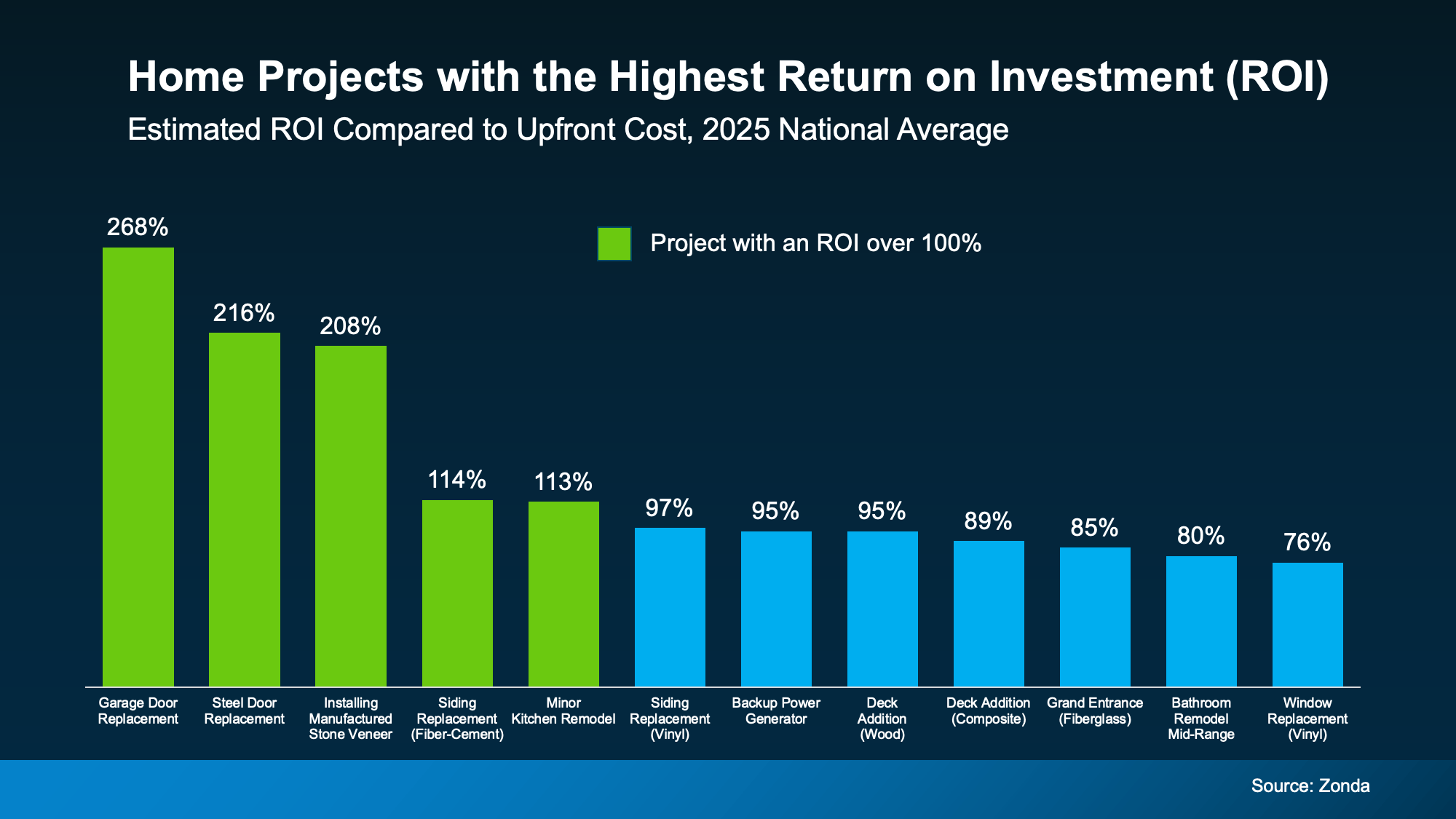
Every year, Zonda looks at which home improvements deliver the most bang for the buck when you go to sell the home. And the results can be a little surprising.

The green in the chart below shows the updates where sellers have the biggest potential to add value based on that research:

a graph of a graph of a companyWhile there's a wide range of projects represented in this data, the cool part is, some of the top winners aren’t big to-do's. They’re just swapping out doors.

Small Updates, Big Visual Impact

This goes to show little projects can have a big impact. So, you don’t have to spend a fortune. And you don’t need to tackle everything on this list. But in today’s market, doing nothing can work against you.

Now that buyers have more homes to choose from, a lot of them are going to opt for what’s move-in ready.

The best advice? Focus on what your house needs, whether it’s listed here or not – like the repairs you’ve been putting off. A front door or shutters in need of a little TLC. Piles of leaves in the yard. Scuffed up paint where your kids play inside. Those details matter too.

Mallory Slesser, Interior designer and Home Stager, explains it to the National Association of Realtors (NAR) this way:

“If you’re looking for affordable updates that pack a punch, dollar for dollar, I would say painting; changing out light fixtures; changing out hardware; maybe new draperies or window treatments. Those are all cost-effective ways to make a big statement. It really changes the space.”

These seemingly small things help buyers focus on the home itself – not the work they think they’ll have to do after moving in. And that’s paying off for other sellers. Buyers are often willing to spend more on homes that feel well cared for, updated, and move-in ready.

This Chart Is a Starting Point, Not a Strategy

Here’s the important thing to remember. National data like this is a guideline. Buyer preferences are going to vary by location, price point, and even neighborhood. That means a project that boosts value in one area might be unnecessary (or even overkill) in yours.

That’s why the first step should always be to talk with a local real estate professional before you start.

An experienced agent can help you answer questions like:

  • Which updates do buyers in your market expect?
  • What can you skip without hurting your sale?
  • Where will a small investment make the biggest difference?
  • Is it better to update, or sell as-is?

That guidance helps you avoid over-improving and under-preparing.

Bottom Line

If you’re looking to sell this spring, you still have time to make updates that help your home stand out – without taking on a full renovation.

If you’re not sure where to start, let’s talk through what makes sense for your house. A quick conversation can help you prioritize the updates that’ll pack the biggest punch.

What’s one upgrade you’ve been thinking about – and wondering if it’s worth it?

The information contained, and the opinions expressed, in this article are not intended to be construed as investment advice. Keeping Current Matters, Inc. does not guarantee or warrant the accuracy or completeness of the information or opinions contained herein. Nothing herein should be construed as investment advice. You should always conduct your own research and due diligence and obtain professional advice before making any investment decision. Keeping Current Matters, Inc. will not be liable for any loss or damage caused by your reliance on the information or opinions contained herein.

Posted in Real Estate
Feb. 25, 2026

New Construction In Sahuarita: Master-Planned Vs. Custom

Trying to decide between buying a new home in a master-planned community or building a fully custom home on your own lot in Sahuarita? Both paths can get you to a beautiful desert home, but they differ in timelines, costs, approvals, and day-to-day lifestyle. You want clarity so you can choose with confidence and avoid expensive surprises. In this guide, you’ll learn how each option works locally, what to budget for, how long it typically takes, and smart next steps to line up land, builders, and financing. Let’s dive in.

Master-planned basics in Sahuarita

A master-planned community in Sahuarita, such as Rancho Sahuarita, offers coordinated development with infrastructure, amenities, and an HOA that manages common areas and design standards. You will usually choose from a set of floor plans and finish packages, then complete a predictable design review. Many neighborhoods have municipal water and sewer, sidewalks, parks, and social programming.

These communities publish design guidelines and CC&Rs that cover items like setbacks, fencing, and exterior materials. HOA dues support amenities and neighborhood upkeep, which many buyers value for simplicity and consistency. Always verify HOA fees, rules, and what is included before you sign.

Custom build basics around Sahuarita

If you build on a custom lot in or around Sahuarita, you control the design, layout, and features. Lots in unincorporated Pima County often require more due diligence. Some parcels rely on septic systems and private wells rather than municipal sewer and water. Site work, grading, and utility extensions can be major variables.

The Sonoran Desert environment makes good planning essential. You should evaluate drainage patterns, any nearby washes, and soil conditions. A geotechnical report and a thoughtful orientation plan for sun and wind can improve comfort and long-term performance. Expect more decision points, but also more design freedom.

Timelines at a glance

  • Inventory or spec home in a master-planned community: If a finished home is available, you can often close in a typical 30 to 60 days.
  • Build-to-order or semi-custom on a developer lot: Contract to move-in typically ranges 4 to 9 months, depending on builder schedule and selections.
  • Custom build on a private lot: Design to move-in commonly spans 9 to 18 months or longer, depending on complexity, permitting, and site work.

These are typical ranges. Always confirm current builder schedules and local permit timelines with the Town of Sahuarita or Pima County.

Cost drivers you must plan for

Master-planned costs

  • Economies of scale on land and materials can help keep base prices competitive.
  • Builder incentives or preferred lender options may be available.
  • Upgrades, lot premiums, and option packages can add up quickly beyond the base price.
  • Plan for recurring HOA dues and any community assessments.

Custom lot costs

  • Lot price varies widely by location and size. Raw land can look affordable but may need substantial investment for utilities and access.
  • Site preparation is a big variable. Grading, drainage solutions, retaining walls, and soil remediation can significantly impact your budget.
  • Professional fees matter. Architects, engineers, and specialty consultants add design value and cost.
  • Expect contingencies. A 10 to 15 percent contingency is commonly recommended for custom builds to handle change orders and unknowns.
  • Carrying costs can be higher during a long build, including construction loan interest, insurance, and temporary housing.

Design freedom vs predictability

  • Master-planned: You choose from a curated set of plans and finish packages. The look and feel are coordinated, and the outcomes are predictable. Many buyers prefer the speed and simplicity.
  • Custom: You drive the vision. From footprint and orientation to finishes and specialized spaces like a guest casita or workshop, you call the shots. The tradeoff is more complexity and more steps to coordinate.

Permits, approvals, and rules

Master-planned path

  • Developers typically handle the big entitlements and install infrastructure.
  • You navigate standard building permits for your home.
  • The HOA or developer design review process is documented and predictable.

Custom build path

  • You or your builder manage zoning checks, site entitlements, and building permits.
  • Confirm whether you will connect to municipal utilities or need well and septic approvals.
  • Review floodplain and wash maps. Some lots will require drainage plans or mitigation.
  • Expect more steps and possible permit conditions depending on the site.

Verify specifics directly with the Town of Sahuarita for parcels in town limits and with Pima County Planning and Development Services for unincorporated areas.

Financing options

Master-planned buyer

  • Inventory and spec homes usually qualify for a standard mortgage.
  • Some builders offer incentives or preferred lender programs. Ask for details and compare offers.

Custom construction borrower

  • Construction loans typically require higher down payments and interest-only draws during the build.
  • One-time-close construction-to-permanent loans are available from some lenders. Underwriting and documentation are different from a standard mortgage.
  • Longer build times mean higher carrying costs. Include an interest reserve in your planning.

Talk with lenders experienced in new construction in Pima County to map the right loan structure for your project.

Warranties, licensing, and quality control

  • Master-planned builders often provide structured warranty programs. It is common to see 1 to 2 years on workmanship and materials and around 10 years on structural elements. Verify the exact coverage and process for service requests.
  • Custom builder warranties vary. Your contract should spell out warranty scope, how defects are handled, and who is responsible for each system.
  • Always verify a builder’s Arizona license and complaint history with the Arizona Registrar of Contractors. Ask for references and a portfolio of completed work.
  • Consider third-party inspections at key milestones. A clear inspection plan helps catch issues early and protects your investment.

Lifestyle and amenities

  • Master-planned living often includes pools, clubhouses, parks, trails, and social events. HOA dues fund and manage these amenities.
  • On a custom lot, you create private amenities such as a larger yard, pool, or equestrian features. You control the design and the maintenance.

Resale and marketability

  • Buyer pool: Master-planned homes appeal to a broad range of buyers who value newer product, amenities, and an easy purchase process. Custom homes tend to attract a more niche audience that prioritizes unique design, privacy, or acreage.
  • Pricing and comps: Master-planned neighborhoods offer consistent comparables, which can make appraisals more straightforward. Custom homes can command premiums when well executed in a desirable setting, but over-customization may narrow the buyer pool.
  • HOA factors: Strong governance and well-kept amenities can support price stability. High dues or restrictive rules may deter some buyers, so disclose all costs and guidelines up front.
  • Long-term costs: Unique materials, specialty systems, and custom hardscape can raise maintenance over time. Budget for replacements and upkeep when you plan your exit horizon.

Who should choose which path

Master-planned is a better fit if you

  • Want a faster move-in and predictable process.
  • Prefer managed amenities and maintained common areas.
  • Value economies of scale and potential builder incentives.
  • Want a streamlined mortgage path and fewer build decisions.

Custom build is a better fit if you

  • Want high design control, unique architecture, or special site features like views and privacy.
  • Can manage a longer timeline and more decision points.
  • Need specialized spaces such as an accessory dwelling, workshop, or larger yard.
  • Are comfortable with construction loans and carrying costs during the build.

Quick decision checklist

Score each item from 1 to 5, where 1 is low priority and 5 is critical.

  • Time to occupy
  • Budget predictability
  • Level of design customization
  • Desire for community amenities
  • Tolerance for construction oversight and decisions
  • Need for municipal utilities versus acceptance of well and septic
  • Resale priority within 3 to 7 years
  • Willingness to absorb change orders and contingencies

Your next steps

  • Get preapproved. Ask lenders about construction-to-permanent options if a custom build is on your radar.
  • Build a full budget. Include land, site work, construction, permits, utility connections, insurance, taxes, HOA dues, and a 10 to 15 percent contingency for customs.
  • Verify land details early. Confirm zoning, recorded plats, and any CC&Rs through the Town of Sahuarita or Pima County. Obtain floodplain and wash maps.
  • Order site studies. A survey and geotechnical report inform foundation and grading decisions and can prevent costly surprises.
  • Clarify utilities. Confirm availability and cost to connect water, sewer, electric, gas, and data, or plan for well and septic if required.
  • Interview pros. Speak with at least two or three builders and, for custom projects, consider architects who know desert design and energy efficiency.
  • Request documents. Ask for sample contracts, warranty details, allowance schedules, typical change order policies, and a line-item estimate for site work and systems.
  • Protect yourself. Have contracts reviewed by a real estate attorney experienced in construction. Clarify milestones, payment schedule, dispute resolution, and permitting roles.
  • Inspect as you go. Use third-party inspections at key stages and keep all selections and change orders in writing.
  • Close cleanly. Collect lien releases before final payment and organize warranty contacts and owner manuals.

A simple timeline example

If you choose an inventory home in a master-planned community, you could close in 30 to 60 days. If you select a plan and lot with a builder, 4 to 9 months is a typical range. For a custom design on a private lot, plan for 9 to 18 months from design through move-in. These are typical ranges only. Confirm current schedules with your builder and the permitting office.

Ready to compare options side by side

Whether you want amenities and speed or acreage and design control, you have good paths in Sahuarita. If you would like help weighing costs, timelines, and local rules, or if you want introductions to vetted builders and available lots, reach out. Connect with Debbie G. Backus for tailored guidance, on-the-ground insights, and a clear plan for your next move.

FAQs

What is a master-planned community in Sahuarita?

  • It is a coordinated neighborhood with installed infrastructure, HOA governance, design guidelines, and amenities such as parks, trails, and clubhouses, plus a predictable build and review process.

How long does a custom home near Sahuarita usually take?

  • Typical projects run 9 to 18 months from design to move-in, depending on complexity, permitting, and site work. Always verify current timelines with your builder.

What utilities should I confirm for a custom lot in Pima County?

  • Verify availability and cost of water, sewer, electric, gas, and data. Many outlying lots require septic and sometimes a private well rather than municipal connections.

How do HOA rules affect buying in a master-planned community?

  • CC&Rs and design guidelines shape exterior materials, fencing, and setbacks. HOA dues fund amenities and maintenance, which can support desirability and price stability.

What should I ask a Sahuarita builder before signing?

  • Request license verification, references, warranty terms, allowance schedules, a clear change order policy, and a line-item estimate for site work and major systems.

How do construction loans work for custom builds?

  • They typically require higher down payments and use interest-only draws during construction. Some lenders offer one-time-close loans that convert to a standard mortgage at completion.
Posted in Real Estate
Feb. 22, 2026

The Credit Score Myth That’s Holding Would-Be Buyers Back

Would-be homebuyers aren’t sitting on the sidelines because they don’t want to buy. They’re sitting out because they think they can’t. And sometimes, it’s their credit score that’s holding them back.

According to a Bankrate survey2 out of every 5 (42%) Americans believe you need excellent credit to qualify for a mortgage. That may be why, when renters are asked why they don’t own yet, “my credit isn’t good enough” comes up often.

Maybe you’re in the same boat. You look at your score, see it’s not where you want it to be, and assume buying your first place just isn’t realistic right now.

But here’s what you need to know.

Even though a lot of people assume you need flawless credit to buy a house, that’s not necessarily the case.

You Don’t Need Perfect Credit To Buy a Home

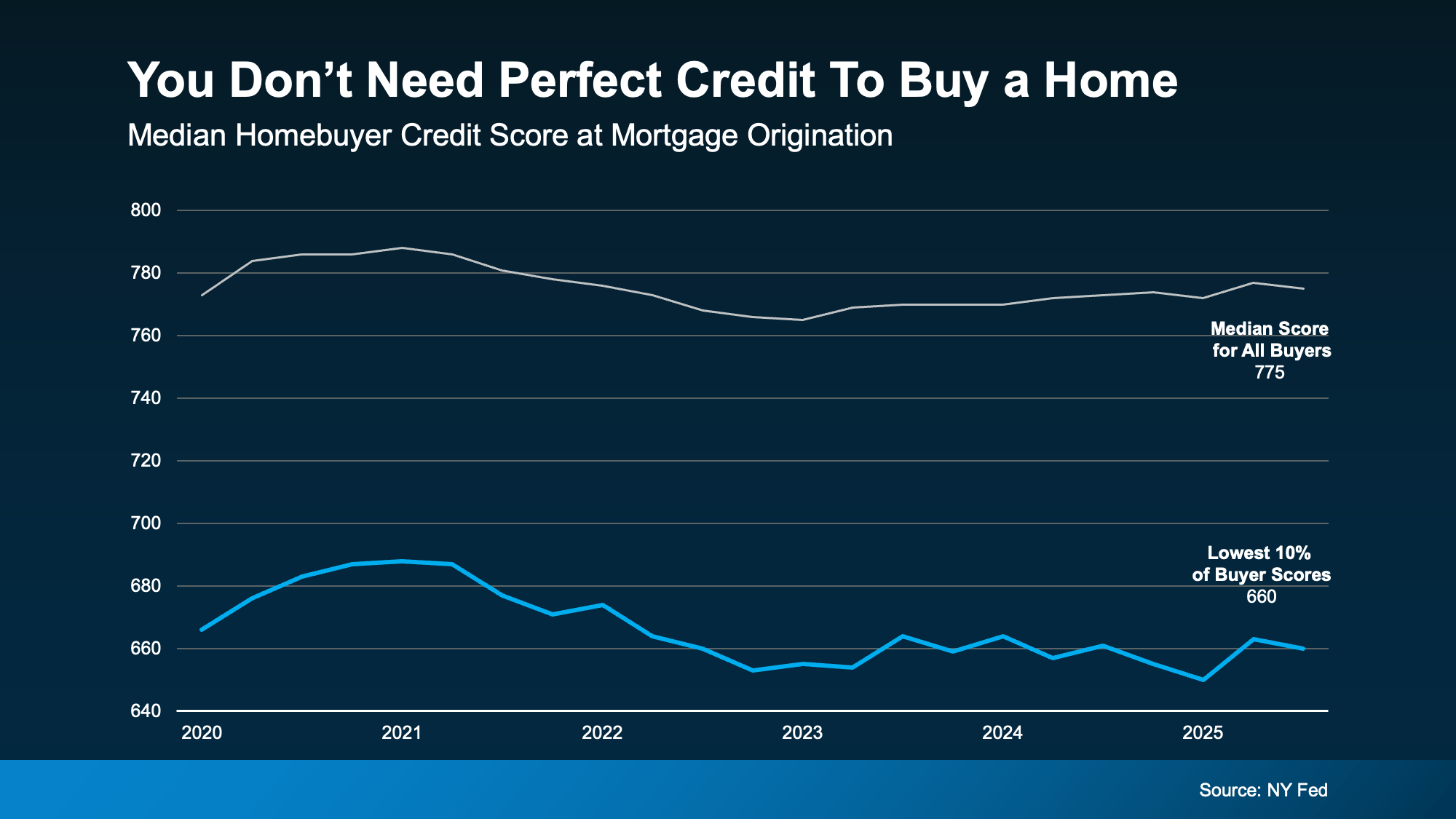
So, where’s this myth come from? Part of the confusion stems from the fact that the typical homebuyer today does have a fairly strong credit score. In fact, according to data from the NY Fed, the median credit score for all buyers is 775.

But that doesn’t mean you need a score that high to qualify.

Looking at recent homebuyers, a number were able to get a mortgage with scores below that threshold. Data shows 10% of scores were around 660. Which means some were higher than that and some were lower, but the median in that lowest 10th percentile was around that range (see graph below):

a graph showing a line graphSo, even if your score isn’t as high as you want, that doesn’t automatically close the door. FICO explains there is no universal credit score you absolutely have to have when buying a home:

“While many lenders use credit scores like FICO Scores to help them make lending decisions, each lender has its own strategy, including the level of risk it finds acceptable. There is no single ‘cutoff score’ used by all lenders, and there are many additional factors that lenders may use . . .

The best thing to do is to talk to a trusted lender to see what’s possible for you. Because a portion of buyers are buying with scores in the 600s – and maybe that means you can too.

Bottom Line

Your credit score is important. But that doesn’t mean it has to be perfect.

If credit has been the reason you’ve been waiting to buy a home, it might be time to take another look at your options. If you want help understanding where you stand and what your next step could be, connect with a local lender.

You don’t need to have everything figured out to start the conversation.

The information contained, and the opinions expressed, in this article are not intended to be construed as investment advice. Keeping Current Matters, Inc. does not guarantee or warrant the accuracy or completeness of the information or opinions contained herein. Nothing herein should be construed as investment advice. You should always conduct your own research and due diligence and obtain professional advice before making any investment decision. Keeping Current Matters, Inc. will not be liable for any loss or damage caused by your reliance on the information or opinions contained herein.

Posted in Real Estate
Feb. 19, 2026

Why Pre-Approval Should Be Your First Step – Not an Afterthought

Finding the right home feels exciting – but being pre-approved for your loan is what makes it possible. Whether you’re planning to buy soon or still just thinking about it, getting pre-approved is one of the best moves you can make. Here’s why.

1. What Is Pre-Approval, Really?

Pre-approval is much more than a guess. It means a lender has reviewed your finances (things like your income, assets, credit score, debts, and savings) and told you how much they’re willing to let you borrow for your loan.

It’s basically a reality check for your home search, so you can make sure it aligns with your budget and shop confidently when you’re ready to go.

2. Why It’s a Power Move (Especially Right Now)

The housing market’s been shifting lately with mortgage rates moving, prices moderating, and inventory rising. So, knowing what you’re working with in the current market is a big reason why pre-approval matters. Here’s what it gives you:

  • Clarity: You’ll know what you can afford before you fall in love with a house that’s potentially out of reach.
  • Confidence: Sellers will take your offer seriously when they see you’re pre-approved because you’re not a risky buyer.
  • Control: If rates come down and you want to jump on the moment, you’re already a step ahead with your plan.

As Experian explains:

“. . . you'll want to make sure you receive your preapproval letter before you start looking at homes so you can submit a strong offer as soon as you find what you want. The process can take anywhere from a day to a few weeks, so if you procrastinate, you may lose out to a competing offer.”

And once you find a home you want to put an offer on, pre-approval has another big perk. It not only makes your offer stronger, it shows sellers you’ve already undergone a credit and financial check. As Greg McBride, Chief Financial Analyst at Bankrate, says:

“Preapproval carries more weight because it means lenders have actually done more than a cursory review of your credit and your finances, but have instead reviewed your pay stubs, tax returns and bank statements. A preapproval means you’ve cleared the hurdles necessary to be approved for a mortgage up to a certain dollar amount.”

Translation: Pre-approval helps you make stronger, more informed decisions – and it helps you avoid missing out on a home or getting stuck on the sidelines when the right one hits the market. Because the reality is, competition might be lower these days, but desirable homes (especially the ones that are priced well) still go quickly.

3. Don’t Wait Until You’re “Ready”

Think of it this way: pre-approval doesn’t mean you’re buying a house tomorrow. It just means you’ll be ready when the time comes. And most pre-approvals are good for 60–90 days and can be refreshed easily if your plans change.

So, here’s a good place to start. Ask yourself this question: “If the perfect home came along today, would you be ready to make an offer?”

If your answer is “not quite,” then pre-approval is your next step.

Bottom Line

Pre-approval doesn’t box you in. It opens doors.

In today’s market, buyers who win aren’t the ones who wait. They’re the ones who plan. So, if you’re even thinking about buying in the next few months, get ahead of the game by connecting with your agent and a trusted lender.

They’ll help you understand what how the process works and walk you through every step along the way, so when the right home pops up, you’re ready.

The information contained, and the opinions expressed, in this article are not intended to be construed as investment advice. Keeping Current Matters, Inc. does not guarantee or warrant the accuracy or completeness of the information or opinions contained herein. Nothing herein should be construed as investment advice. You should always conduct your own research and due diligence and obtain professional advice before making any investment decision. Keeping Current Matters, Inc. will not be liable for any loss or damage caused by your reliance on the information or opinions contained herein.

Posted in Real Estate
Feb. 16, 2026

Relocating to Corona de Tucson: Your Practical Guide

Craving more sky, privacy, and desert views without losing touch with Tucson? If you are weighing a move to Corona de Tucson in southern Pima County, you are not alone. Many buyers are drawn to its semi-rural feel, larger lots, and access to open space. In this guide, you will learn how homes are built and sited here, what to know about wells and septic, how HOAs work, commute realities, outdoor access, and a practical checklist to help you relocate with confidence. Let’s dive in.

Why Corona de Tucson appeals

Space, views, and a semi-rural feel

You will find a foothills setting with mountain and desert vistas that many neighborhoods intentionally capture through lot orientation. The community blends quiet streets and dark skies in some pockets with convenient access to greater Tucson. If you value privacy and room to breathe, the area’s development pattern supports that lifestyle.

Housing mix and lot sizes

Most homes are single-family and span 2 to 4 or more bedrooms, with both planned subdivisions and custom homes on larger parcels. In denser subdivisions, lots often sit under a half acre. In semi-rural pockets, you can find 1 to 5 or more acres, including properties sometimes marketed for hobby equestrian use.

Architecture and landscaping

Single-story ranch and Southwestern-style exteriors are common, though you will see variety. Many homes are positioned to maximize views through elevation and thoughtful siting. Landscaping often leans toward xeriscape and low-water designs, while larger parcels may mix gravel, native vegetation, and selectively irrigated areas.

Neighborhood patterns and HOAs

Subdivisions vs. custom parcels

You will encounter both master-planned subdivisions and scattered custom builds. Subdivisions typically offer consistent architectural themes and common-area maintenance. Custom parcels vary in size, setbacks, and design, which can appeal if you want more latitude in site planning.

What HOA living means

Many subdivisions have active HOAs with recorded CC&Rs, architectural guidelines, and dues. HOAs can enforce rules, maintain common areas, and levy fines or special assessments. During escrow, request full HOA documents including CC&Rs, bylaws, budget, reserve studies, recent minutes, and any litigation disclosures.

Non-HOA parcels

Some properties lie outside HOA governance. You gain flexibility in use and design, but you also assume responsibility for standards, private road agreements, and any shared maintenance. Confirm recorded easements for ingress, egress, and utilities.

Utilities and infrastructure

Electric and gas

Electric service is typically provided by a regional utility, and much of Pima County is historically served by Tucson Electric Power. Natural gas may be available from Southwest Gas in the Tucson region. Always confirm serviceability, capacity for planned additions, and connection costs for your specific address.

Water and wastewater

Water and sewer setups vary by neighborhood. Subdivisions closer to town may connect to municipal or private water and wastewater systems. Many larger-lot or rural-style properties rely on private wells and septic systems. Build contingencies for a complete well inspection, water quality testing, septic inspection, and verification of permit history. These systems affect financing, insurance, and future maintenance planning.

Internet and trash services

Internet options range by address. Expect a mix of cable if present, limited fiber in rural pockets, DSL in some areas, plus fixed wireless or satellite. Trash and recycling are usually contracted with private haulers by the owner or HOA, so check service areas and pickup schedules before move-in.

Permits and records

Pima County issues building, septic, and well permits. To understand a property, review permit history, septic and well records, and any zoning constraints. A parcel viewer and assessor records can help you verify lot size, legal description, and past improvements.

Commute and transportation

Everyday driving patterns

Residents often commute to Tucson job centers or other employment corridors. Drive time depends on your destination and time of day. Use live mapping tools during the hours you expect to travel to gauge realistic commute times from a short list of candidate homes.

Road types and maintenance

You will drive a mix of paved subdivision streets, county-maintained roads, and occasional unpaved service or private roads. Confirm who maintains the roads that serve your property: Pima County, an HOA, or a private agreement. This is especially important for financing and long-term upkeep.

Public transit reality

Public transit is limited compared to central Tucson, and most households rely on personal vehicles. Some commuters coordinate carpools or use employer shuttles where available. Plan for dependable vehicle access and parking.

Monsoon impacts

Summer monsoon storms can temporarily affect secondary roads and cause localized flooding in washes. Check routes for low-water crossings, keep a weather eye during storm season, and plan alternatives when needed.

Schools and essential services

School boundaries and options

School assignments depend on the parcel address, and districts serving southern Pima County use boundary maps and lookups to confirm placements. If you need bus routes or school choice information, confirm directly with the relevant district by address. This ensures you have accurate, current information for your household.

Health care and emergency services

Primary care clinics and hospitals are accessible in the greater Tucson region, with urgent care options found along major corridors. Because Corona de Tucson spans unincorporated areas, confirm your fire district and law enforcement coverage. Fire district affiliation can influence insurance and preparedness planning.

Outdoor lifestyle and climate

Recreation at your doorstep

You have quick access to foothills, desert trails, and regional public lands for hiking, mountain biking, birding, and equestrian pursuits. Many residents appreciate the open skies for stargazing in areas with lower light pollution. Confirm trailheads and public access points near your target neighborhood.

Desert climate basics

Expect very hot summers with a mid-summer monsoon season and mild winters. Temperature swings from day to night can be significant, which shapes daily routines and outdoor plans. Xeriscaping and water-wise design are common and often encouraged by HOAs and local norms.

Hazards to evaluate

In foothill-adjacent areas, evaluate wildfire risk and consider defensible space and fire-wise landscaping. Monsoon-driven flash flood risk can affect parcels near washes, so review floodplain maps and ask about historical drainage patterns. Plan for desert wildlife and install appropriate pest exclusion and safety measures.

Everyday conveniences

Shopping and services

Grocery stores, pharmacies, and retail centers are clustered along major corridors and in nearby towns. Convenience varies by neighborhood, so factor drive times to supermarkets, specialty services, and medical care into your short list. Buyers on more remote lots often plan fewer, larger trips for errands.

Costs and budgeting considerations

Utility setup and connection

If you are purchasing a remote lot or planning new construction, build a budget for potential utility extensions or upgrades. Confirm power capacity for future improvements like workshops, RV hookups, or EV charging. For private wells and septic, include inspection, testing, and ongoing service costs in your financial plan.

HOA dues and assessments

If your property is governed by an HOA, request the current dues schedule, reserve study, and any pending or recent special assessments. Understanding the association’s budget and maintenance plan helps you anticipate future costs.

Inspection and maintenance planning

Rural systems thrive on proactive care. Schedule septic pumping at manufacturer-recommended intervals, maintain well equipment, and track filter replacements. Create a simple maintenance calendar for HVAC, roofing, and desert landscaping to protect your investment.

Relocation checklist

Decision phase

  • Define your must-haves: lot size, views, equestrian needs, HOA preference, and commute tolerance.
  • Compare subdivisions with custom-lot areas to match your lifestyle and budget.
  • Use live mapping to test commute times at your actual travel hours.
  • Research school assignments and transportation by exact address.

Due diligence and contingencies

  • Order well inspection and water quality testing; confirm flow rate and review any regional considerations your inspector recommends.
  • Schedule septic inspection and verify permit history and absorption field location.
  • Review title and recorded easements for ingress, egress, utilities, and shared driveways.
  • Request full HOA documents: CC&Rs, bylaws, budget, reserve study, minutes, and any litigation disclosures.
  • Assess hazards: flood risk and fire district guidance for defensible space.

Closing and immediate post-move

  • Set up utilities early: electric, gas if available, water, wastewater or septic service, trash, and internet.
  • Update USPS, DMV, and voter registration; enable mail forwarding.
  • Meet HOA or community contacts; secure gate codes, amenity access, and neighborhood guidelines.
  • Schedule maintenance: septic pumping timeline, well service schedule, HVAC tune-up.

Moving logistics

  • Choose movers comfortable with rural driveways and limited turnaround space.
  • Prepare for heat: shade, hydration, and a car kit for monsoon season.
  • If relocating from out of state, plan a scouting trip to see neighborhoods during rush hour, midday, and evening.

First 30 days in Corona de Tucson

Get your home dialed in

  • Walk the property after a rain to observe natural drainage and note any pooling.
  • Label shutoff valves for water and gas where applicable, and test GFCI outlets and smoke detectors.
  • Identify local contractors: well and septic, HVAC, roofing, pest control, and landscaping.

Connect to the community

  • Introduce yourself to neighbors and HOA contacts to learn about service days and local tips.
  • Explore nearby trailheads and parks early in the morning or late afternoon.
  • Save non-emergency numbers for your fire district and sheriff’s office.

How Backus Realty supports your move

You deserve a guide who understands Corona de Tucson’s mix of subdivisions, custom parcels, wells, septic, and HOA nuances. As a boutique, locally rooted brokerage with development insight, we help you evaluate lot fit, verify utility realities, and navigate due diligence with clarity. Whether you want a premium resale home, a custom-lot opportunity, or an acreage property, you get personal, high-touch service built on long-term community knowledge.

Ready to find the right home and land in southeast Pima County? Reach out to Debbie G. Backus for a thoughtful, local strategy and a smooth transition to Corona de Tucson.

FAQs

What types of homes are common in Corona de Tucson?

  • Mostly single-family homes in subdivisions and custom builds, with lot sizes ranging from under a half acre to 1 to 5 or more acres in semi-rural areas.

How do utilities work for larger lots in Corona de Tucson?

  • Many larger parcels use private wells and septic systems, while some subdivisions connect to municipal or private utilities; always verify service and plan inspections.

Are HOAs common in Corona de Tucson neighborhoods?

  • Many subdivisions have active HOAs with CC&Rs and dues, but there are also non-HOA parcels; request full documents during escrow to understand rules and costs.

What is the commute like from Corona de Tucson to Tucson job centers?

  • Commute time varies by destination and time of day; check live mapping during your typical drive hours to get realistic estimates from specific addresses.

What should I know about flood or wildfire risk near the foothills?

  • Evaluate floodplain exposure near washes and review wildfire risk in wildland-urban interface areas, then plan defensible space and insurance accordingly.

How reliable is internet in rural parts of Corona de Tucson?

  • Availability varies by address; options can include cable if present, limited fiber in some pockets, DSL, fixed wireless, or satellite for more remote homes.

What inspections are essential before buying an acreage property?

  • Prioritize well inspection with water quality testing, septic inspection with permit verification, title and easement review, and hazard checks for flood and fire.

Posted in Real Estate
Feb. 13, 2026

Headlines Have You Worried about Your Home’s Value? Read This.

Hearing talk about home prices falling? That may leave you worried about whether your house is losing value. But here’s what you need to know. While some local markets have seen small price dips this year, home prices are not falling nationally. So, don’t let the headlines scare you.

The vast majority of the country is actually seeing prices rise.

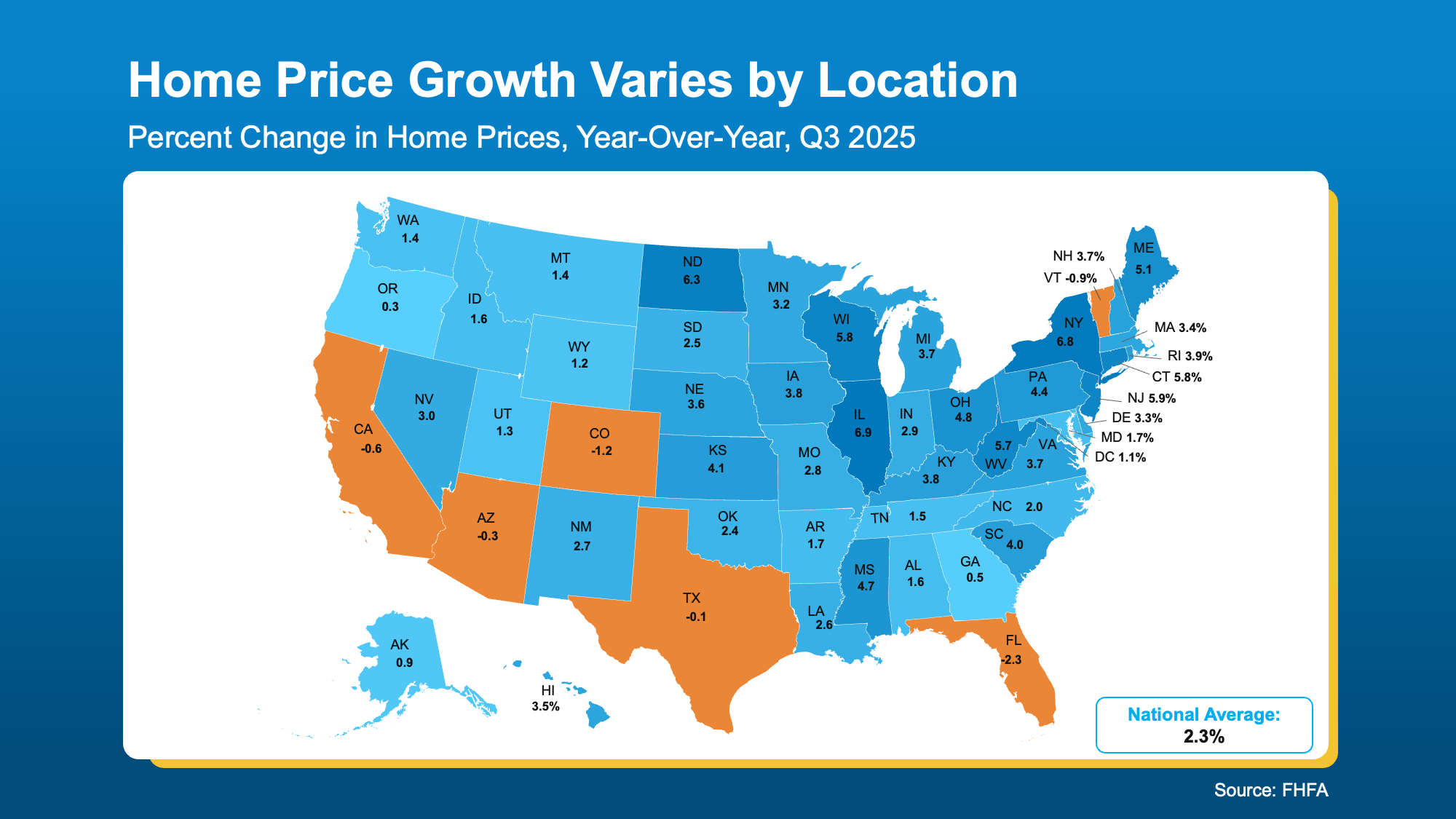
While that may feel surprising after the headlines you’ve seen, the map below uses year-over-year data from the Federal Housing Finance Agency (FHFA) to make that clear:

a map of the united statesLet’s break down what this really shows.

Most states are seeing prices rise (the blue in that map). Not fall. Now, the gains aren’t as big as they’ve been in recent years, but that’s okay. The story is still, prices are growing. And that positive majority is exactly why data from the National Association of Realtors (NAR) shows, nationally, home prices are up 2.1% compared to last year.

But the headlines don’t draw attention to this. They feed on the negative. But even that isn’t as bad as it sounds.

Yes, there are some states where homes have lost value over the past 12 months (the orange in the map above). That’s what all the chatter is drawing attention too. But here’s what the data really says.

The dips aren’t happening everywhere. And in the select states where prices are inching down, it’s slight. The range here is -0.1 to roughly -2%.

And those states are the ones where prices spiked too high, too fast during the pandemic housing boom. There was always going to be a come down period after that. Now, we’re in it. In those places, prices are leveling off. And that’s a sign of normalization, not collapse.

In plain terms: Home prices aren’t crashing. And this isn’t doom and gloom or the sign of broader trouble.

Most Homeowners Still Have Plenty of Value

Just to drive that point home, here’s one more thing to reassure you. Even in the few places where prices dipped slightly, most homeowners are still way ahead. Additional context from Zillow helps prove that point: 

  • Only about 4% of homes are worth less than what the owner originally paid.
  • And 96% of homes are still worth more than their homeowners paid for them.

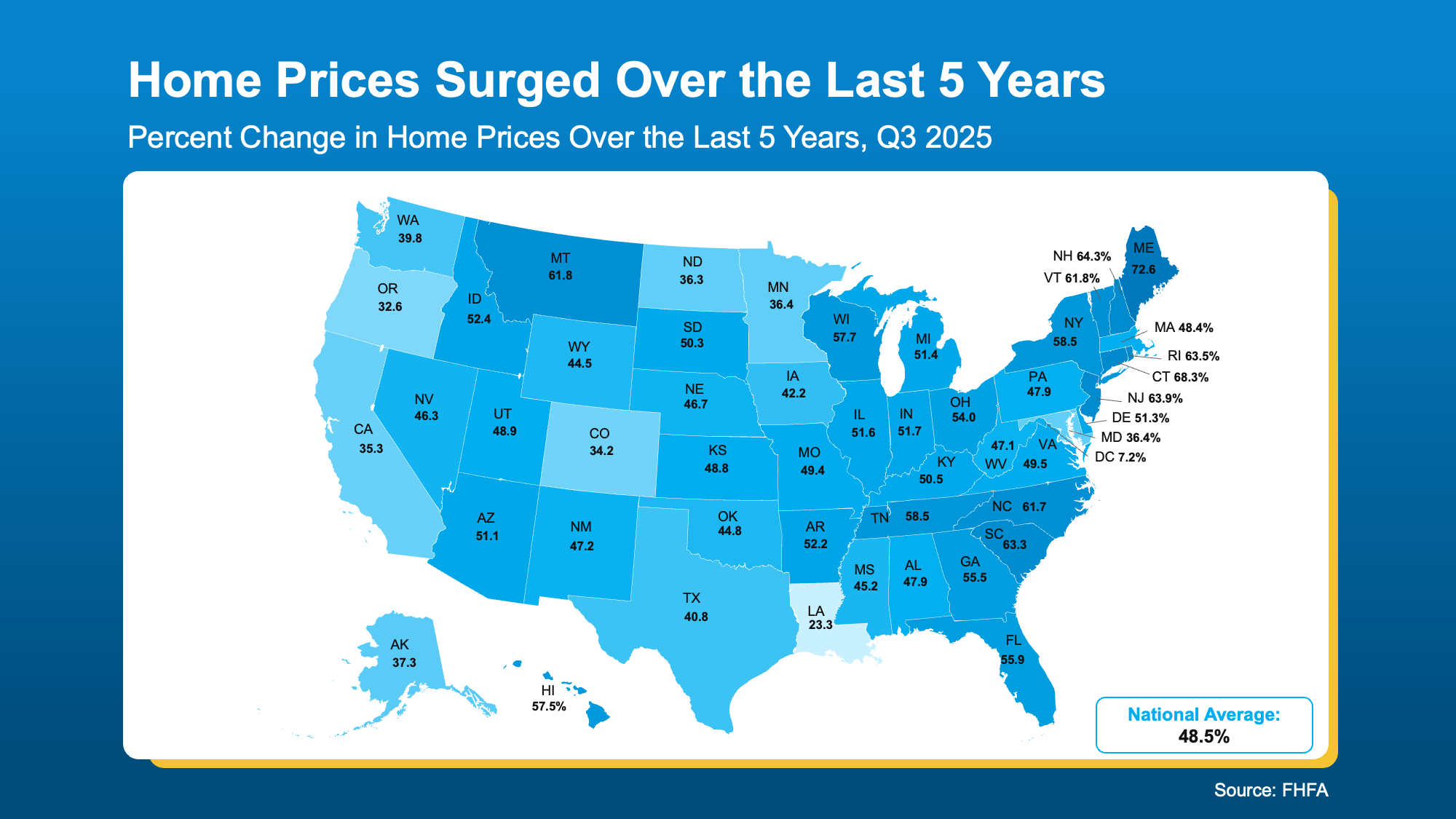
But don’t just take their word for it, see for yourself. When you zoom out and look at how much home prices have grown over the past five years, it’s a lot easier to understand why so many homeowners are still in such great shape.

Nationally, prices are up almost 49% in the last 5 years alone, and just about everywhere saw double-digit price growth in that time frameThat’s why there’s no orange in this map (see below):

a map of the united statesThe truth is, across the board, homeowners are still sitting on substantial gains. So, the -0.1 to -2% declines some states are seeing now? That’s easily absorbed.

So, don't let the headlines scare you. What’s happening with home prices this year varies a lot from one area to the next. But the takeaway is clear: a small dip in some areas doesn’t mean your home’s value is collapsing.

It means select local markets are correcting – and most of the time these are the ones that saw prices rise the most during the pandemic. You’re probably still in great shape.

Bottom Line

If you’re hearing talk about price drops or crashes, a closer look at the data can help put things in perspective. That’s only happening in some markets. Most of the nation is still seeing prices rise.

And for the vast majority of homeowners, the long-term gains far outweigh any recent softening.

If you want help understanding what’s happening in our local market, let’s connect.

The information contained, and the opinions expressed, in this article are not intended to be construed as investment advice. Keeping Current Matters, Inc. does not guarantee or warrant the accuracy or completeness of the information or opinions contained herein. Nothing herein should be construed as investment advice. You should always conduct your own research and due diligence and obtain professional advice before making any investment decision. Keeping Current Matters, Inc. will not be liable for any loss or damage caused by your reliance on the information or opinions contained herein.

Posted in Real Estate