Area Real Estate News & Market Trends

You’ll find our blog to be a wealth of information, covering everything from local market statistics and home values to community happenings. That’s because we care about the community and want to help you find your place in it. Please reach out if you have any questions at all. We’d love to talk with you!

Feb. 10, 2026

Understanding CC&Rs for Tucson Homebuyers

Buying in Tucson and wondering how CC&Rs could shape your day-to-day life and long-term plans? If you care about privacy, views, low water use, or building a custom home, those rules matter more than you think. In this guide, you will learn what CC&Rs are, how they operate in Arizona, and the exact steps to review them for homes and lots across Tucson and Pima County. Let’s dive in.

What CC&Rs are in Arizona

CC&Rs are recorded property rules that “run with the land,” which means they bind current and future owners until they are properly amended or expire. In the Tucson area, these documents are recorded with the Pima County Recorder. CC&Rs often sit alongside other governing documents, including bylaws, articles of incorporation, community rules, and architectural guidelines.

CC&Rs are private contracts enforced through property and contract law. They commonly allow associations to issue notices and fines, suspend certain privileges, and place a lien for unpaid assessments. In Arizona, associations can have lien and, in some cases, foreclosure rights for unpaid common assessments, subject to state law and the recorded declaration.

CC&Rs work together with city and county codes. A CC&R can be more restrictive than local law, but it cannot allow something local law prohibits.

How CC&Rs affect Tucson buyers

Architectural controls and ARC reviews

Most communities require you to submit exterior changes to an Architectural Review Committee. Plans for additions, pools, fencing, paint colors, major landscaping, or solar are often reviewed against published standards. You should confirm submittal requirements, review timelines, appeal or variance options, and whether licensed professionals must prepare plans.

Landscaping and water-wise rules

Many Tucson CC&Rs address front-yard design, irrigation, turf, and plant choices. Newer rules often align with water-wise xeriscape practices, while older declarations may be more prescriptive. Check if the association manages common-area irrigation and how those water costs are covered.

Exterior materials, walls, and fences

Expect standards for exterior finishes, roof materials, and wall or fence height and placement. In foothills or hillside settings, rules often protect view corridors. If your lot includes slopes, arroyos, or retaining walls, confirm whether you need ARC approval and possibly engineering sign-off.

Lighting and dark-sky standards

Tucson has a strong dark-sky culture. Some CC&Rs require shielded fixtures, lumen limits, and motion sensors to reduce light pollution. These rules may be stricter than city or county lighting codes, so plan exterior and security lighting accordingly.

Solar, EV charging, and modern systems

CC&Rs increasingly address solar panels, satellite dishes, and EV chargers. While associations cannot unreasonably prohibit solar under evolving state policies, you may have placement, color, or screening requirements. Always review the declaration and ask how the ARC has handled recent solar or EV requests.

Pools, casitas, and accessory structures

Pools, detached guest spaces, shade structures, and outdoor kitchens typically require ARC approval. Setbacks, fencing, and drainage are common review points. Plan your design with those standards in mind to avoid delays.

Parking, vehicles, and home businesses

Many CC&Rs limit on-street parking, RV or boat visibility, and commercial vehicle storage. If you have multiple vehicles or a home-based business, verify what is allowed before you buy.

Rentals and short-term rentals

Rental rules vary widely. Some communities allow rentals with minimum lease terms, while others restrict or prohibit short-term rentals. Check the declaration and any later rules for current restrictions and registration requirements.

Pets and animals

Rules often limit the number and type of animals, and set standards for enclosures. In semi-rural or custom-lot areas, CC&Rs may outline whether horses or agricultural uses are allowed and how facilities must be maintained.

Maintenance and lot appearance

Declarations typically require owners to keep lots to a community standard. Associations may have the right to remedy visible violations and assess the cost. Review the maintenance language so you understand your responsibilities.

Assessments, fees, and reserves

CC&Rs set the framework for dues, late fees, and special assessments. Strong reserves and clear budgets help avoid surprise costs. Look for any transfer fees, capital contributions, or one-time fees that apply at closing or for new construction.

Tucson and Pima County considerations

Hillsides, washes, and drainage

Many Tucson properties sit on slopes or near natural washes. CC&Rs often require erosion control measures, defined building envelopes, and drainage plans that do not alter natural flow. Expect heightened standards for grading and retaining walls in hillside areas.

Views and scenic protection

In foothills and custom-lot neighborhoods, view preservation is a common goal. That may affect where and how you can build, how high walls can be, and even what trees you plant.

Master associations and sub-associations

Master-planned communities often include a master association for amenities plus sub-associations for individual neighborhoods. You should review both sets of documents, budgets, and rules so you understand all obligations and fees.

Enforcement, governance, and financial health

Associations generally use a step-by-step enforcement process that can include notices, fines, suspension of privileges, recorded liens, and foreclosure for unpaid assessments, subject to Arizona law. Ask for the fee schedule and written procedures so you know the timeline.

Financial health matters. Review the current budget, recent financials, reserve study if available, assessment history, insurance coverage, and any audits. Red flags include repeated special assessments, low reserves, high delinquency rates, and significant ongoing litigation. Also check board authority and owner voting thresholds for amendments so you know how easily rules can change.

Due diligence checklist for Tucson buyers

Request these items during your inspection period and before closing:

  • Full recorded Declaration of CC&Rs with all amendments, plus any master or sub-association declarations.
  • Bylaws, Articles of Incorporation, and current community rules and regulations.
  • Architectural guidelines and an example ARC application packet.
  • Current budget, most recent financial statements, and any reserve study.
  • Assessment ledger for the property and the current assessment amount and billing cycle.
  • Estoppel or resale certificate showing outstanding assessments, fees, and known violations.
  • Association insurance summary and your personal insurance responsibilities.
  • Board meeting minutes for the past 12 to 24 months.
  • Any pending litigation, violation notices, or major projects and funding plans.
  • Copies of recent ARC approvals in the community to gauge review standards.
  • Public records for easements or recorded restrictions affecting the lot.
  • Local code references for outdoor lighting, water use, drainage, and hillside construction that may interact with CC&Rs.

Smart trade-offs and buyer strategies

Buying in a community is about balance. Gated or amenity-rich neighborhoods often deliver security and upkeep, but with stricter rules and higher fees. Strong ARC standards protect visual continuity and values, yet limit design flexibility. Healthy reserves create financial stability, but special assessments can still happen.

Use these strategies to protect your plans:

  • Review CC&Rs and ARC rules early and build a contingency into your offer if needed.
  • Map your wish list: pool, casita, solar, fencing, gates, and privacy landscaping. Confirm what is allowed and what approvals are required.
  • Ask about precedent. Recent ARC decisions reveal how the community applies its standards.
  • Check enforcement history. Minutes and violation logs show how actively the board enforces rules.
  • For new builds or custom lots, seek pre-approved variances or documented ARC feedback on your initial concept.
  • Make sure estoppel or resale certificates are delivered before closing and that seller disclosures address compliance.
  • For complex plans, consult an architect or attorney familiar with Arizona CC&Rs and HOA practice.

Planning a custom home or equestrian property

If you are targeting a custom lot in southeast Tucson or the foothills, ARC standards may be more site specific. Expect guidance on view corridors, grading, and desert preservation, along with lighting and water-wise landscaping. Equestrian or acreage properties may add rules for barns, arenas, setbacks, and maintenance, so review use permissions and facility standards closely.

Thoughtful preparation gives you more control. When your plans align with CC&Rs, approvals come faster and your long-term enjoyment improves.

Final thoughts

CC&Rs shape how you live, what you can build, and how your neighborhood looks and feels. A careful, document-based review helps you avoid surprises and buy with confidence anywhere in Tucson or Pima County. If you want expert help aligning your goals with the right community or lot, connect with Debbie G. Backus for local, high-touch guidance.

FAQs

What are CC&Rs in Tucson real estate?

  • CC&Rs are recorded rules that run with the land and govern how you can use and modify property, typically enforced by a homeowners association under Arizona law.

How do Tucson CC&Rs interact with city zoning?

  • CC&Rs can be stricter than local code but cannot permit what city or county laws prohibit, so you must satisfy both sets of rules.

Can an HOA in Pima County restrict solar panels?

  • Associations can set reasonable placement or screening standards, but they generally cannot impose rules that unreasonably restrict solar, so review both the declaration and ARC practices.

What should I review before buying in a Tucson HOA?

  • Request the full declaration and amendments, ARC guidelines, budgets and reserves, meeting minutes, resale certificate, insurance summary, and any pending litigation details.

Are short-term rentals allowed in Tucson HOAs?

  • It depends on the community; some declarations allow rentals with minimum lease terms while others restrict or prohibit short-term rentals through CC&Rs or later rules.

How are HOA fees and reserves evaluated in Tucson?

  • Review the budget, reserve study if available, assessment history, delinquency rates, insurance coverage, and any special assessments or planned capital projects for a clear picture.

Posted in Real Estate
Feb. 7, 2026

How To Stretch Your Options, Not Your Budget

One of the biggest homebuying advantages you can give yourself today is surprisingly simple: a flexible wish list.

Think of it like this. Your wish list and your budget are the guardrails of your search. And when your budget needs to hold firm, there’s another lever you can pull. That’s seeing if you truly need all of your desired features. Because the truth is, a small compromise could be the difference between feeling stuck and getting the keys to your next home.

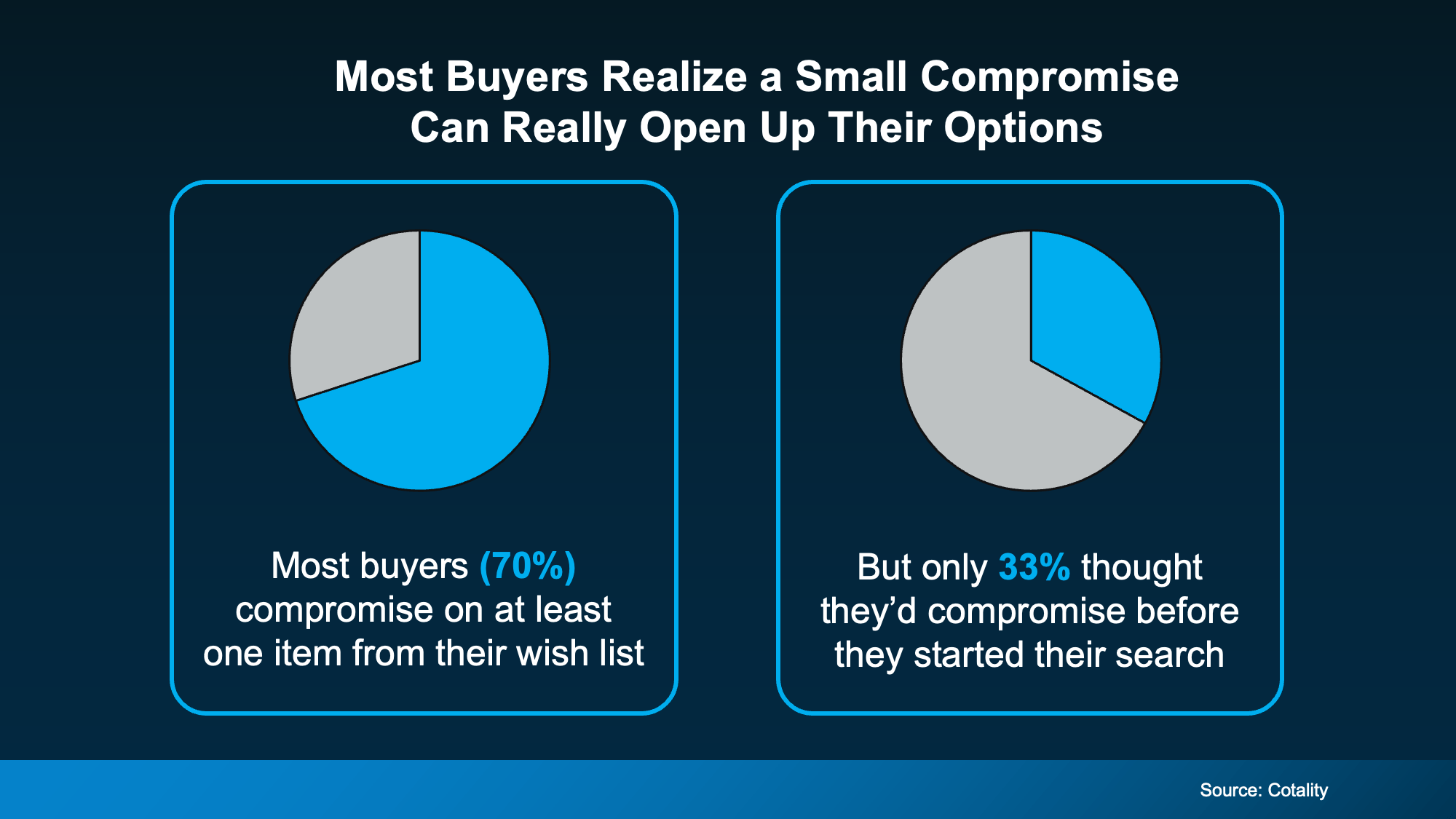
The data shows more buyers are using that strategy to offset affordability hurdles in today’s market. A recent study from Cotality found most buyers (70%) ended up compromising on one or more items from their original wish list. But before they started searching, only 33% expected to compromise at all:

a blue and grey pie chartWhat changed? They realized something during the search. The things you can’t change matter far more than the things you can update later.

You can:

  • Install hardwood floors
  • Put in those marble countertops
  • Upgrade the bathrooms down the line.

You can’t as easily:

  • Add land
  • Tack on more bedrooms or bathrooms
  • Move the house closer to people you care about

In the end, things like the location, layout, and overall bones matter far more than the cosmetic features you can change later. And that realization is power.

A Simple Step That’ll Open More Doors

So, if you’re hitting a wall in your search or you’re browsing online and just not seeing “it,” here’s an easy exercise that can reset the whole experience. Write down everything you want in a home, then sort it into three buckets:

  • Must-Haves: Your non-negotiables. The things that make daily life workable: the number of bedrooms, the length of your commute, accessibility, safety, or being close to your family or support system.
  • Nice-to-Haves: Features you’d absolutely enjoy but aren't truly essential. Some examples: a fenced-in backyard, dual closets in the owner’s suite, or a stamped patio.
  • Dream Features: The extras that would truly be over the top. They’re the things you think about when you say “one day, I want to have...” It's great if you get them, but totally fine if you don’t (for now).

Once you divide your list, you’ll notice something. Your wish list can either limit your options or open them up.

Sometimes you’re treating “nice-to-haves” like “must-haves.” Loosen that up even a little, and suddenly more homes come into range – including homes you may have scrolled past that could actually work for your lifestyle.

Small Flexibility, Big Payoff

Your next home doesn’t need to check every box. It just needs to check the right ones.

Maybe that means considering a house that needs light cosmetic updates. Maybe it means choosing a slightly smaller yard for a better location.

These aren’t sacrifices. They’re worthwhile trade-offs that get you into a home. Just remember, anything cosmetic can be upgraded over time. But getting the right bones, the right layout, the right location? That’s what sets you up for the long run.

An Agent Helps You See the Possibilities

If you’re not sure what to hold firm on and where you can flex, that’s where a trusted agent can be a game changer. They'll help you spot the opportunities, walk you through what features you truly shouldn’t budge on, and determine which ones you can add later – when the time is right.

Bottom Line

If you’re ready to find a home that fits both your budget and your life, let’s take a look at your wish list together. With a local expert on your side, it’s easier to see where a little flexibility can open up a lot more opportunity.

Posted in Real Estate
Feb. 4, 2026

This May Be the Best Time To Buy a Brand-New Home

New home construction today is giving buyers something it feels like they haven't gotten much lately: a real shot at both the home they want and the deal they need. More brand-new options are on the market right now, and builders are rolling out incentives that make these homes more affordable than many people expect.

It’s a combination that doesn’t come around often – and it’s putting buyers in a surprisingly strong position this season. Here’s why this moment matters and why it’s worth partnering with your own local agent to take advantage of it.

1. More New Homes Are Available Now – and That May Not Last

There’s more new construction on the market today than normal. And for buyers, that means:

  • More cutting-edge communities
  • More move-in-ready homes
  • More floor plans to pick from
  • More upgraded designs and modern features

But that variety may not last.

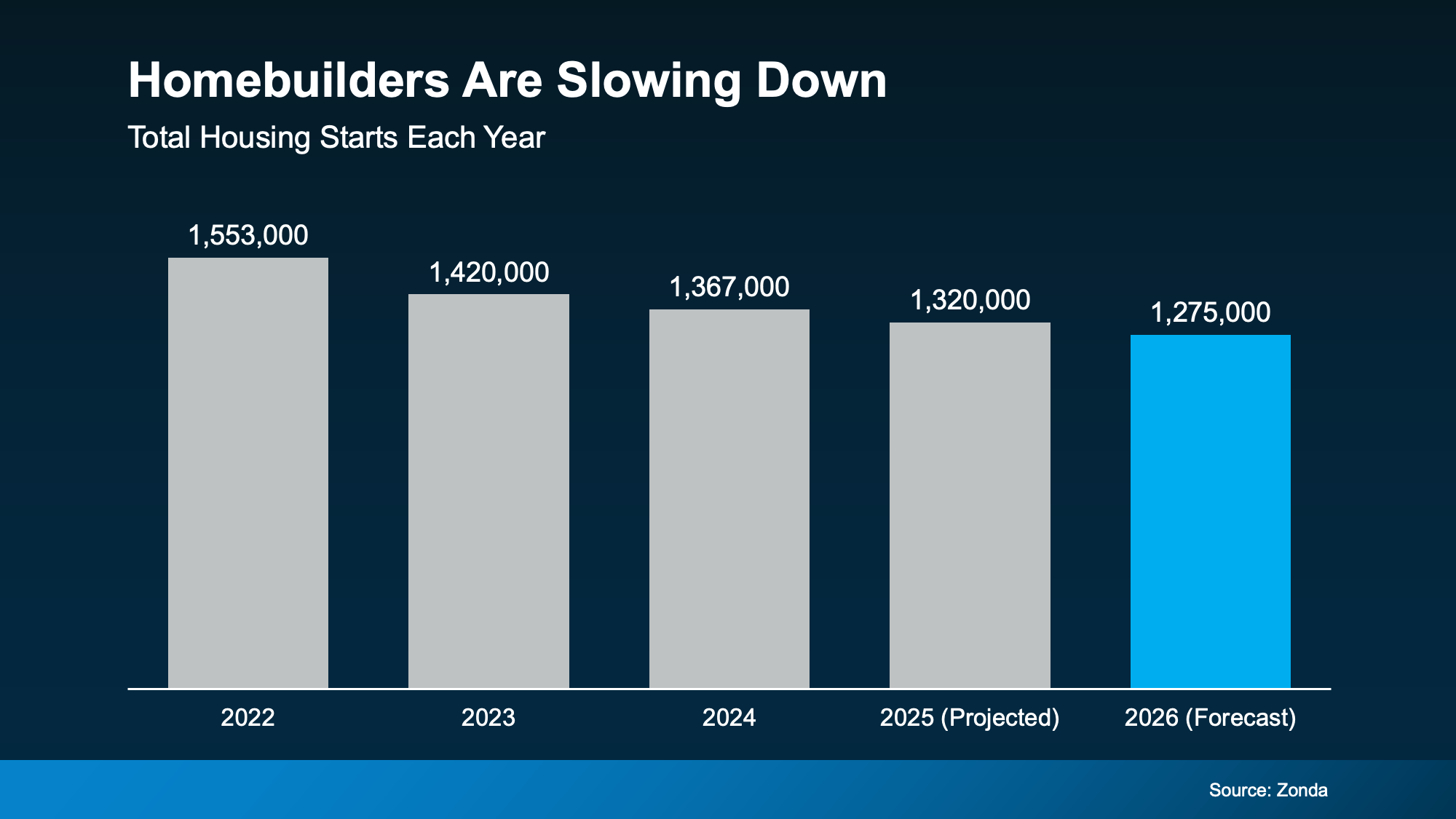
Data from Zonda shows that even though it feels like new homes are popping up just about everywhere, builders have actually started pulling back. The number of starts (that’s when builders break ground) has been slowly but steadily declining over the past few years. And that’s good because it prevents overbuilding nationally.

But here’s the real insight that can give you an edge. Forecasts show that slight downward trend should continue next year (see graph below):

a graph of progress with numbers and textIt’s a signal that the new inventory we have now may be your widest pool of all-new options for a while.

Today, Redfin says roughly 1 in 3 homes (27%) on the market are new builds. That’s higher than the norm, but the lowest share in four years. And it makes sense based on the graph above.

That means if you want more options to choose from, now’s the time to look.

And if you're wondering: why the pullback? It’s simple. Since there are already more new homes for sale than usual, builders want to focus on selling down the supply they already have on the market rather than adding more new homes. And that leads to point two.

2. Builder Incentives Just Hit an All-Time High

Here’s where things get even better for buyers. To make sure the inventory they have now keeps moving, builders are offering incentives at levels not seen in years – and many of those perks directly help buyers with affordability. Buyers today are getting:

  • Lower Prices: Builders are dropping the prices on their brand-new homes to draw in buyers.
  • Help with Closing Costs: Some builders are covering thousands of dollars in fees to reduce the upfront cost of buying.
  • Extra Upgrades: Think premium finishes, appliance packages, and designer features, all added at no extra cost.
  • Mortgage Rate Buydowns: This is when the builder pays to get you a lower mortgage rate, which reduces your monthly payments and helps with affordability.

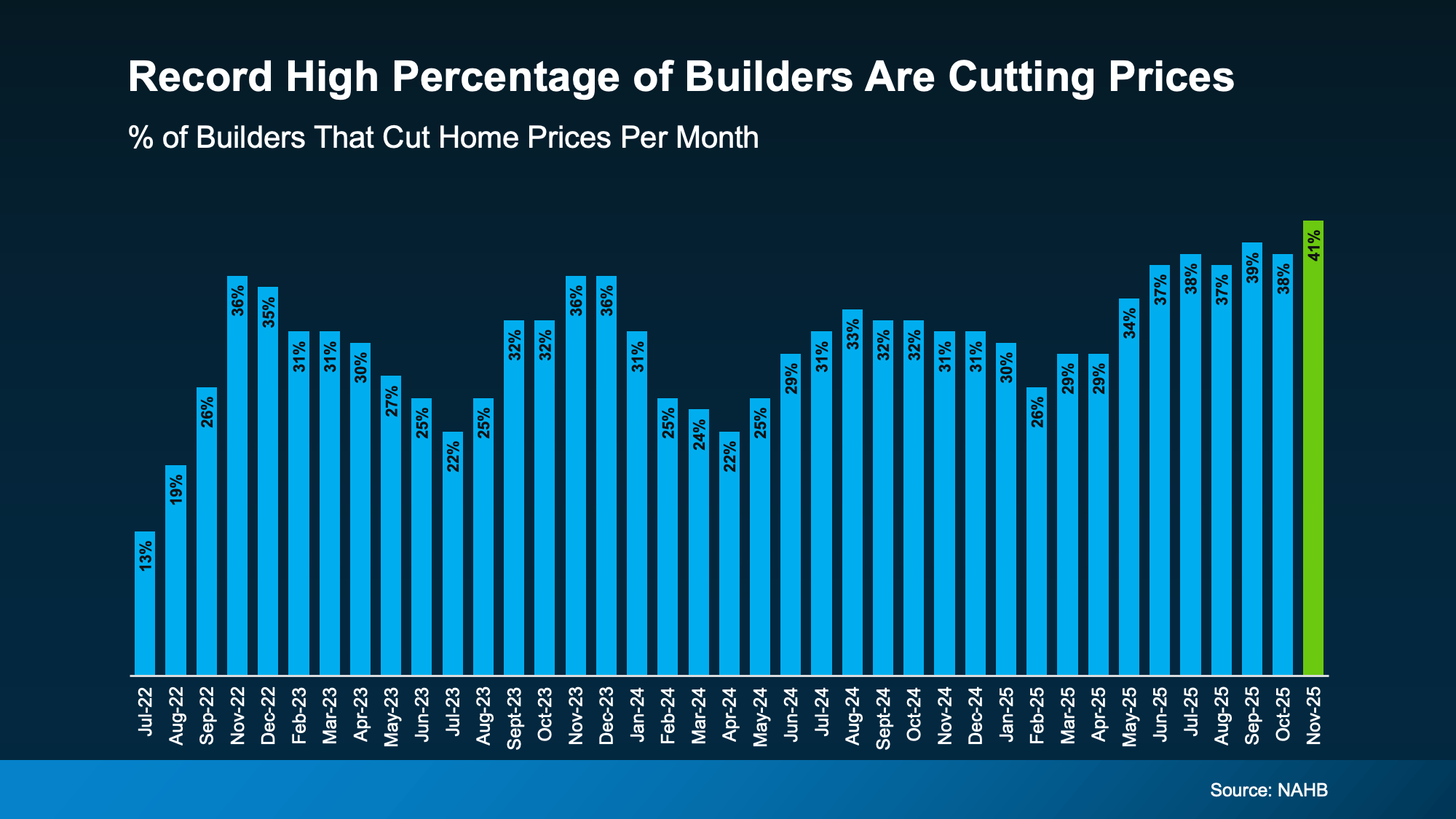
But you don't have to be lucky to see these types of perks. The truth is, the vast majority of builders are offering advantages like these right now. According to the National Association of Homebuilders (NAHB) 65% of builders say they’re using some type of sales incentive and:

“. . . 41% of builders reported cutting prices in November, a record high in the post-Covid period and the first time this measure has passed 40%.”

a graph of a number of blue barsThat’s a big deal. It shows how willing builders are to negotiate right now.

And if you look closely at the graph, you’ll notice the use of incentives typically falls in the early part of the year, as buyer demand rises going into the spring. So, you have an edge if you act now. This may be your ideal window to find the most options and better prices.

If you lean on your own agent and you’re savvy about what you ask for, you could walk away with some of the best perks buyers have seen in years. And when every dollar counts and any incentive helps your bottom line, that's worth looking into. 

More options and more savings = an offer too good to pass up.

Bottom Line

With most builders offering generous incentives and a wider selection of new homes for sale, buyers may be looking at one of the best times in years to buy a new build.

Let's connect if you want to know which communities, builders, and incentives offer the most value today. Having your own agent (not the builder’s representative) makes the sale and negotiation process that much easier for you.

If you could have a brand-new home for less than you may expect, would you be interested?

The information contained, and the opinions expressed, in this article are not intended to be construed as investment advice. Keeping Current Matters, Inc. does not guarantee or warrant the accuracy or completeness of the information or opinions contained herein. Nothing herein should be construed as investment advice. You should always conduct your own research and due diligence and obtain professional advice before making any investment decision. Keeping Current Matters, Inc. will not be liable for any loss or damage caused by your reliance on the information or opinions contained herein.

Posted in Real Estate
Feb. 1, 2026

Understanding the Coyote Creek Building Envelope

Building a custom home in Coyote Creek starts with one crucial idea: the building envelope. It sets the ground rules for where your home, pool, guest house, and driveway can go on the lot. If you want great views, smooth approvals, and no costly surprises, you need to understand it. In this guide, you’ll learn what a building envelope is, who sets it, how it affects your design and budget, and the steps to confirm it before you buy. Let’s dive in.

What a building envelope is

A building envelope is the portion of a parcel where you are allowed to build. It is not just setbacks. It is the result of several layers working together: setbacks, easements, wash and flood buffers, slope limits, height rules, and any community CC&Rs and design guidelines.

In Coyote Creek and across Pima County, the envelope may appear on a recorded plat, on a site plan, or be defined during design review. You will design and place your home inside that area, and any improvement outside of it can require special approvals or may not be allowed.

Who sets the rules in Coyote Creek

Several entities shape your envelope, and you must satisfy all of them.

  • Private rules: CC&Rs and a Design Review Board (DRB). These community standards guide home placement, exterior materials and colors, rooflines, landscaping, lighting, and view protection. DRBs can require tighter setbacks, define envelopes, and set submittal steps before you pull permits.
  • Public rules: Pima County zoning and building codes. The county sets baseline setbacks, lot coverage, building and grading permits, septic or wastewater standards, and floodplain and wash regulations. County permits enforce these standards.
  • Other agencies. FEMA maps flood zones. The Arizona Department of Environmental Quality oversees septic permitting and wastewater standards. The Arizona Department of Water Resources regulates wells and water rights. The Pima County Flood Control District manages washes and drainage.

If rules conflict, the stricter standard governs. For example, a DRB cannot waive a county setback, and county permits do not override recorded plat notes.

How to confirm the envelope for a lot

Do not rely on assumptions or a marketing sketch. Ask for documents and verify.

  • Get the recorded plat and any plat notes that show the building envelope, easements, and any view corridors.
  • Request the complete CC&Rs, design guidelines, and DRB application with fees and timelines.
  • Check Pima County property records for zoning and any parcel-specific conditions. Contact Development Services for setbacks and permit requirements.
  • If a wash is nearby or a low area is visible, review FEMA flood maps and Pima County Flood Control District mapping to understand buffers and potential drainage requirements.

These steps help you understand the true, effective buildable area before you spend money on design.

Common site constraints in Pima County desert lots

Coyote Creek sits in the Sonoran Desert, so a few patterns repeat across many custom lots. Knowing these early can save time and budget.

Desert slopes and grading

Many homesites sit on gentle to moderate slopes near ridgelines. Grading allowances and cut-and-fill limits matter because they affect visibility from the valley, drainage patterns, and the need for retaining walls. Hillside locations often have stricter standards to protect ridgelines and keep the perceived height low.

Washes and flood risk

Ephemeral washes and arroyos often cross or edge a lot. Wash setbacks and floodplain designations can shrink your usable area and may trigger engineered drainage solutions. Expect to plan around these buffers when placing your pad, pool, or driveway.

Soil and geotechnical conditions

Desert soils and caliche vary within short distances. A soils or geotechnical report helps determine pad location, footing type, and whether you need specialized foundations. It also informs drainage and retaining strategies inside the envelope.

Utilities, septic, and wells

Utility easements and service points constrain where you place structures. If the lot is not on municipal sewer, a septic system layout and reserve area must fit within the envelope and setbacks. For private wells, well setbacks and ADWR permits influence site planning and can affect the location of driveways and outdoor spaces.

Vegetation and habitat

Many communities in the region require you to retain native vegetation, protect saguaros and other species, and revegetate after grading. These rules can influence driveway routing, pad size, and the location of outdoor living areas.

Dark-sky lighting

Tucson-area dark-sky principles often appear in HOA guidelines. Expect standards for fixture shielding and lumen limits that guide your exterior lighting plan.

How the envelope shapes your home design

A well-defined envelope does more than set limits. It guides smart design decisions that make your home feel right on the land.

Buildable area and views

Your final, effective buildable area is the envelope minus easements, wash buffers, and septic or well setbacks. That footprint often dictates your primary view direction and privacy. Placing main living areas to frame ridgelines while respecting neighbors’ view corridors is a common goal.

Solar orientation and energy

The envelope influences roof and window orientation. Designers use it to position glazing for winter sun, shade outdoor spaces, and plan for photovoltaic panels in locations that meet community standards for visibility and screening.

Driveways and access

If the envelope sits deep in the lot or at a higher elevation, you may need a longer or steeper driveway. That can raise costs and may require specific materials or grading plans under the design guidelines.

Grading, retaining, and drainage

Smaller envelopes on slopes tend to produce more complex grading and retaining wall needs. That can add engineering and construction cost. Early coordination between your designer, civil engineer, and DRB helps minimize rework.

Outdoor living and pools

Setbacks, wash buffers, and height limits affect courtyards, pool placement, and any accessory structures. Screening requirements may shape where you can place mechanical equipment or rooftop elements.

Lot comparison checklist

Bring this checklist when you evaluate Coyote Creek lots so you can compare apples to apples.

Documents to gather

  • Recorded plat with any building envelope, easements, and view corridor notes.
  • Full CC&Rs, design guidelines, and DRB submittal checklist with fees and timelines.
  • Preliminary title commitment to confirm recorded restrictions and easements.
  • Pima County zoning details and any overlays or parcel conditions from Development Services.
  • FEMA flood status and any Pima County flood-control or wash mapping.
  • Utility availability statements: sewer or septic, water source, electric service point, and gas, if available.
  • Recent topographic survey and any existing soils or drainage reports.

Smart questions to ask

  • Is the envelope shown on the recorded plat, or defined only in guidelines? Any variance options or planned amendments?
  • What is the DRB process and typical timeline? Are conceptual reviews available before you commit to full plans?
  • Any known cultural, environmental, or native plant constraints on the lot?
  • Where are the utility connection points and meters? Is sewer available, or will you need septic with a reserve area?
  • Has any grading, pad work, or retaining already been permitted or installed?

Early steps after you go under contract

  • Order a topographic survey that locates all easements and visible site features.
  • Commission a soils/geotechnical study and a drainage evaluation to confirm pad options.
  • Request a pre-application or conceptual DRB review, if offered, to align early design ideas with community standards.
  • Coordinate with a local builder to estimate grading, driveway, and utility run costs based on the envelope.
  • If planning a private well or septic, verify feasibility and start the ADWR and ADEQ processes early.

Red flags to watch

  • Large portions of the lot lost to easements, wash buffers, or floodplain.
  • Envelope placement that blocks key views or conflicts with planned roads or neighboring homes.
  • Vague or highly subjective design standards that could extend the review timeline.
  • Steep slopes within the envelope that imply extensive retaining or specialized foundations.
  • Unclear utility locations or long distances to connect to main lines.

Timeline and cost impacts

Design review and envelope constraints shape both soft and hard costs. More restrictive envelopes and detailed DRB processes can add submittal rounds and review meetings, which can extend the pre-construction timeline and increase design and consultant fees. Complex grading, longer utility runs, and engineered pads add construction cost.

The upside is clarity. A well-documented envelope and clear guidelines can speed up design decisions, limit guesswork, and reduce change orders. Early due diligence pays for itself by avoiding redesigns.

How Backus helps you plan with confidence

You deserve a home that fits your land and your lifestyle. With developer-to-broker experience and deep local knowledge in Coyote Creek, we help you read between the lines of plats, CC&Rs, and DRB guidelines so you can make smart choices.

Here is how we support you:

  • Help you source and interpret the recorded plat, CC&Rs, and design guidelines for each lot you consider.
  • Coordinate early conversations with the DRB and connect you with vetted local builders who understand envelope constraints.
  • Advise on lot-to-lot tradeoffs, from slope and wash buffers to driveway routing and view orientation.
  • Keep your process grounded in Pima County permitting, flood-control rules, and the practical realities of desert construction.

Ready to compare lots or start designing a home that respects the land and protects your views? Reach out to Debbie G. Backus for expert guidance from first look to closing.

FAQs

What is a building envelope in Coyote Creek?

  • It is the portion of your lot where you can build after applying setbacks, easements, wash and flood buffers, slope and height limits, and any CC&R rules.

Who has the final say: HOA rules or county rules?

  • Both apply, and the stricter standard controls; county enforces through permits and the HOA enforces CC&Rs through private review and compliance.

Can the Design Review Board change my recorded envelope?

  • A DRB can approve siting within the envelope but cannot expand a recorded envelope or remove recorded easements without a formal amendment.

How do washes and flood zones affect my plan?

  • Wash setbacks and floodplain areas reduce buildable space and may require engineered drainage solutions that influence pad, driveway, and pool placement.

What should I check before making an offer on a lot?

  • Obtain the recorded plat and notes, CC&Rs and design guidelines, county zoning details, flood status, and utility availability, and review them with your advisor.

Will design review add time and cost to my build?

  • It can; review cycles and revisions add weeks to months and fees, but early coordination and clear guidelines help prevent costly redesigns.
Posted in Real Estate
Jan. 29, 2026

How To Find the Best Deal Possible on a Home Right Now

Want to know how to find the best deal possible in today’s housing market? Here’s the secret. Focus on homes that have been sitting on the market for a while.

Because when a listing lingers, sellers tend to get more realistic – and, more willing to negotiate. And that’s where the savviest buyers are finding homes other buyers overlook.

The Opportunity: 1 in 5 Homes Has Had a Price Cut This Year

According to Realtor.com, about 1 in every 5 listings (20.2%) have dropped their asking price at least once. And while so many things in today’s housing market vary by region, that number is consistent throughout the country. That tells you one thing...

No matter where you live, there’s a chance to score a better deal. You just need to know where to look. And that’s where your agent comes in.

The Tactic: Target Homes That Have Been Sitting the Longest

Your agent can help you identify which homes have been on the market the longest. Those are the ones where you’re more likely to get a discount. That’s because the seller may be getting frustrated their house hasn’t sold yet, so they're more willing to play ball.

And since a lot of buyers steer clear of homes that aren’t selling, you may be the only offer they get. So, you can lean in and push for a better deal. As Realtor.com explains:

“Less competition means fewer bidding wars and more power to negotiate the extras that add up: closing cost credits, home warranties, even repair concessions . . . these concessions can end up knocking thousands of dollars off the price of a home.”

And they’re not the only ones calling out the opportunity you have right now. Bankrate also says:

“During the quieter fall and winter months, when fewer prospective buyers are shopping, home sellers may be more willing to lower their prices, or offer concessions, to attract those prospective buyers who are still looking.

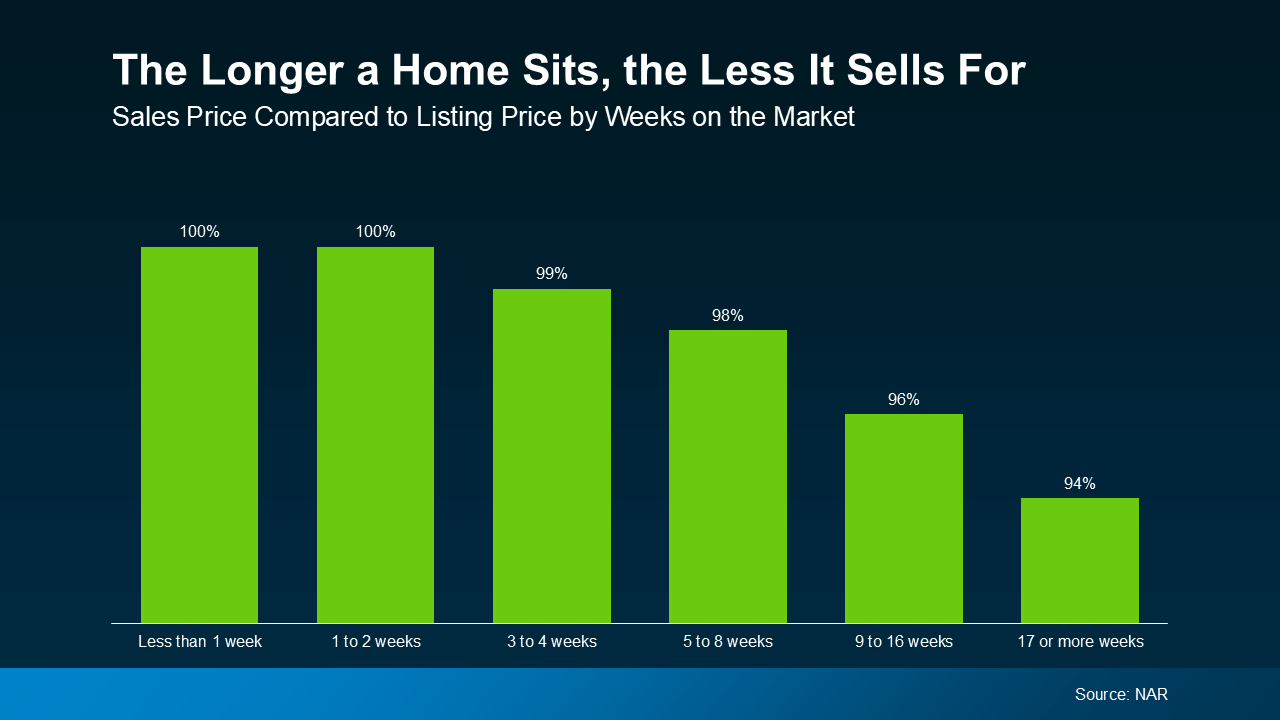
And the proof is in the data. The National Association of Realtors (NAR) shows a clear pattern: the longer a home stays on the market, the lower it tends to sell for compared to the original asking price.

a graph of green rectangular objects

So, if you’re serious about getting as much as you can for your money, focusing on these listings could be your best strategy yet.

Even a Small Discount Can Go a Long Way

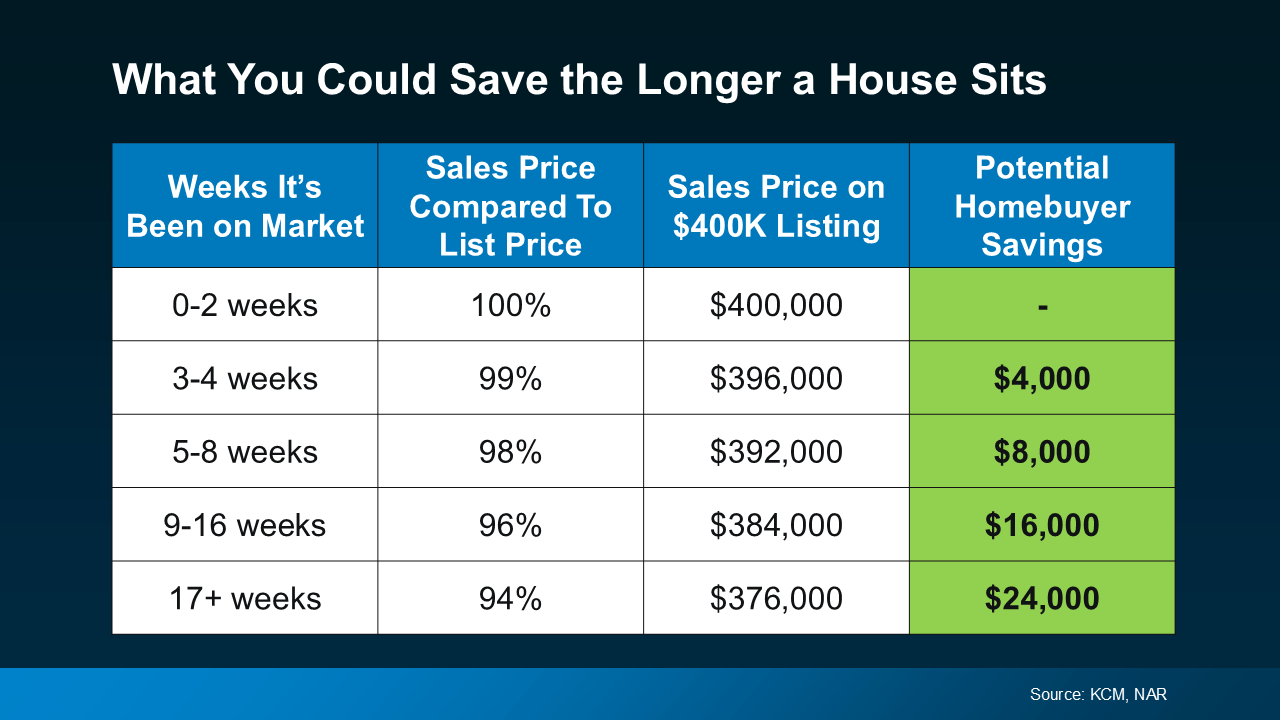
And while paying 94% of the original asking price may not sound like much of a deal, the savings add up. That’s roughly $24,000 in savings on the median priced home (see chart below):

Zillow sums it up best:

If you’re a buyer who is hoping to strike a deal, look for homes that have been on the market for a while and that may already have lowered prices to entice buyers. You may find a motivated seller who is more willing to negotiate.”

Bottom Line

If you want to find the best deal possible on a home right now, start by looking where others aren’t.

With 1 in 5 sellers cutting prices and many growing more flexible by the week, the homes that have been sitting a little longer could be your best opportunity to save.

Let’s talk about where to find them in our area.

The information contained, and the opinions expressed, in this article are not intended to be construed as investment advice. Keeping Current Matters, Inc. does not guarantee or warrant the accuracy or completeness of the information or opinions contained herein. Nothing herein should be construed as investment advice. You should always conduct your own research and due diligence and obtain professional advice before making any investment decision. Keeping Current Matters, Inc. will not be liable for any loss or damage caused by your reliance on the information or opinions contained herein.

Posted in Real Estate
Jan. 26, 2026

4 Reasons Your House Is High on Every Buyer’s Wish List This Season

When the holidays roll around, travel plans, family gatherings, and all the chaos of the season may make you think it’s better to pull your listing off the market or to wait until 2026 to sell your house. But here’s the thing.

Waiting could mean missing out on a great window of opportunity. Because while other sellers are stepping away, you can lean in – and that might actually give you the edge. Here are 4 reasons selling now may be the better bet. 

1. Buyers This Time of Year Are Serious

Don’t let the season fool you. While casual browsers tend to step back around the holidays, serious buyers stay in the game. The people looking for homes right now usually aren’t just browsing. They’re ready to make a move and they usually want to close before the new year. As Zillow says:

“While more buyers have tended to shop in the spring and summer months, those shopping in the winter are likely to be motivated — often moving because of a job relocation, change in financial situation, or change in family needs.”

Their timelines are real and missing them would create a hassle for the buyer, so they’re eager to get the deal done. And that’s exactly the kind of buyer you want to work with.

2. You Have Control Over Your Schedule (and Showings)

Some homeowners decide not to sell this time of year because they don’t want to juggle showings during the holiday rush. They’re anticipating traveling to see family and thinking about buyers in their home only adds another layer of complexity. 

But here’s what no one’s reminded them. You can control your showings and can set times that work for your schedule. You don’t have to stop your plans to keep your sale on track. The right agent can help you manage your calendar, your showings, and your stress level.

3. Other Sellers May Step Back, Which Means Less Competition

Because fewer sellers tend to list this time of year, the number of homes for sale usually falls a bit. Lisa Sturtevant, Chief Economist at Bright MLS, explains:

“As we approach the end of the year, listing activity tends to slow and would-be sellers decide to wait until after the new year to list . . .”

And in a year when inventory has been steadily rising, that seasonal slowdown works in your favor. With the potential for fewer sellers on the market, your house will stand out. So, a seasonal dip in listings could help you get noticed, especially if your home is priced right and presented well.

4. Homes Decorated for the Holidays Can Feel More Inviting

You may not realize it, but seasonal decor can actually help you appeal to buyers. Maybe it’s that they have an easier time picturing themselves making memories in the home. Maybe it just feels cozier and more inviting. Whatever the reason, it works. Sometimes tasteful seasonal touches can make it easier to sell your house.

But don’t go overboard. Keep your choices simple to let your home’s charm shine through.

Bottom Line

There are plenty of good reasons to put (or keep) your house on the market during this time of year.

If you want to talk strategy for how to make the most of this season in our market, let’s connect.

The information contained, and the opinions expressed, in this article are not intended to be construed as investment advice. Keeping Current Matters, Inc. does not guarantee or warrant the accuracy or completeness of the information or opinions contained herein. Nothing herein should be construed as investment advice. You should always conduct your own research and due diligence and obtain professional advice before making any investment decision. Keeping Current Matters, Inc. will not be liable for any loss or damage caused by your reliance on the information or opinions contained herein.

Posted in Real Estate
Jan. 23, 2026

Our Proven Plan To Sell Rincon Valley Equestrian Homes

Thinking about selling your horse property in Rincon Valley Estates? Selling an equestrian home is different from selling a standard house. Buyers focus on function as much as finish, and they ask detailed questions about wells, septic, arenas, barns and fencing. In this guide, you’ll see our step-by-step plan to prepare, price and market your property so the right riders find it and move quickly. Let’s dive in.

Why this market is unique

Rincon Valley Estates sits in unincorporated Pima County near the Rincon Mountains, with rural lots that often rely on private wells and septic systems. Equestrian properties attract a smaller, niche buyer pool, so marketing times can be longer and details matter. Many buyers come from the Tucson metro and regional riding communities seeking training space, private turnout and scenic trail access.

Before listing, it helps to confirm zoning, permitted uses and any recorded easements. If your parcel has CC&Rs or neighborhood rules, pull them early. Buyers will ask about permitted uses for boarding or lessons, well registration, septic permits and the history of any outbuildings.

Buyer profile here

  • Owner-riders who want private turnout and space to train at home.
  • Trainers or small boarding operators who need multiple stalls, an arena and functional hay and tack storage.
  • Hobby farm buyers or small-scale breeders.
  • Relocating households who want a rural lifestyle within Tucson commute range.

These buyers care about safety, water access, stall layout, arena footing and drainage. They also look for operational clarity, like how many horses the property can comfortably support.

Pre-listing prep that sells

Safety and function first

A clean, safe, working facility shows value fast. Walk your property with an equine-focused checklist:

  • Barn and stalls: inspect roofs, posts and doors for rot, leaks or termite issues. Confirm safe latches and secure hardware.
  • Arena: note surface type, compaction, drainage, watering or irrigation lines and lighting. Consider a simple footing assessment if you want to justify a premium.
  • Fencing and gates: confirm integrity of pipe, wood or electric lines. Repair sagging or damaged sections and test all gates.
  • Turnouts and corrals: check footing, runoff control and shade or shelter.
  • Water systems: schedule a well yield test and verify pump function. Map irrigation lines.
  • Waste and septic: confirm permit status and recent service.
  • Utilities and access: verify power service, gated or shared driveways and any access easements.
  • Site hazards: walk flood-prone areas, arroyos and erosion points that could affect paddocks.

If your goal is a top-of-market price, consider professional inspections for barns, wells, septic and even arena footing. Document any repairs with invoices.

Documents buyers need

Put together a clear package before you go live:

  • Arizona Seller’s Property Disclosure Statement (SPDS), plus local disclosure forms.
  • Well records, including state registration, recent pump or yield tests and maintenance logs.
  • Septic permit and the latest service or inspection records.
  • Building permits and final inspections for barns, arena lighting, sheds, shops and any accessory structures.
  • Maintenance history for arena footing, fencing, roofs, tractors or equipment that may convey.
  • Any service contracts, plus boarding or lease agreements if they will transfer with the sale.

Having these ready reduces renegotiation risk and builds buyer confidence.

Presentation that speaks to riders

  • Tidy stalls, swept aisles, cobwebs cleared and fresh paint where needed.
  • Groom the arena and, if possible, show lighting and the watering system in action.
  • Mow and clean turnout areas, fix or remove damaged fencing, and stage pastures for clear photos.
  • Create a productized list of equine features: stall count and dimensions, wash racks, tack room size, hay storage capacity in tons, arena dimensions and surface, round pen size, paddock acreage and any irrigated pasture.
  • Emphasize safety features, fire preparedness and emergency access.

For media, prioritize high-resolution barn and arena photos, drone shots that show pasture layout and access roads, short video clips of footing, and a scaled site plan or features map.

Pricing equestrian homes right

Value your improvements

Standard comps rarely capture the value of a well-built facility. We use a hybrid approach:

  • Start with land and residence comps in Rincon Valley and greater Pima County.
  • Add the value of equestrian improvements using replacement-cost estimates for barns, arenas and outbuildings. Contractor quotes help.
  • Compare against recent horse-property sales with similar features.
  • If the property operates boarding or training, consider documented income to support value.

This method sets a realistic range while highlighting the true worth of your infrastructure.

Smart pricing strategy

We tailor pricing to your timeline and condition:

  • Market-launch price with full marketing push when condition and documentation support a premium.
  • Slightly under the expected range to test demand and drive early showings if speed matters most.
  • Pricing with a repair buffer when inspections may uncover items you plan to address. Communicate completed repairs clearly in marketing.

We also plan for structured adjustments if activity is light after two weeks. Clear pricing tiers help you make fast, informed decisions.

Targeted marketing that works

Equestrian buyers live in specialty networks. We build a multi-channel plan that meets them where they are.

MLS built for riders

  • Use farm and ranch property types and every equine-specific field available.
  • Detail stall count and sizes, arena dimensions and surface, paddock acreage, fencing type, well and septic status and all outbuildings.
  • Attach an aerial site map, high-quality photos and a concise packet of permits and maintenance records.

Digital reach to riders

  • Place the listing on regional ranch and equestrian classifieds where appropriate.
  • Create social content that highlights barn flow, water and hay storage, and arena footage. Target riders and trainers in Arizona and nearby states.
  • Produce a video tour that shows how horses move through the property and embed short clips that spotlight footing and drainage.
  • Send direct emails to equestrian agents, local trainers, boarding barns and tack shops with a one-page spec sheet.

Community outreach

  • Place flyers at local tack and feed stores and share materials with equine vets and farriers.
  • Host a broker open for agents who work horse properties.
  • Offer private showings for qualified equestrian buyers. Use clear safety rules, liability waivers and require appropriate footwear. Limit loose animals during tours unless pre-arranged.

From offer to close

Anticipate the due diligence equestrian buyers need, and get ahead of it:

  • Well pump and yield testing, with current registration and records.
  • Septic inspection and permit verification.
  • Structural inspections for barns and outbuildings.
  • Arena footing and drainage review if the buyer runs a training or boarding operation.
  • Zoning confirmation for permitted uses, setbacks and any conditional use needs for commercial activities.

Required disclosures

Arizona requires the SPDS, and federal law requires a lead-based paint disclosure for structures built before 1978. Disclose known well issues, water supply details, easements, shared-drive agreements and any flood or wash history you know about. Clarity prevents disputes and keeps deals on track.

Smooth closing checklist

  • Lock inspection windows and schedule well and septic tests immediately after contract.
  • Pull permits and finals for barns and accessory structures.
  • Provide maintenance records and vendor contacts to buyers early.
  • If you host boarders, outline how contracts will transfer or terminate. Confirm plans for animals, staff and feed or equipment per the purchase contract.

Your 3–6 month plan

Use this simple roadmap to prepare with confidence.

  • Month 3 to 6

    • Gather SPDS, well and septic records, permits, maintenance logs and any service contracts.
    • Book inspections for barns, well, septic and arena footing.
    • Get quotes for high-impact fixes like fencing, roof repair or arena grading.
    • Start staging: declutter tack and hay storage, tidy stalls and repair obvious safety issues.
  • Month 1 to 3

    • Complete agreed repairs and document them.
    • Hire a photographer and licensed drone pilot. Create a labeled site and features map.
    • Draft MLS data with detailed equine specs and attachments.
    • Build a targeted outreach list of regional trainers, equestrian groups and local tack shops.
    • Finalize pricing strategy and a plan for broker tours and private showings.
  • Launch to week 8

    • Go live on MLS and niche channels. Push social and email outreach.
    • Host a broker open and scheduled equestrian-focused showings.
    • Review feedback after two weeks. Adjust presentation or price if needed.
  • Contract to close

    • Schedule buyer due diligence quickly. Keep communication tight.
    • Share records and vendor contacts promptly.
    • Coordinate the transfer or removal of equipment and animals per contract.

Why list with Backus Realty

You deserve a team that understands barns, arenas and the realities of rural lots in southeast Tucson. Backus Realty and Development is a boutique, family-operated brokerage rooted in Vail and Coyote Creek. We pair hands-on development know-how with high-touch listing service, so your equestrian property is presented with precision and care.

Our approach is simple. We lead with local authority, highlight functional value and tell your property’s story with clarity. We also bring confidential, relationship-driven service and tailored marketing to reach serious riders and trainers who are ready to buy.

Ready to craft your selling plan and timeline? Connect with Debbie G. Backus for a private consultation.

FAQs

Do I need to disclose my well’s yield in Pima County?

  • Yes. Water supply is material to use. Provide state well registration documents, any recent pump or yield tests and maintenance records.

Will my arena add value when I sell in Rincon Valley Estates?

  • A well-built, well-maintained arena can add value for equestrian buyers. Document the surface type, drainage, lighting and maintenance to support pricing.

How do I price unique equestrian improvements like barns and round pens?

  • Use a hybrid method: local land and residence comps, replacement-cost estimates for equine improvements and any documented income from boarding or training.

Are special permits needed for boarding or lessons on my property?

  • Zoning may require a conditional use for commercial boarding or lessons. Confirm permitted uses, setbacks and conditions with local development services before marketing those uses.

Should buyers be allowed to ride during showings at my property?

  • Manage liability carefully. Require pre-qualification, waivers and proof of insurance, and limit riding to supervised sessions. Short videos of the arena in use can reduce the need for test rides.
Posted in Real Estate
Jan. 20, 2026

What the Housing Market in 2026 Means for You

After several years of high mortgage rates and hesitation from buyers, momentum is quietly building beneath the surface of the housing market. Sellers are reappearing. Buyers are re-engaging. And for the first time in what feels like forever, there’s movement happening again.

No, it’s not a surge. But it is a shift – and it’s one that could set the stage for a stronger year in 2026.

So, what’s driving the comeback? Here are three big trends that are slowly breathing life back into the housing market right now.

1. Mortgage Rates Have Been Coming Down

Mortgage rates are always going to have their ups and downs – that's just how rates work. Especially with the general economic uncertainty right now, some volatility is to be expected. But, if you zoom out, it’s the larger trend that really matters most.

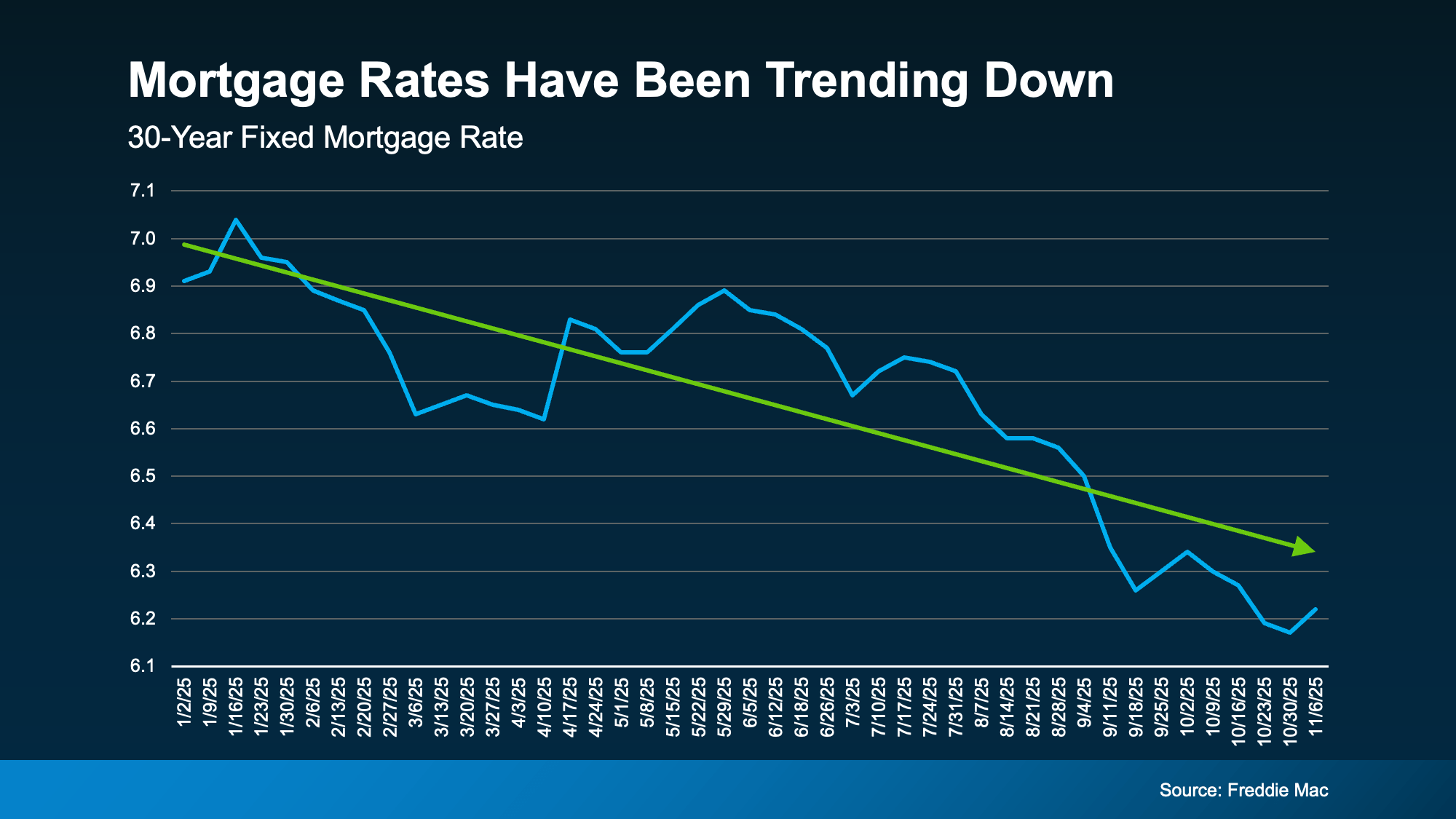
And overall, rates have been trending down for most of this year (see graph below):

a graph with a line and a green lineAnd in just the last few months, we’ve seen the best rates of 2025. According to Sam Khater, Chief Economist at Freddie Mac:

“On a median-priced home, this could allow a homebuyer to save thousands annually compared to earlier this year, showing that affordability is slowly improving.

Here's why that matters for you. This shift changes what you can actually afford. It means lower borrowing costs and more buying power. Take this as an example.

Data from Redfin shows a buyer with a $3,000 monthly budget can now afford roughly $25,000 more home than they could one year ago. That’s a big deal. And it’s just one of the reasons why activity is picking up.

2. More Homeowners Are Ready To Sell

For a while, many homeowners stayed put because they didn’t want to give up their low mortgage rate. That “lock-in effect” kept inventory tight. And while plenty of homeowners are still staying where they are today, the number of rate-locked homeowners is starting to ease as rates come down. Life changes are becoming a bigger part of what’s driving more people to move, and that’s opening up more inventory.

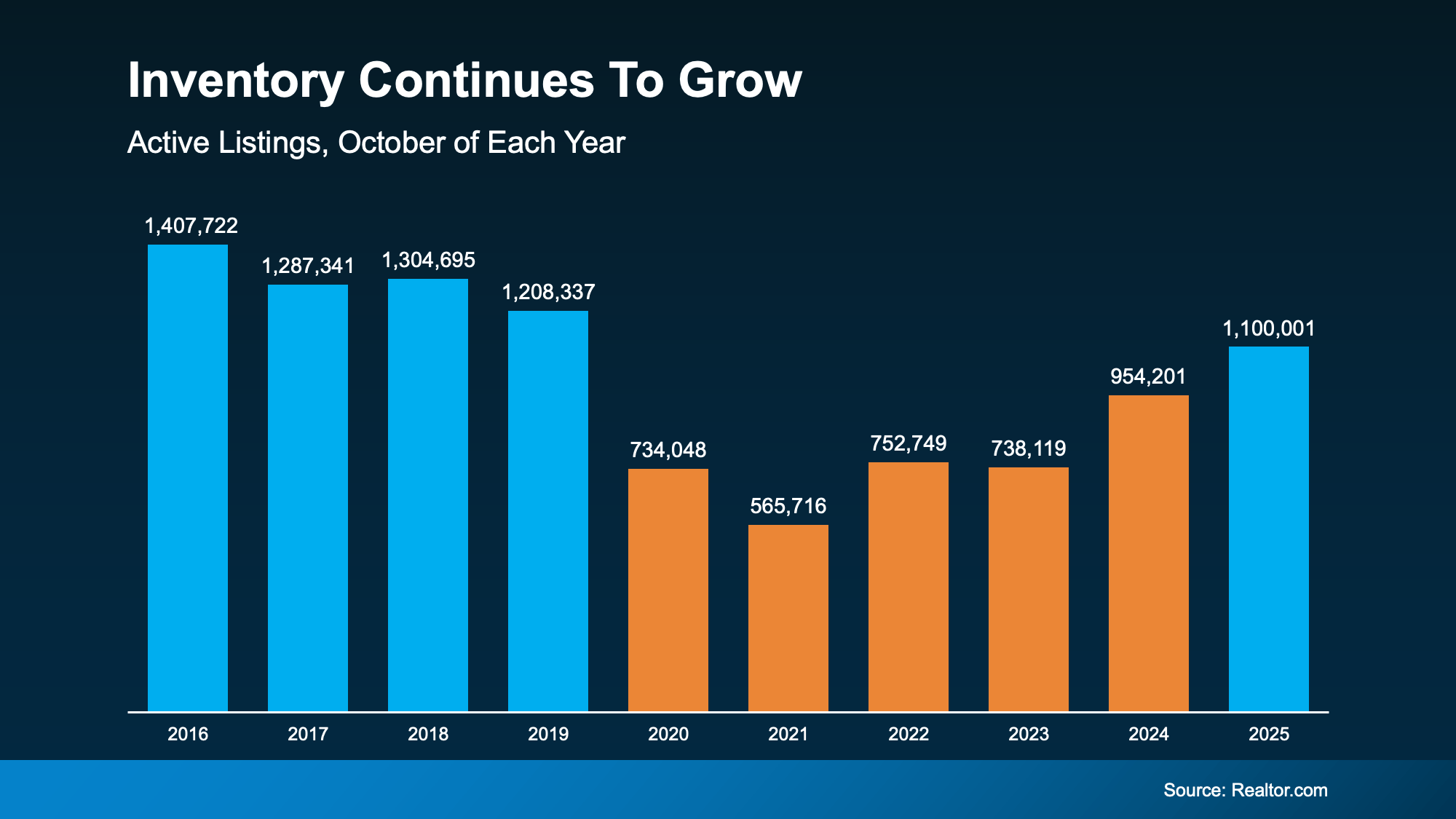
Data from Realtor.com shows just how much the number of homes for sale has grown. And the really interesting part is that the market is approaching levels that haven’t been seen for the past six years (see the blue on the graph below):

a graph of growth in the yearThat return to more normal inventory levels is a really good thing. It gives buyers more options than they’ve had in years. And it’s helping to bring the market closer to balance.

3. More Buyers Are Re-Entering the Market

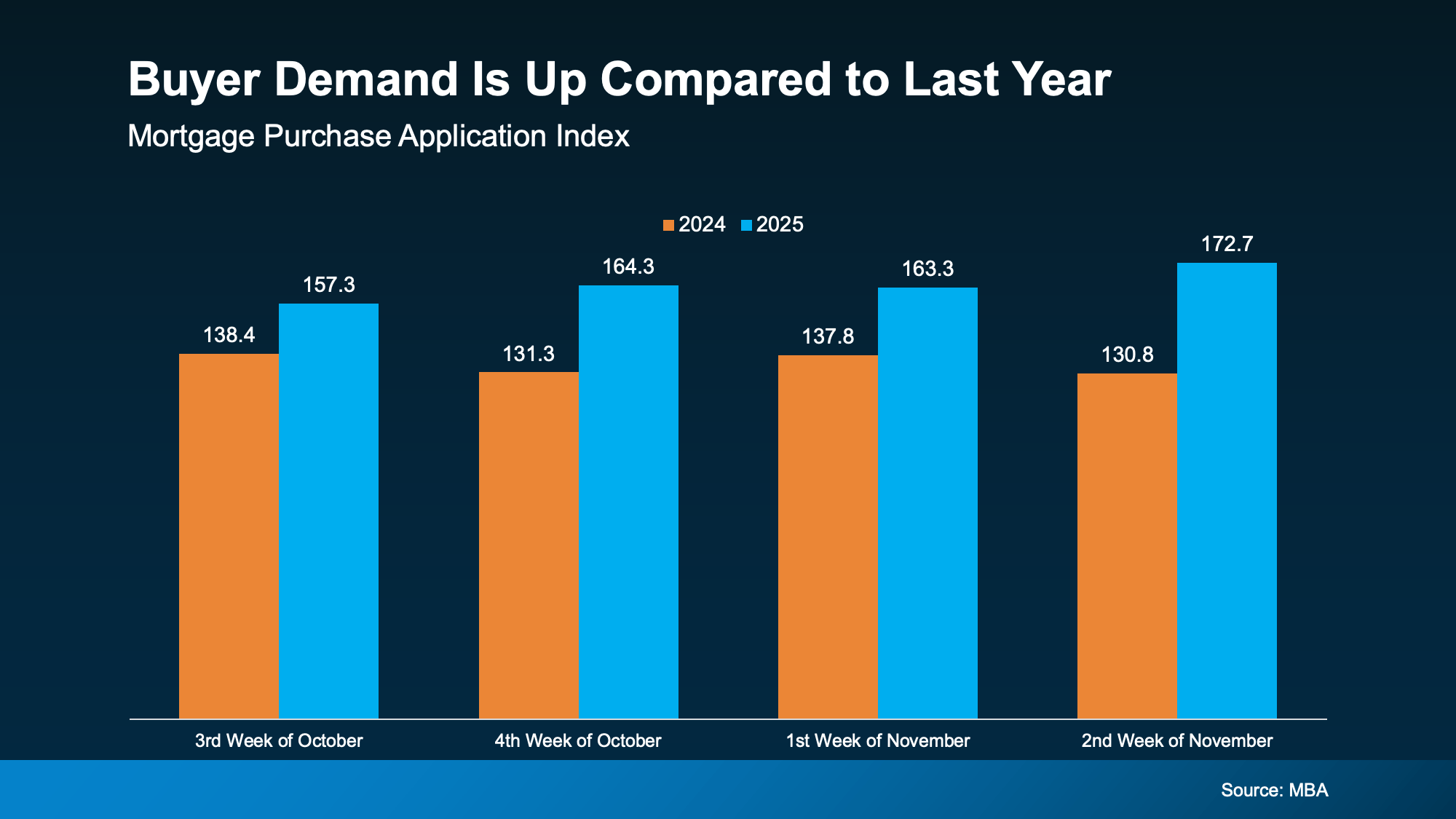
And it’s not just sellers making moves. With more options and slightly better affordability, buyers are getting back in the game, too. The Mortgage Bankers Association (MBA) reports purchase applications are up compared to last year, a clear signal that demand is building again (see graph below):

a graph of blue and orange barsAnd experts think this momentum will continue. Economists from Fannie Mae, the Mortgage Bankers Association (MBA), and the National Association of Realtors (NAR) all forecast moderate sales growth going into 2026.

Now, this recovery won’t happen overnight. It’s not a flood of activity. But it is the start of steady improvement going into 2026. And that's something a lot of people have been waiting for.

Bottom Line

After several slower-than-normal years, the market is finally starting to turn a corner. Declining mortgage rates, more listings, and growing buyer activity all point to a market gaining real traction.

Let’s connect to talk about what’s happening in our local market and how you can make the most of it in 2026.

The information contained, and the opinions expressed, in this article are not intended to be construed as investment advice. Keeping Current Matters, Inc. does not guarantee or warrant the accuracy or completeness of the information or opinions contained herein. Nothing herein should be construed as investment advice. You should always conduct your own research and due diligence and obtain professional advice before making any investment decision. Keeping Current Matters, Inc. will not be liable for any loss or damage caused by your reliance on the information or opinions contained herein.

Posted in Real Estate
Jan. 17, 2026

The VA Home Loan Advantage: What Every Veteran Should Know Right Now

If you’ve served in the military (or if your spouse has), you have access to one of the most powerful homebuying tools out there. The chance to buy a home without having a down payment.

Unfortunately, 70% of Veterans (that's 7 out of every 10) don’t know about this benefit, according to Veterans United.

a group of people in circlesAnd that’s a big missed opportunity for those who’ve earned this benefit through service. So, let’s break down what you really need to know about Veterans Affairs (VA) home loans right now.

Why VA Home Loans Can Be a Great Option

For nearly 80 years, VA loans have made homeownership possible for millions of Veterans and active-duty service members. Here are just a few of the top perks according to the Department of Veteran Affairs:

  • Options for $0 Down Payment: Many Veterans can buy a home without spending years saving up.
  • Fewer Upfront Costs: The VA limits which types of closing costs Veterans have to pay, helping you keep more cash on hand when you’re finalizing your purchase.
  • No Private Mortgage Insurance (PMI): Unlike many other loan types, VA loans don’t require PMI, lowering your monthly costs.

These features make VA loans a great way for service members (or their family) to build stability, save money, and start creating long-term wealth through homeownership.

Can You Still Get a VA Loan with the Government Shutdown?

But lately, there’s been some confusion about whether VA loans are still available due to the government shutdown. And that uncertainty has kept some Veterans from taking the next step.

While there may be processing delays, Veterans United explains you can still get a loan:

“There’s been a lot of confusion and uncertainty about how a government shutdown will affect VA home loans . . . The good news is that the shutdown has minimal impacts on VA lending. Lenders are still able to order appraisals, obtain a borrower’s Certificate of Eligibility, submit the VA Funding Fee and more. In short, Veterans are still able to use their home loan benefit to buy a home or refinance an existing mortgage.”

So, despite the headlines, you can still use your VA home loan benefits today. The process is ready when you are. It just may take more time to go through.

Why the Right Agent and Lender Matter

Just remember, using your VA home loan is easier (and smoother) when you have the right team behind you. As VA News puts it:

“Choosing a military-friendly broker or agent who understands the VA home loan application process can make all the difference in the homebuying experience. Finding the right agency or brokerage is just as important as locking in a good VA mortgage lender. Communication is key to getting to the loan closing table.”

A knowledgeable agent and an experienced lender can help you navigate every step, all the way from qualifying to closing. With their help, you can make sure you’re getting the most out of your benefits.

Bottom Line

If you’re a Veteran, a VA home loan is one of the most valuable benefits you’ve earned through your service. It offers options for no down payment, limited closing costs, and more.

Want to learn more? Talk to a lender so you can take full advantage of the benefits you’ve earned.

The information contained, and the opinions expressed, in this article are not intended to be construed as investment advice. Keeping Current Matters, Inc. does not guarantee or warrant the accuracy or completeness of the information or opinions contained herein. Nothing herein should be construed as investment advice. You should always conduct your own research and due diligence and obtain professional advice before making any investment decision. Keeping Current Matters, Inc. will not be liable for any loss or damage caused by your reliance on the information or opinions contained herein.

Posted in Real Estate
Jan. 14, 2026

Monsoon‑Ready Comfort For Foothills Homes

Monsoon season can make Catalina Foothills living both spectacular and stressful. One minute you have glowing sunsets, the next you face fast-moving winds, lightning, and humid nights. If you want comfort that lasts through June to September, a little planning now will pay off when the first gust front hits.

This guide shows you how to harden your home, plan for outages, and fine-tune your cooling for humid monsoon weather. You will learn practical steps tailored to Foothills terrain and resources to keep handy all season. Let’s dive in.

Why monsoon prep matters in the Foothills

Catalina Foothills homes sit on steeper slopes with nearby washes and microclimates. Storms can develop quickly in the afternoons and evenings, and winds can be stronger at elevation than on the valley floor. Outflow winds may toss patio furniture, lightning can damage electronics, and runoff can move fast through small watersheds.

Your best strategy is a layered approach. Strengthen the exterior, control water, protect power and electronics, and create a heat-safe outage plan. Follow National Weather Service lightning guidance and the 30/30 rule. If you hear thunder, go indoors and wait 30 minutes after the last thunder before going back outside. For flooding, remember the “Turn Around, Don’t Drown” rule and never drive through water.

Know the season and hazards

June to September brings the highest frequency of thunderstorms, lightning, gusty winds, dust, and short, intense downpours. Even a single cell can drop heavy rain in a small area and cause debris flows. Humidity increases, which makes nights feel warmer and reduces the effectiveness of evaporative coolers.

Power outages can happen when wind or lightning damage lines, or when trees and limbs fall. Prepare for a range of impacts even if your home feels slightly cooler than the city due to elevation.

Harden your home exterior

Roof and solar checks

  • Inspect tiles or shingles for cracks or looseness. Secure or replace loose pieces and check flashing and sealant around vents and penetrations.
  • Confirm solar panel mounts and flashing are tight. Ask your installer about proper grounding and surge protection for the array and inverter.
  • Look at attic vents and gable openings. Seal against wind-driven rain and confirm insulation and ventilation are in good condition.

Gutters, grading and drainage

  • Clear gutters and downspouts so they can handle sudden downpours. Extend downspouts to discharge away from the foundation and toward stable drainage paths.
  • Maintain positive grading with soil or rock to keep water from pooling next to the house.
  • Keep swales, culverts, and wash crossings clear of debris. If your home is near a wash or on a slope, consult a professional about rock walls, grade controls, or small debris basins and confirm any needed permits with local authorities.

Windows, doors and openings

  • Re-caulk and replace worn weatherstripping to reduce humid air infiltration and water intrusion.
  • Inspect large west and south exposures. If budget allows, consider impact-resistant glass or storm shutters.
  • Secure awnings and shade structures so they do not become wind hazards.

Trees and yard safety

  • Trim dead branches and evaluate trees near structures and power lines. Hire an ISA-certified arborist for large or complex work.
  • Before storms, move or secure outdoor furniture, umbrellas, grills, play sets, and large potted plants. Store items in a garage or shed when possible.
  • Use erosion-resistant landscaping on slopes. Native plants, rock mulch, and groundcover help stabilize soil.

Lightning and surge protection

  • Install a whole-house surge protector at your main service panel. Pair it with quality point-of-use surge protectors for computers, TVs, and network gear.
  • For homes on exposed ridgelines or with metal roofs, consult a licensed contractor about a lightning protection system with air terminals and proper grounding.
  • Verify your solar installer included surge protection and grounding that meet code.

Pools, outbuildings and equipment

  • Secure pool covers and check that pump controls and breakers are protected from water.
  • Anchor storage sheds and secure doors. Store chemicals and flammables in covered, ventilated spaces.
  • Confirm that propane tanks, water heaters, and exterior equipment are placed and secured per safety specs.

Build an outage-ready plan

Emergency kits and family plan

  • Stock water and nonperishable food. FEMA recommends a minimum of 1 gallon of water per person per day for several days. In hot climates, store extra and include pets.
  • Add flashlights, headlamps, battery chargers, first aid, cash, a manual can opener, and printed local maps.
  • List medical device power needs and a backup plan. Keep extra prescriptions and a method to keep medication cool if required.
  • Create a communication plan with an agreed meeting spot and out-of-area contacts. Identify neighbors who may need assistance.

Keep cool when power is out

  • Close blinds on west-facing windows during the day and create shade inside. Use battery-powered fans to improve comfort.
  • Open windows at night only when conditions are cooler and safe. Close them again before storms or dust approach.
  • Know where local cooling centers are and how you will get there. Elderly adults, infants, and those with chronic conditions should be prioritized in your plan.
  • Keep refrigerator and freezer doors closed to maintain cold temperatures as long as possible.

Backup power choices and safety

  • Portable generators: Affordable and flexible. Operate outdoors only, never in a home, shed, or garage. Use carbon monoxide detectors and follow safe fueling practices.
  • Standby generators: Higher upfront cost, but safer and automatic when professionally installed with a transfer switch.
  • Battery backup or solar plus storage: Quiet and lower emissions. Can run critical circuits during short or multi-day outages depending on capacity. Coordinate design with a licensed electrician or your solar installer.
  • Always use a transfer switch or interlock to prevent backfeeding the grid and endangering utility workers.

Stay informed and report issues

  • Keep your utility’s outage reporting number and app handy. Tucson Electric Power provides outage maps and guidance for customers.
  • Sign up for Pima County alerts from the Office of Emergency Management. Check county resources for shelter and cooling center information during extreme heat.
  • For flooding and wash conditions, consult Pima County Flood Control resources and follow local guidance.

Fine-tune cooling and air

HVAC maintenance before storms

  • Schedule a professional A/C tune-up in spring. Have a technician check refrigerant levels, clean coils, replace filters, and clear condensate drains.
  • Clear leaves and debris around outdoor condensers. Maintain 12 to 24 inches of clearance for airflow.
  • Test programmable or smart thermostats and verify emergency fan modes work. Confirm condensate lines drain freely during humid periods.

Manage humidity

  • Your central A/C lowers temperature and removes some humidity. For persistent humid spots like bathrooms or basements, use a dehumidifier.
  • Evaporative coolers are less effective when humidity rises. Rely more on refrigerated A/C during monsoon season.

Passive cooling and ventilation

  • Use shades, reflective blinds, or window film to reduce heat gain. Focus on west and south exposures.
  • Create cross-ventilation during cooler, drier nights when it is safe. Close windows again before storms and dust events.
  • Run ceiling fans to improve comfort. They do not lower temperature but allow a slightly higher thermostat setting while you still feel cool.

After-storm moisture control

  • Dry wet areas as quickly as possible, ideally within 24 to 48 hours, to reduce mold risk.
  • Check for leaks, wet insulation, stained ceilings, or soft drywall. Hire professional remediation if you see significant water intrusion.

Your monsoon prep timeline

Winter to spring: February to May

  • Schedule A/C maintenance and inspect your roof, gutters, and attic.
  • Trim trees and remove dead limbs near structures and lines.
  • Review insurance and store digital copies of key documents.
  • Assemble or refresh your emergency kit with extra water.

Late spring: May to early June

  • Clear gutters and downspouts again.
  • Secure shade structures and outdoor items.
  • Test generator or battery backups and check fuel or charge levels.
  • Confirm your family communication and meet-up plan.

During monsoon: June to September

  • Monitor National Weather Service forecasts and Pima County alerts.
  • Move unsecured items inside before storms. Bring pets in early.
  • Use lightning safety rules, including the 30/30 guideline.
  • Know local cooling center locations and transportation routes.

After a storm

  • Walk the property safely, watching for downed wires and unstable trees.
  • Document damage with photos for any insurance claim.
  • Clear debris from drains and inspect for water intrusion or mold.

Quick checklists you can save

Pre-monsoon checklist

  • A/C tune-up and filter replacement
  • Clear gutters and extend downspouts
  • Trim trees near structures and lines
  • Secure or store outdoor furniture and grills
  • Install whole-house and point-of-use surge protection
  • Build or update an emergency kit with extra water

Storm-day actions

  • Bring pets inside early
  • Move patio furniture, umbrellas, and planters to sheltered storage
  • Unplug sensitive electronics or confirm surge protection
  • Stay indoors and away from windows
  • Avoid washes and low spots when driving

If the power goes out

  • Keep refrigerator and freezer closed
  • Use battery lights and fans
  • Head to a cooling center if heat or humidity becomes unsafe
  • Operate generators outdoors only with proper transfer equipment

Preparing now gives you a calmer, cooler summer in the Catalina Foothills. If you are planning a move, a remodel, or a new build, early conversations about site drainage, equipment placement, and energy systems can pay off during the first storm. If you want local guidance on lots, custom builds, or premium resales that match your lifestyle, we are here to help.

Ready to talk through your home goals and a smart monsoon plan? Contact Backus Realty & Development for local, place-based guidance that puts your comfort and safety first.

FAQs

What are the biggest monsoon risks for Catalina Foothills homes?

  • Strong winds, frequent lightning, fast runoff in washes, dust, higher humidity, and power outages are the main concerns during June to September.

How do I keep water away from my foundation during storms?

  • Maintain positive grading, clear gutters and downspouts, extend discharge away from the house, and keep swales and culverts clear of debris.

Are evaporative coolers effective during monsoon humidity?

  • Their performance drops as humidity rises. Rely more on refrigerated A/C and consider dehumidifiers in problem areas.

How can I protect electronics from lightning strikes and surges?

  • Install a whole-house surge protector and use quality point-of-use protectors. Unplug sensitive devices during severe storms when possible.

What is the safest generator option for outages?

  • The safest setup is a professionally installed standby generator or a portable unit used outdoors with a proper transfer switch or interlock.

What should I include in a monsoon-ready emergency kit?

  • Water, nonperishable food, lights, chargers, first aid, cash, a manual can opener, local maps, and extra medications, plus plans for pets and medical devices.

What is the 30/30 rule for lightning safety?

  • If you hear thunder, go indoors and wait 30 minutes after the last thunder before going back outside to reduce lightning risk.
Posted in Real Estate