Area Real Estate News & Market Trends

You’ll find our blog to be a wealth of information, covering everything from local market statistics and home values to community happenings. That’s because we care about the community and want to help you find your place in it. Please reach out if you have any questions at all. We’d love to talk with you!

April 11, 2026

This’ll Change What You Think About Investors in Today’s Housing Market

There’s a lot of noise out there right now about investors in the housing market.

Some headlines make it sound like big Wall Street firms are buying up everything in sight. And if you’re trying to purchase a home yourself, that can make it feel like the odds are stacked against you.

But when you take a closer look at the data, a very different picture starts to come into focus.

Most Investors Are Just Everyday Owners

For starters, when you hear the word investor, you probably picture big corporations. And that misconception is a large part of what’s feeding into the myth that they’re buying up all the homes.

Most investors aren’t big companies, at all.

They’re everyday people just like you.

They’re someone who owns a second home (like a vacation house at the river), a neighbor who has 1 or 2 rentals, or even a homeowner who tried to sell their home, didn’t get the price they wanted, and decided to rent it instead.

And when all of these groups are lumped together in the headlines, the number of investors sounds high – especially if you’re operating under the assumption all investors are big investors.

But here’s what the numbers really show when you drill down.

Institutional Investors Are a Small Slice of the Housing Market

Large institutional investors, those big companies buying homes, actually make up a very small share of the overall housing market.

According to BatchData, the largest investors (those with 1,000+ homes) own just 0.4% of the 86 million single-family homes in the country. And their share of the market is actually shrinking.

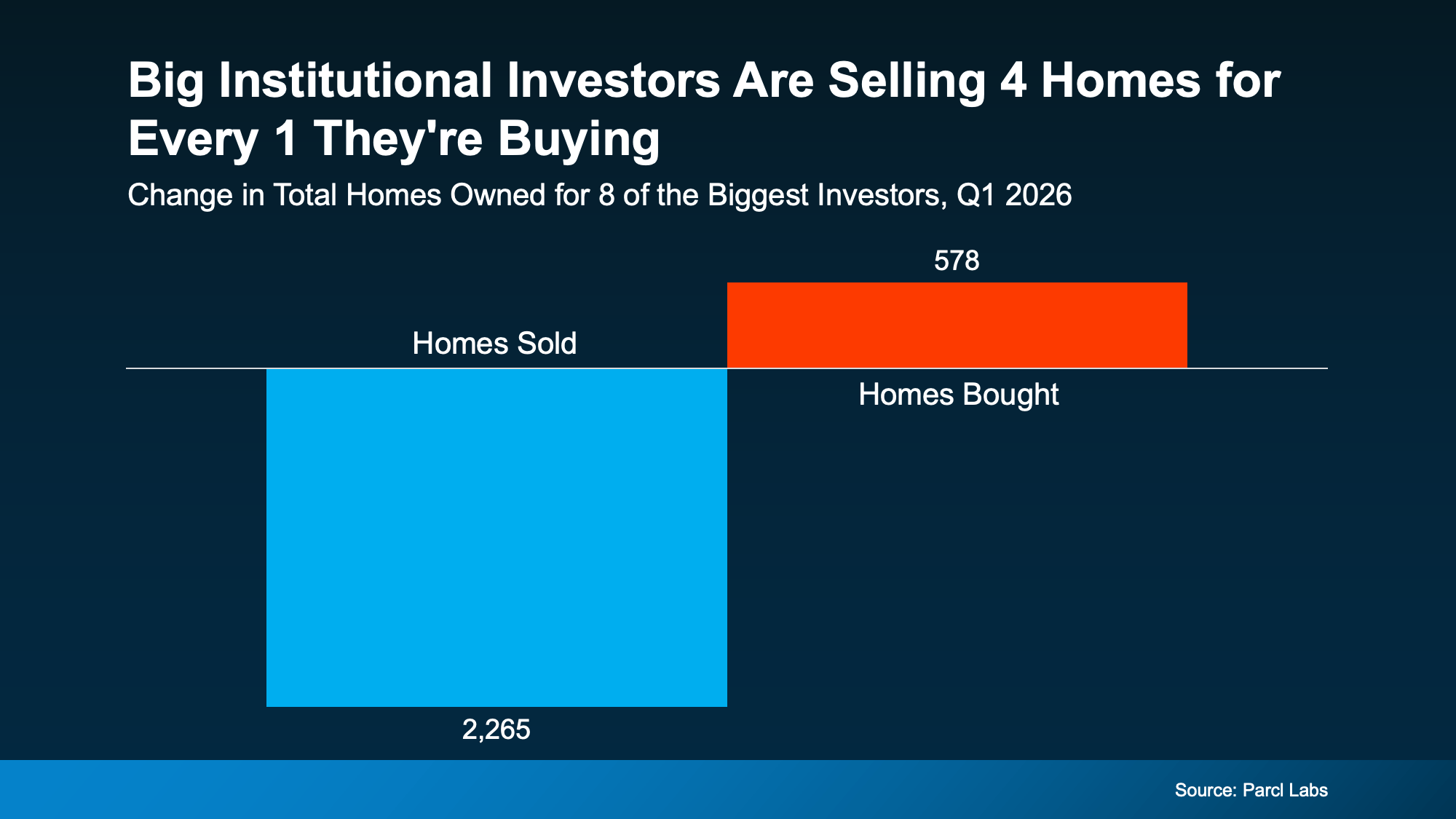
Data from Parcl Labs shows big investors are selling 4 homes for every 1 they’re buying right now (see visual below):

a graph of a home sellingThat means they’ve actually added almost 1.7k homes back into the market lately.

What This Means for You

The story is clear. Instead of aggressively buying up homes, most of these companies are stepping back, which means less competition from them than you might expect. If you were someone who thought they were dominating the market, let that give you some peace of mind.

Most of the competition you’ll face is from other everyday buyers – people just like you. And with most large investors stepping back, there may be more opportunity in the market than you think.

Bottom Line

It’s easy to assume big investors are taking over the housing market, but the data tells a different story. If you want an expert's opinion on what investor activity looks like in our area, let's talk.

Because odds are, it’s not as big a factor as you may think.

The information contained, and the opinions expressed, in this article are not intended to be construed as investment advice. Keeping Current Matters, Inc. does not guarantee or warrant the accuracy or completeness of the information or opinions contained herein. Nothing herein should be construed as investment advice. You should always conduct your own research and due diligence and obtain professional advice before making any investment decision. Keeping Current Matters, Inc. will not be liable for any loss or damage caused by your reliance on the information or opinions contained herein.

Posted in Real Estate
April 8, 2026

Buying A Condo Or Loft In Downtown Tucson: What To Know

Craving a low-maintenance place near Tucson’s best dining, arts, and events? A downtown condo or loft can trade yard work for walkability and transit access, but it also adds layers you do not see in most single-family homes. In this guide, you will learn how parking, HOA rules, financing, and insurance work for Downtown Tucson buildings, plus the questions that protect you during escrow. Let’s dive in.

Why buy in Downtown Tucson

Downtown Tucson brings together distinct districts with restaurants, arts venues, and regular events that keep the streets lively. If you want a true urban lifestyle with culture close by, it is hard to beat. You can explore neighborhood districts and happenings through the Downtown Tucson Partnership.

The Sun Link streetcar and Sun Tran buses connect the Mercado, Congress/Main, 4th Avenue, and the University of Arizona. That network can make daily errands and commuting possible without a car. Before you tour listings, map nearby routes and stops using the Sun Tran route finder.

Transit, parking, and event tips

Downtown relies on on-street meters, time-limited spaces, and public garages. During major events like 2nd Saturdays or the 4th Avenue Street Fair, on-street spaces can be scarce and some garages fill. Review meter and garage options through the city’s Park Tucson visitor parking page.

When you evaluate a condo, confirm how parking works for your unit. Ask whether spaces are deeded on title, assigned by the HOA, or first come. If assigned, request the exact stall location. Also ask about guest parking rules, monthly fees for garages, and event-night access.

HOA disclosures in Arizona

Arizona law requires a formal resale disclosure packet for condos. Under A.R.S. §33-1260, the association (or the seller, depending on the project size) must provide documents within a set timeframe. Ask your agent or escrow officer to order the packet as soon as your offer is accepted and confirm who pays the fee. You can review the statute language at A.R.S. §33-1260.

What is typically inside that packet? Look for CC&Rs, bylaws, rules, the current budget, recent financials, insurance declarations, board and annual meeting minutes, and disclosures about any pending litigation or special assessments. Read these closely. They outline your rights, your obligations, and the association’s financial health.

Reserves and financial health

Arizona does not require a specific reserve balance, but the resale packet must state how much the HOA holds in reserves and include the most recent reserve study if one exists. Pay attention to reserve levels and the age of any study. A thin reserve history or repeated one-time assessments can signal higher risk for future special assessments.

Mixed-use buildings and lending

Many downtown lofts sit over ground-floor retail or restaurants. That mixed-use setup is common and often desirable, yet it can affect financing. Lenders and federal programs look at the share of non-residential floor area when judging project eligibility. As a general rule, projects where non-residential space exceeds about 25 percent of total floor area face tougher approval, and FHA may allow limited exceptions up to 35 percent. Review the federal project guidance summarized in HUD’s Condominium Project Approval and Processing Guide.

Before you fall in love with a unit, ask your lender to check project status. Lenders use Fannie Mae’s tools, including the Condo Status Finder, to see if a building is approved or flagged. If a project is not approved, your lender may need extra documentation or a different loan program.

Practical questions for mixed-use projects

  • How much of the total project is commercial by square footage, and how is that calculated?
  • Are commercial systems (such as ventilation or grease traps) fully separated from residential systems?
  • Who maintains shared infrastructure that serves commercial tenants?
  • Are commercial leases long term, and who manages them?

Get clear answers in writing. If needed, make your approval contingent on lender acceptance of HOA documentation.

Financing options to verify

Condominiums layer building-level underwriting on top of your personal loan approval. Here is what to verify early:

  • Conventional loans (Fannie Mae/Freddie Mac): Project eligibility rules apply, including owner-occupancy levels, delinquency caps, single-entity ownership limits, adequate insurance and reserves, and commercial space limits. Ask your lender to run a project check early.
  • FHA: Unless your lender uses single-unit approval, the project must meet HUD’s condo rules. The non-residential limit is generally 25 percent, with limited-case exceptions up to 35 percent as described in the HUD guide referenced above. Confirm FHA approval or eligibility before you rely on FHA terms.
  • VA: VA maintains its own condo project list. If you plan to use VA financing, have your lender confirm approval immediately.

If a building is non-warrantable due to commercial share, reserves, delinquencies, litigation, high rental ratios, or other factors, you may still find portfolio or non-QM loans. Expect higher rates, larger down payments, and a longer underwriting timeline. For an overview of how non-warrantable financing differs, review this buyer primer on warrantable vs non-warrantable condo loans.

Ask your lender to do this on day one

  • Confirm whether the building shows as approved or ineligible on conventional, FHA, and VA systems.
  • Run a Condo Project Manager or equivalent project review.
  • If non-warrantable, price several alternatives so you understand cost and down payment impacts before you remove contingencies.

Insurance and assessment planning

Your HOA’s master policy typically covers the building exterior and common areas. Your unit’s interior finishes and personal property are usually not covered, which is why condo owners carry an HO-6 policy. Consider adding loss-assessment coverage on your HO-6. That protection can help if the HOA levies a special assessment to cover a large master policy deductible or an uninsured shortfall. For a plain-English overview of master policies, deductibles, and loss assessments, see this HOA insurance explainer.

Ask the HOA for the master policy declarations page and the per-loss deductible amount. Match your HO-6 loss-assessment limit to at least the HOA deductible when possible. Also review whether flood or earthquake are excluded from the master policy.

Due diligence checklist

Use this list during your inspection and escrow window. Build in a document-review contingency so you have time to read everything.

  • Resale packet and fee allocation. Ask escrow to order right after acceptance under A.R.S. §33-1260.
  • HOA budget, cash on hand, reserve study (or confirmation that none exists), and the past 12 months of bank statements. Note any history of special assessments.
  • Insurance declarations for the master policy, including coverage type, limits, and deductibles. Share with your insurance agent to size your HO-6 and loss-assessment coverage.
  • Board and annual meeting minutes for 12 to 24 months, plus any litigation disclosures. Look for mentions of roof work, plumbing, elevators, exterior envelope, or water intrusion.
  • Parking rights and fees. Confirm deeded vs assigned spaces on title, guest policies, monthly garage costs, and event-night access rules.
  • Rental policies. Ask for owner-occupancy and rental percentages, plus any written restrictions on leases or short-term rentals. Confirm whether HOA rules are more restrictive than city rules.
  • Mixed-use details. Request the calculation of non-residential square footage and copies or summaries of commercial leases that describe maintenance obligations.
  • Building systems and inspection scope. Include plumbing risers, electrical capacity, HVAC distribution, roof condition, elevator maintenance, exterior envelope and waterproofing, and pest or termite checks. For adaptive reuse lofts, confirm that fire separation and egress were properly retrofitted.
  • Lender project checks. Require written confirmation of project eligibility for your intended loan type before you remove financing contingencies.

Short-term rentals and taxes

If you plan to rent your unit short term, verify HOA rules and city requirements first. Some associations restrict or prohibit short-term rentals, and city or state taxes may apply. For current Arizona Transaction Privilege Tax information, review the Arizona Department of Revenue’s TPT rate table. Your accountant can help you apply the correct taxes to your rental activity.

Negotiation tips that protect you

  • Make your offer contingent on full HOA review, building inspection, and lender confirmation of project eligibility. If the resale packet is large or litigation is disclosed, request an extended review period.
  • If the project is non-warrantable and you will face a higher rate or down payment, consider negotiating a price adjustment or seller credit.
  • If parking is not deeded or secure, weigh the impact on daily living and resale value. Use that in your negotiations.
  • Time your inspection to include any HOA or building engineer access you need for shared systems.

Ready to explore your options?

Downtown Tucson condos and lofts can deliver a vibrant, car-light lifestyle with strong convenience. The key is a careful review of HOA finances and insurance, early lender checks on project eligibility, and clear parking rights. If you want a trusted local sounding board as you compare urban living to single-family options in greater Tucson, reach out. You will get steady guidance from search to closing with a focus on your long-term goals. Connect with Debbie G. Backus to start the conversation.

FAQs

What makes Downtown Tucson walkable compared to other areas?

  • Downtown clusters restaurants, arts venues, and events within close reach, and Sun Tran and the Sun Link streetcar connect major districts so many errands and outings are possible without a car.

How do Arizona condo resale packets protect me as a buyer?

  • Under A.R.S. §33-1260 the HOA must provide governing documents, budgets, insurance details, minutes, and disclosures about litigation or assessments so you can evaluate risks before closing.

Can I use FHA to buy a loft in a mixed-use building?

  • Possibly. FHA generally limits non-residential floor area to about 25 percent, with case-by-case exceptions up to 35 percent. Ask your lender to confirm project eligibility early.

What is the difference between the HOA’s master policy and my HO-6?

  • The master policy usually covers the building exterior and common areas. Your HO-6 covers interior finishes and personal property, and loss-assessment coverage can help if the HOA levies an assessment.

Why does parking status matter so much downtown?

  • Event nights can strain public parking. Deeded or reliably assigned spaces and clear guest policies make daily life easier and can support resale value.

What happens if the condo project is non-warrantable?

  • Conventional and FHA/VA options may be limited. Portfolio or non-QM loans can work but often require higher down payments and rates, so confirm costs before removing contingencies.
Posted in Real Estate
April 5, 2026

The Remodel You’ve Been Dreaming About May Be Closer Than You Think

That kitchen you’ve been mentally redesigning...

The bathroom that really needs a refresh...

Or the outdoor space you keep saying you’ll get to someday...

What if you already have what you need to finally make it happen? Because a growing number of homeowners are realizing just that.

Homeowners are expected to spend over $522 billion on home improvements by the end of 2026 – and they’re not draining their savings accounts to get it done. Many are using their home equity.

And if you’ve owned your home for 10+ years, there’s a chance you could use your equity to fund some home upgrades too. Let’s break down what you need to know first.

What Is Equity? And How Does It Help?

Equity is the difference between what your house is worth and what you owe on your mortgage.

And according to Cotality, the average homeowner has about $313,000 worth of equity today. That’s more than enough to finally knock some projects off your list. And more people are realizing they can use that to give their home a little TLC.

Research coming out of Meridian Link says home improvements are the top thing people are using their equity for today.

Top Motivations for Equity-Based Borrowing:

  • Funding home improvements (45%)
  • Using it to pay down other debts / debt consolidation (16%)
  • Investing in other properties (16%)

Maybe it makes sense for you to do the same. But here’s what’s important. Just because you can use your equity doesn’t mean you have to. It also doesn’t mean every project makes sense.

What Projects Are Actually Worth It?

If you’re going to go this route, you’ll want to focus on upgrades that actually pay off. A good renovation should be something that improves the value of your home. Because, even if you’re not planning to sell soon, you want to make sure you’re setting yourself up for success when you do.

And an agent is the best resource as you weigh your options. They know what other homeowners are doing and what buyers in your area like. And that can be really helpful as you narrow down your project list. As the National Association of Realtors (NAR) puts it:

“Being able to help sellers prioritize home improvements and maximize their net on the sale is a key value real estate agents offer.”

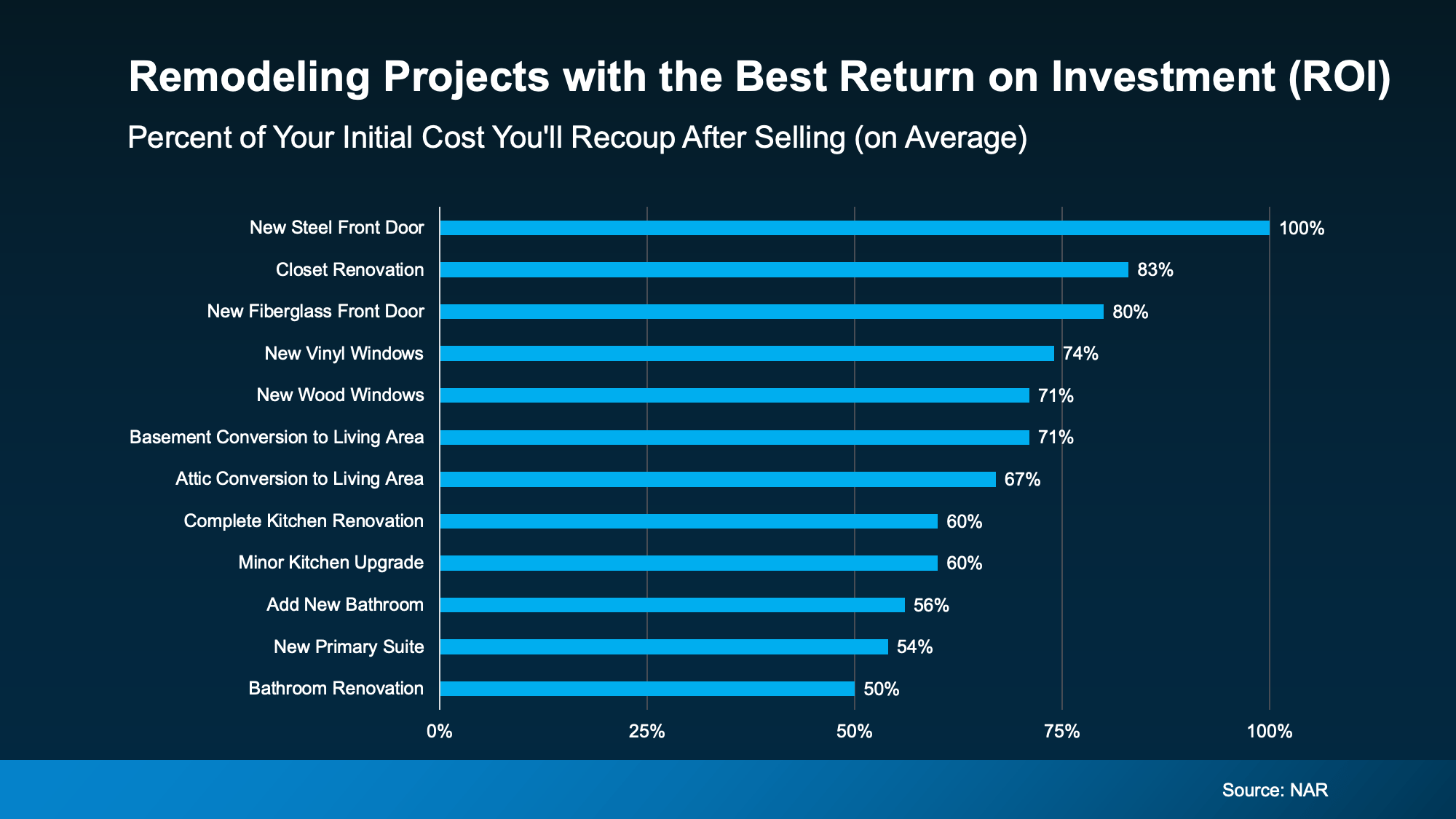
Here’s a quick rundown of the projects with the best potential to recoup your costs according to NAR (see graph below). While it’s a good starting point, just remember it can’t match the expertise an agent can provide.

a graph of a number of blue and white barsAs you can see, there’s a wide range of projects on that list. Yes, some are bigger-ticket items, like kitchens or baths. But others are smaller updates with surprisingly strong ROI.

A new front door is a great project. But it’s not something to use your equity for. But revamping your kitchen? That’s where your equity can come in and lighten the load.

Where To Go from Here

Whether the project you’ve been thinking about is on this list or not, chat with an agent to make sure it’s worth the time, money, and effort before calling in any contractors.

Because the goal isn’t to do everything, it’s to invest where it counts.

And if you want to use your equity to get one of the bigger projects done, meet with a financial advisor too. Because you’ll want to make sure you’ll maintain a good loan-to-value (LTV) threshold even after using your equity. That way you have all the information you need to make your decision.

Bottom Line

Whether you’re selling next year or just giving your house some TLC, the right home improvements today can set you up for success tomorrow. And the best part? Your equity may be the key to making it happen.

What’s one upgrade you’ve been thinking about – and wondering if it’s worth it?

Let’s have a quick conversation about whether it’s the right decision for your home.

The information contained, and the opinions expressed, in this article are not intended to be construed as investment advice. Keeping Current Matters, Inc. does not guarantee or warrant the accuracy or completeness of the information or opinions contained herein. Nothing herein should be construed as investment advice. You should always conduct your own research and due diligence and obtain professional advice before making any investment decision. Keeping Current Matters, Inc. will not be liable for any loss or damage caused by your reliance on the information or opinions contained herein.

Posted in Real Estate
April 2, 2026

The #1 Reason Buyers Walk Away (And How To Get Ahead of It)

You may have seen headlines on social saying the number of buyers backing out of their contracts is on the rise – and has recently reached a high not seen since 2017. That can sound intimidating. But it varies a lot by market.

And here’s the key thing to understand if you want to sellA lot of the time, there’s one common cause. And it’s something you can actually control.

Here’s what you can do to get ahead of the biggest dealbreaker before it ever becomes a problem.

The Top Dealbreaker: Issues That Pop Up During the Inspection

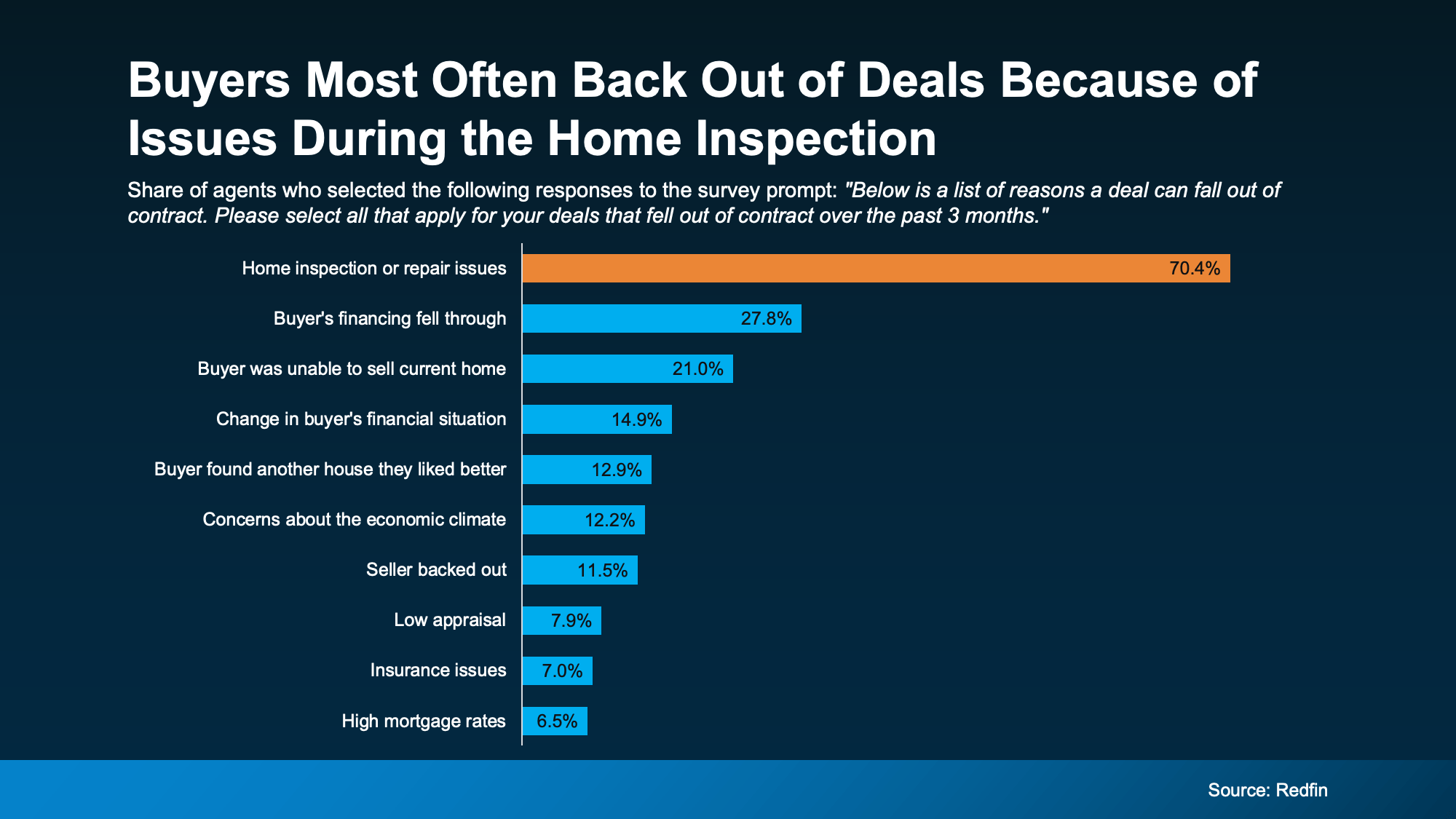
A Redfin survey shows over 70% of recently cancelled contracts happened because of issues during the home inspection (see graph below): 

a screenshot of a surveyAnd that makes sense. Because today’s buyers have something they didn’t have a couple of years ago: options.

Why Fixing Things Before You List Matters More Today

A few years back, when buyers felt rushed or boxed in due to the limited number of homes for sale, they were more willing to overlook issues.

But in today’s market, skipping essential repairs is one of the fastest ways to lose a deal.

Now that there are more homes to choose from, buyers can be more selective. If a house feels risky, outdated, or like it’s hiding expensive surprises, they’re a lot more likely to walk away. So, what do you have to fix? Just ask an agent.

How Your Agent Can Help Give You the Edge

A local agent will be able to walk through your house and offer advice on what to tackle based on your specific home, your market, and what buyers are prioritizing in your area. They'll also have first-hand knowledge about some of the biggest turnoffs for buyers today. And you can use that expertise to prevent future headaches.

For example, according to Zillow, these are some of the issues buyers will care the most about:

  • Roof leaks or damage: sagging, leaking, etc.
  • Plumbing problems: standing water, leaks, water damage, etc.
  • Electrical concerns: outdated or exposed wiring, missing GFCI outlets, etc.
  • HVAC issues: non-functioning units
  • Pest or insect damage: termite colonies, etc.
  • Hazardous materials: lead, mold, asbestos, etc.
  • Safety/code violations: missing smoke detectors, windows stuck closed, etc.
  • Structural problems: cracks in the foundation, sagging floors, etc.


Odds are not all of this even applies to your house. Maybe only 1-2 things do. Or maybe none of them do. It just depends. But an agent will have the tools and resources to help you figure it out and stay one step ahead.

The Benefits of a Pre-Listing Inspection

To buyers, these aren’t cosmetic issues. They’re trust issues. And that’s what you need to watch out for today. Once buyers start wondering “what else might be wrong,” it’s hard to recover momentum.

That’s why some agents are even recommending a pre-listing inspection as a sneak peek into what buyers will see on their own inspection. With that insight, you can:

  • Fix concerns before you list, or disclose issues upfront
  • Avoid having to respond or negotiate under pressure
  • Stop scrambling to find contractors with availability before your closing date

But remember, you don't have to fix everything. You just have to be strategic about what you do tackle, so you and your buyer aren’t caught off guard.

And that’s why you need an agent who can:

  • Decide if a pre-listing inspection is worth it where you live
  • Recommend a trusted inspector (if you decide to get one)
  • Look at the results with you to identify true dealbreakers in your market
  • Help you decide what to fix or what to credit
  • Make sure you avoid over-spending or under-preparing

Bottom Line

One of the biggest dealbreakers for buyers today is inspection issues – and that’s something you can control. You just need to be proactive about high-impact repairs before you list.

If you want help figuring out where to focus, let's connect so we can keep your sale on track from day one.

The information contained, and the opinions expressed, in this article are not intended to be construed as investment advice. Keeping Current Matters, Inc. does not guarantee or warrant the accuracy or completeness of the information or opinions contained herein. Nothing herein should be construed as investment advice. You should always conduct your own research and due diligence and obtain professional advice before making any investment decision. Keeping Current Matters, Inc. will not be liable for any loss or damage caused by your reliance on the information or opinions contained herein.

Posted in Real Estate
March 30, 2026

Should You Wait for Lower Rates?

Mortgage rates have already dropped into the upper 5s twice this year. But after just a few days, they ticked back up into the low 6% range. If you saw that and thought, “Great. I missed it,” you’re not the only one.

A lot of buyers are treating the 5s like some kind of magic number. As if moving from 6.1% to 5.99% suddenly changes everything. And from a mindset perspective, it does feel different.

But here’s the part most people don’t actually run the math on.

The Payment Difference Isn’t What You Think

Let’s say you’re looking at a $500,000 home loan. At 6.1%, generally speaking, your principal and interest payment is roughly $3,030 per month. At 5.9%, it’s about $2,966 per month.

That’s a difference of only $64 a month.

Not $300.

Not $500.

Sixty dollars.

Let that sink in for just a moment.

a blue and green rectangular box with white textYes, over time that $64 a month can add up. But it’s far from the dramatic swing many buyers imagine when they say they’re “waiting for the 5s.”

The psychological impact of seeing a 5 in front of your rate can feel big. The financial impact? It might be something you don’t even notice when it’s all said and done.

Experts Aren’t Predicting a Big Drop

Another important piece to think about: most housing economists aren’t forecasting a long-term return to 5% territory anytime soon.

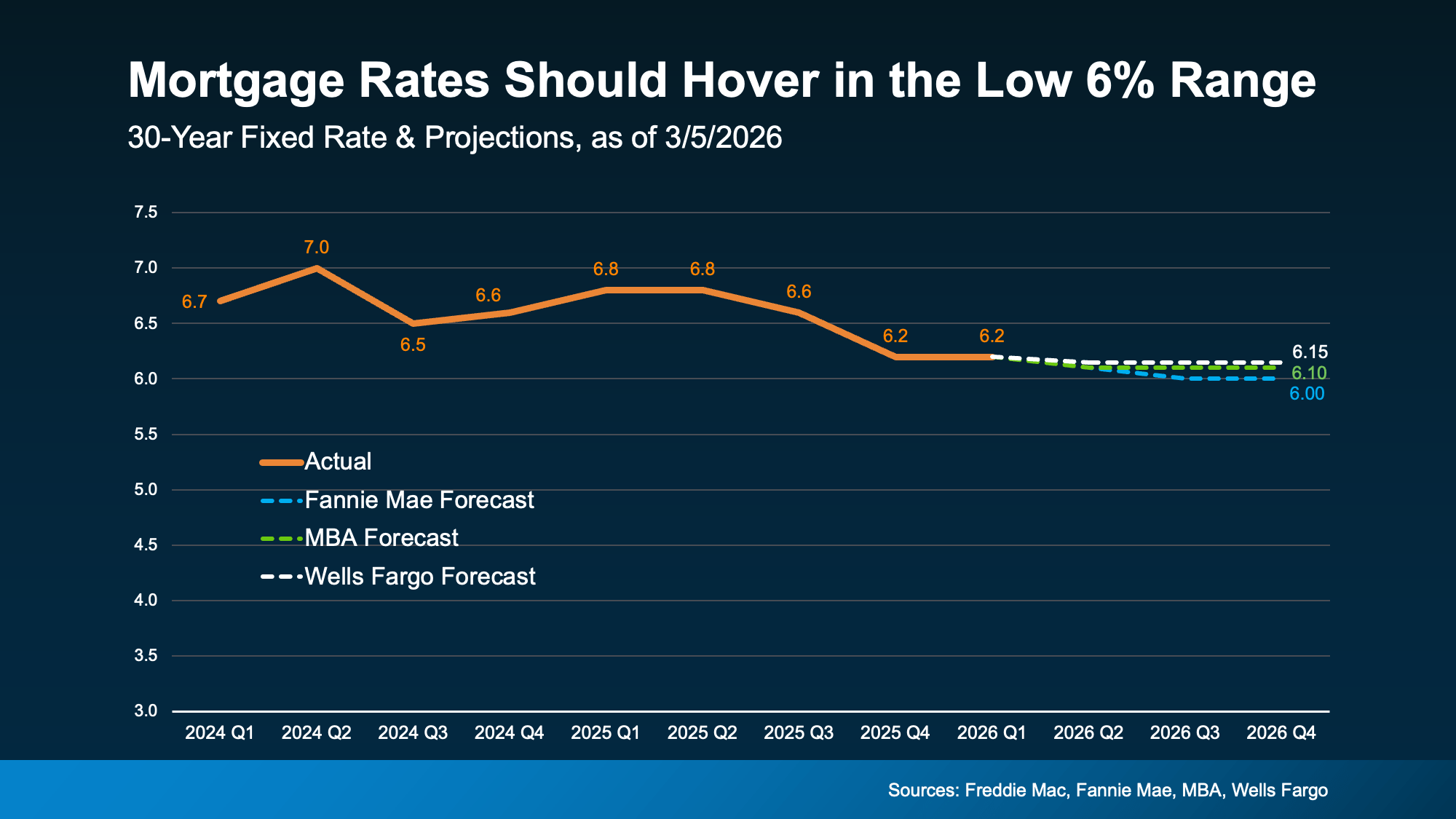
While rates will move up and down, likely hitting the high 5s here and there, the broader expectation is for mortgage rates to hover in the low 6% range this year, not stay in the 5’s or decline much more.

a graph with numbers and linesWhile it certainly could happen, the reality is, waiting for a deep drop may not deliver the payoff you’re hoping for, if you’re holding out

The Bigger Question to Ask

Instead of asking, “Did I miss the 5s?” A better question is: “Does today’s payment work for me?” 

If the monthly payment fits comfortably in your budget, and you’ve found a home that meets your needs, the difference between 6.1% and 5.9% likely isn’t the deciding factor. It might be one of them, but it shouldn’t be everything. 

And remember, mortgage rates aren’t permanent. If they drop meaningfully later, refinancing is always an option. But you can’t refinance a home you didn’t buy.

Waiting Might Feel Safe, But It Isn’t Always Strategic

It’s natural to want the best possible rate. Everyone does. But sometimes buyers overestimate how much a rate in the high 5s will change things in today’s market.

Don’t miss the fact that rates have already come down. A year ago, they were in the 7s. Now? They’re hovering in the low 6s. And for a lot of people, that percentage point difference that’s already here is the real game changer.

If you paused your plans when rates were higher, now may be the right time to re-run your numbers. Not because rates are “perfect.” But because the monthly payment math might work better than you think, even with rates in the low 6s. 

Before assuming you’ve missed your moment, take another look at the numbers.

You may find it never disappeared.

Bottom Line

If you’ve been sitting on the sidelines waiting for that magic number for rates, that strategy may not pay off as much as you’d expect.

Let's connect so you can double check the math at your price point. You may realize payments are already within your range.

The information contained, and the opinions expressed, in this article are not intended to be construed as investment advice. Keeping Current Matters, Inc. does not guarantee or warrant the accuracy or completeness of the information or opinions contained herein. Nothing herein should be construed as investment advice. You should always conduct your own research and due diligence and obtain professional advice before making any investment decision. Keeping Current Matters, Inc. will not be liable for any loss or damage caused by your reliance on the information or opinions contained herein.

Posted in Real Estate
March 27, 2026

Vail vs Corona de Tucson Homes: Choosing Your Desert Base

Trying to choose between Vail and Corona de Tucson for your desert home base? You are not alone. These two southeast Tucson communities share the same wide skies and mountain views, yet they live a little differently day to day. In this guide, you will compare commutes, amenities, lot sizes, and new construction so you can pick the spot that fits your life best. Let’s dive in.

Where they are and how you get around

Both Vail and Corona de Tucson sit southeast of central Tucson within a similar distance band. Many Vail neighborhoods are roughly 24 miles from downtown Tucson, which often puts you in the 20 to 30 minute drive window in light traffic according to Vail’s overview. Central points in Corona de Tucson typically fall in the same 20 to 30 mile range to downtown, with a practical 25 to 35 minute drive depending on route and time of day based on common routing estimates.

Your main corridor is Interstate 10 for quick access to downtown, the UA Tech Park, Tucson International Airport, and east-side employers. Houghton Road, Old Spanish Trail, local collectors, and the Valencia Road extension tie neighborhoods into I‑10 and have improved access patterns in recent years as local development updates note. Always test the specific route you would use at the times you plan to travel.

Seasonal weather and I‑10 incidents can affect reliability at times. During monsoon season, heavy rain and crashes can cause significant delays, so build a buffer into important trips. Check regional traffic advisories for current conditions.

Commute snapshots

Downtown Tucson

  • Typical drive: about 25 to 35 minutes from many points in Vail or Corona in light traffic. Add 10 to 20 minutes for peak hours or big events.
  • Tip: Test both I‑10 and Houghton-access routes during morning and evening peaks with a route check.

UA Tech Park, Raytheon, and the airport

  • UA Tech Park and Raytheon: often 20 to 35 minutes, depending on which gate you use and your neighborhood’s connection to I‑10 and Houghton.
  • Tucson International Airport: commonly around 20 to 30 minutes from much of both areas in light traffic.

Davis‑Monthan AFB and east‑side employers

  • Plan roughly 20 to 40 minutes depending on your exact origin and route. Your results will vary by gate location and time of day.

Public transit reality

  • Both areas are primarily car‑dependent. Regional transit exists, but routes from these neighborhoods can be long with transfers. For example, sample trips to the University of Arizona can exceed 60 minutes per regional transit information. For daily commuters, a personal vehicle is the practical baseline.

Community feel and daily amenities

Vail: foothills access and space

You get immediate access to the Rincon foothills, Colossal Cave, and Saguaro National Park East. That makes hiking, equestrian use, and mountain views part of daily life for many households. Vail blends foothill and estate pockets with growing master‑planned neighborhoods and suburban conveniences as outlined in Vail’s overview.

Retail and services continue to fill in along the Houghton corridor. Houghton Town Center and nearby nodes provide grocery, medical, and everyday shopping that serve both Vail and Corona residents per regional development updates.

Corona de Tucson: quiet foothills vibe with neighborhood amenities

Corona reads as a foothills-suburban mix with multiple planned subdivisions. Some sections include HOA amenities like parks and pools, and certain pockets offer a golf and country‑club identity. Other streets have a more low‑amenity feel, which can appeal if you prefer fewer shared features. Residents describe it as quieter and more rural in feel than inner-city areas while still commuter‑convenient.

Lot sizes and home types you will see

Both areas offer a spectrum, but the patterns differ in helpful ways when you are shortlisting.

  • Vail lot mix: You can find small suburban lots roughly 6,000 to 9,000 square feet in many builder phases alongside estate and ranchette parcels of about 0.5 to 3+ acres in foothill pockets. Expect a blend of resale and new‑build options, with some neighborhoods bordering preserved open space for added privacy and view corridors.
  • Corona de Tucson lot mix: Many recent listings and builder phases cluster on suburban lots around 0.15 to 0.25 acre. That means simpler yard upkeep and more compact neighborhoods. Select gated or estate areas within Corona offer larger lots if you want more elbow room.

If “big sky plus big acreage” is non‑negotiable, you will likely focus on Vail’s foothill and estate pockets. If you want a newer floor plan with a quicker move‑in on a smaller lot, both areas have options, with Corona often skewing smaller-lot suburban in its recent phases.

New construction hot spots

  • Vail: Rocking K is the headline master‑planned community and a major new‑build hub for southeast Tucson. National builders have committed to multiple phases, with a planned network of trails and parks across the community as the developer reports. Rocking K uses a Community Facilities District in certain phases, so budget for an additional tax assessment if you buy within those CFD boundaries.
  • Corona de Tucson: You will see activity across subdivisions such as Santa Rita Ranch, Sycamore Canyon, and Sycamore Vista. Product often concentrates on smaller suburban lots with quick‑move homes, though you can still find larger custom and gated offerings in select pockets.

Questions to ask any builder or sales office:

  • Is the lot inside a CFD and what is the estimated annual assessment and term as local development notes explain?
  • Which utilities are stubbed to the lot, including water, sewer, gas, and broadband?
  • What are the standard build timelines and warranty coverages?
  • Do CC&Rs or design standards affect future additions, exterior finishes, or fencing?

Utilities, HOAs, and CFDs to verify

Arizona desert living often means double‑checking the basics early in your search. Here is what to confirm in the first 30 to 60 days.

  • Water and sewer: Some rural or older parcels use onsite wastewater systems. Pima County requires a qualified septic inspection within six months before a property transfer when a home is served by onsite wastewater. Confirm sewer versus septic and obtain inspection records early per Pima County’s guidance.
  • HOAs: Many master‑planned neighborhoods have HOAs that maintain common areas and amenities. Fees and CC&Rs vary. Request budgets, reserves, and rules up front so you understand exterior, rental, and parking policies.
  • CFDs: Larger master plans like Rocking K may use a Community Facilities District to finance infrastructure. That appears as an extra property tax assessment on homes inside the district. Ask for full disclosures on the amount and term before you write an offer as outlined in local development materials and review the community’s information on the Rocking K site.
  • Broadband and power: Options vary from fixed wireless to cable or fiber in newer phases. Confirm providers and speeds for the exact address, and check electrical capacity if you plan EV charging or a home office using local utility and provider resources.

Which one fits your lifestyle

Choose Vail if you want:

  • Larger lot options and foothill or ranchette settings.
  • Direct access to recreation like Saguaro National Park East and Colossal Cave.
  • A mix of custom sites and active master‑planned choices such as Rocking K.

Choose Corona de Tucson if you want:

  • A foothills‑suburban feel with many smaller‑lot neighborhoods.
  • Quieter desert surroundings while staying commuter‑convenient.
  • Options that include HOA amenities in select subdivisions and some gated sections.

Not sure which side of the line fits? Think about how you spend weekdays versus weekends. Your preference for lot size, HOA structure, and trail or course amenities usually points clearly to one or the other.

A smart first‑month checklist

Use this quick plan to compare specific addresses.

  • Drive the commute during your actual peak hours and map alternate routes. Note employer gate access and parking.
  • Verify water and sewer status. If septic, order inspections early and review maintenance history following county rules.
  • Request HOA and CC&R documents, plus budgets and reserves, to check any restrictions that matter to you.
  • Ask whether the lot sits inside a CFD and get written disclosures on assessments and terms from developer or HOA sources.
  • Compare lot orientation, grading, and privacy buffers. Views and solar gain can differ dramatically even within the same tract.
  • Confirm internet options and electrical capacity if you need high bandwidth or plan EV charging using provider tools.
  • If schools are part of your logistics, use the district’s tools to confirm which schools serve a specific address and how boundaries apply via Vail School District.

Your next step with a local guide

You deserve straightforward, lot‑level guidance before you choose a neighborhood. As a boutique, locally rooted brokerage and developer in Vail and the Rincon Valley, we help you weigh commute reliability, HOA and CFD details, and site characteristics like views and grading long before you write an offer. If you want direct access to custom‑lot inventory, builder introductions, or curated resale options on acreage, reach out to Debbie G. Backus for a confidential, no‑pressure conversation.

FAQs

How far are Vail and Corona de Tucson from downtown Tucson?

  • Many Vail neighborhoods are roughly 24 miles from downtown, and central Corona points are commonly 20 to 30 miles out. In light traffic, plan about 25 to 35 minutes. Confirm your exact route and time with a live map check using these reference points.

Is Rocking K in Vail and what should I know about CFDs there?

  • Yes. Rocking K is a major Vail master plan with multiple national builders. Certain phases use a Community Facilities District, which adds a separate tax assessment. Ask for written CFD disclosures and review community materials before you buy on the Rocking K site and in local development notes.

Do homes in these areas often use septic systems?

  • Some rural or older parcels do. Pima County requires a qualified septic inspection within six months prior to transfer when a property is served by onsite wastewater. Verify sewer versus septic and get records early in due diligence per county guidance.

Are Vail or Corona de Tucson good for commuting to Raytheon, UA Tech Park, or the airport?

  • Yes. Many routes run about 20 to 35 minutes in light traffic, with longer times during peaks. Test your exact address-to-campus gate routes at commute hours, and plan buffers for I‑10 incidents when needed using sample drive‑time checks.

Which school district serves homes in Vail and Corona de Tucson?

  • Many neighborhoods in both areas are within the Vail School District, but school boundaries vary by street. Confirm the assigned schools for any address using the district’s tools on the Vail School District site.
Posted in Real Estate
March 24, 2026

The Hidden Advantage Repeat Buyers Have Right Now

What if you didn’t have a mortgage payment on your next house? It may sound a little unrealistic. But for a number of homeowners, it’s actually doable.

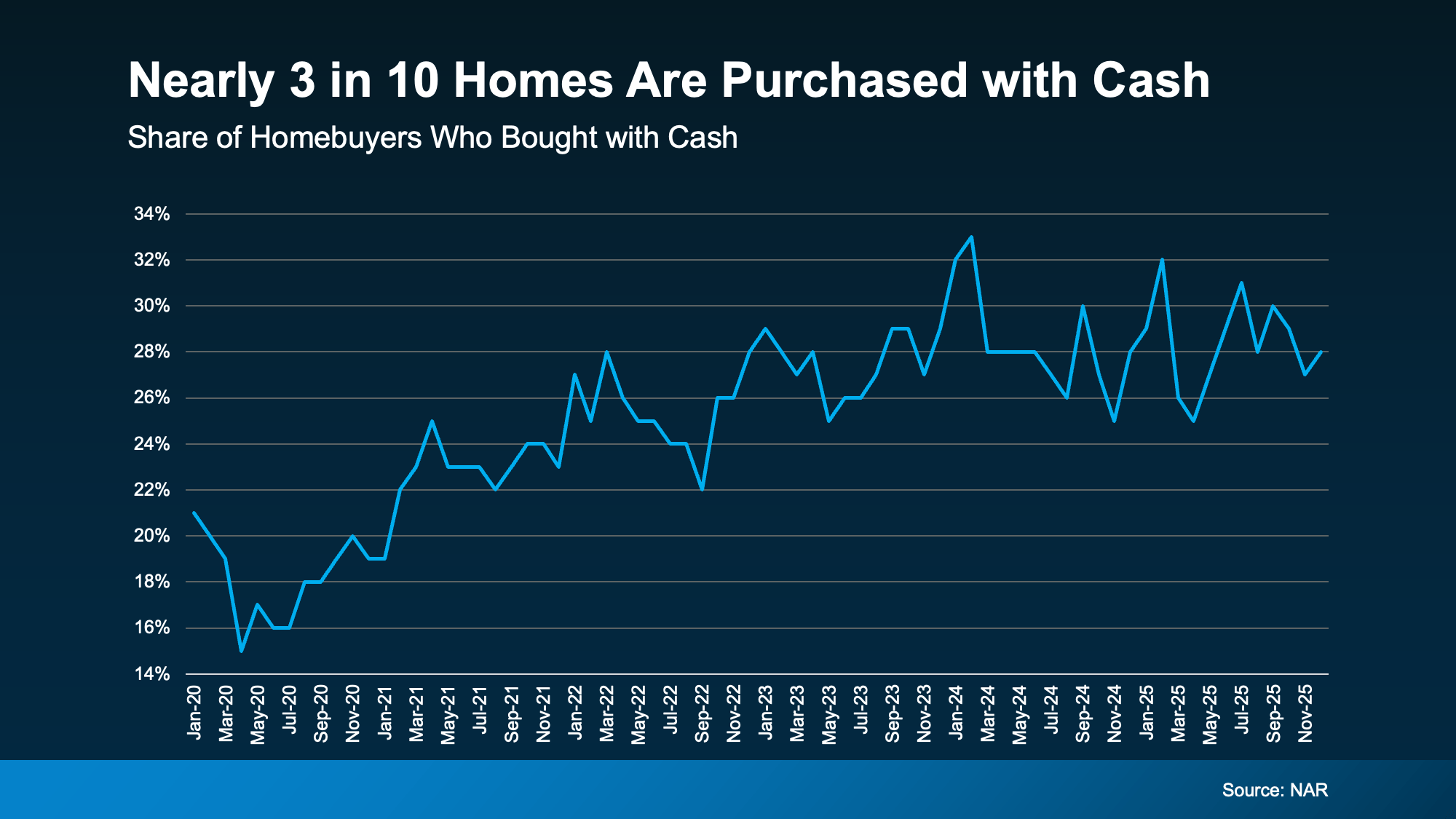
Nearly 3 in 10 homes purchased today are bought in cashaccording to the National Association of Realtors (NAR). That’s far more than the pre-pandemic norm (see graph below):

So, how are so many buyers pulling that off? The answer is simple: home equity.

Back in 2020-2021, mortgage rates and the number of homes for sale were both at all-time lows. And that combination pushed home prices up, fast.

If you owned a home during that time, it likely gained significant value  maybe even enough to buy your next house in cash. NAR explains:

“. . . rising home equity has armed many existing homeowners with the financial leverage to make cash offers, allowing them to convert years of price appreciation into immediate purchasing power.”

Here’s why you may want to go that route yourself, if you have enough equity to do it.

1. Your Offer Becomes More Attractive

Sellers value certainty. And an all-cash offer removes one of the biggest unknowns in a transaction: financing. As Rocket Mortgage explains:

Cash offers are attractive to sellers. Sellers often prefer to work with cash buyers if they can because they don’t have to worry about a buyer’s financing falling through at the last minute.”

In many markets, an all-cash offer can give you a serious edge.

2. You Can Close Faster

And since you don't have to worry about underwriting, lender approvals, and loan processing, the time it takes to close shrinks. Cotality puts it this way:

“Cash buyers have always enjoyed an edge over borrowers. They remove financing risk, reduce delays, and often close in days rather than weeks.”

If the owner of the house you're buying is already under contract on their next home or they just need to move fast (like for a new job), that speed is a real draw.

3. You Won't Have Monthly Mortgage Payments

When you buy in cash, you don’t have to finance your purchase. That means you don’t have to worry about what today’s mortgage rates are and you own the house outright from the day you close. And that’s a big deal.

No mortgage.

No monthly payment.

Full ownership.

That financial freedom opens the door for other big lifestyle benefits. Zillow explains:

“Paying in cash means you own your home outright. This eliminates the need for monthly mortgage payments, freeing up your finances for other priorities like savings, travel, or home improvements.”

4. You May Get a Better Deal

And here’s one more thing that surprises a lot of homeowners: cash buyers often pay less for the house.

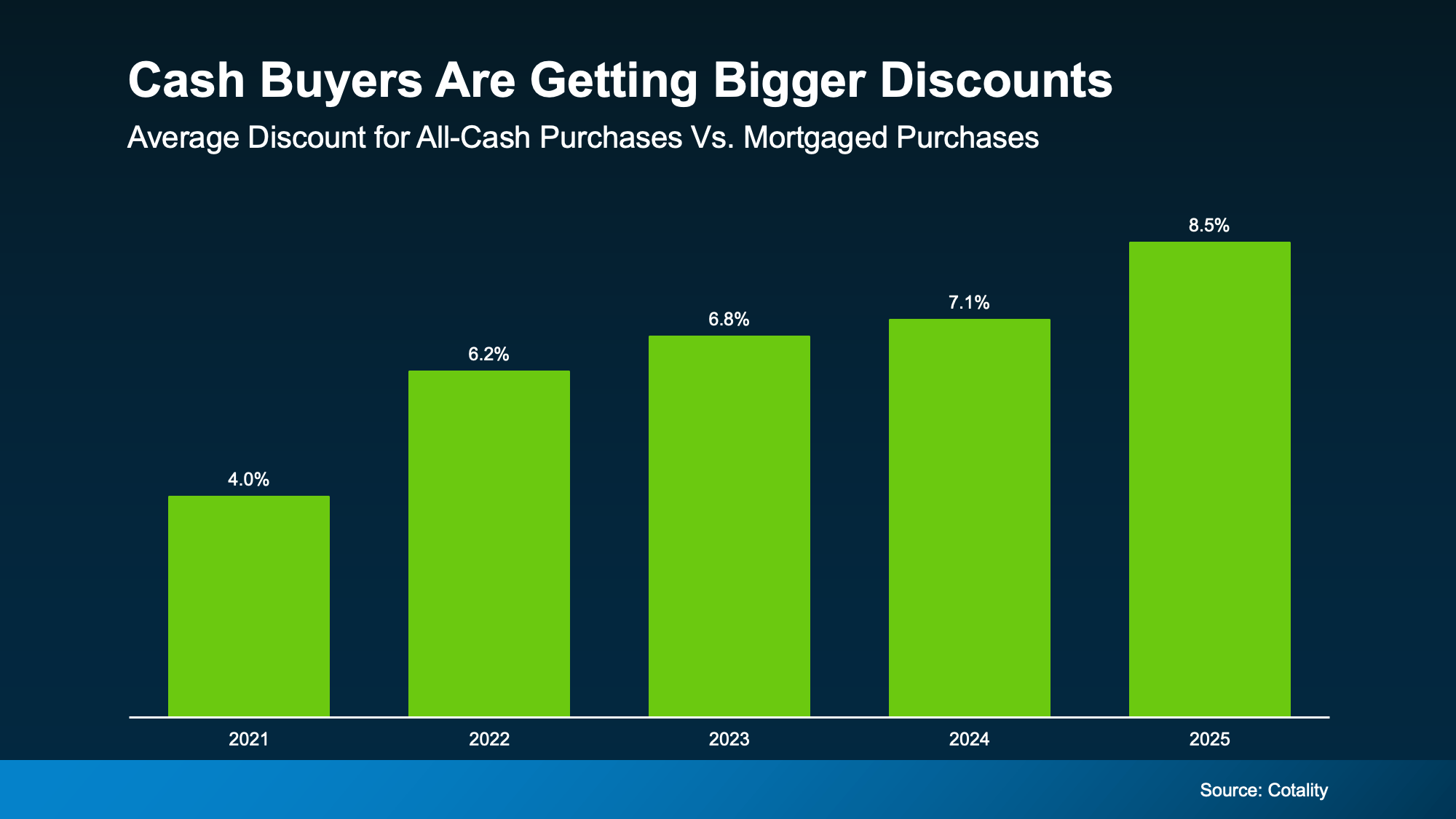
According to Cotality, all-cash buyers tend to spend roughly 9% less on the house than buyers who use a mortgage. That’s because some sellers are willing to accept lower offers to get a deal done quickly, with more certainty of closing, and fewer financing hoops to jump through. As Cotality explains:

“From a seller’s point of view, a lower but reliable offer can feel preferable to a higher one that may collapse weeks later.”

And that advantage grows with each passing year (see graph below):

Is an All-Cash Move Realistic for You?

Not every homeowner will buy their next house outright in cash. And that’s okay.

But the bigger takeaway is this: the equity you’ve built may give you more options than you think. 

Whether that means downsizing and eliminating a mortgage entirely, or just relocating with stronger negotiating power, your current house may be what makes it possible.

Bottom Line

Before assuming you’ll need another traditional mortgage, it’s worth asking one simple question: How much equity do you really have? Because the answer might change what you thought your next move could look like.

Curious what your home equity could do for you? Let’s run the numbers and see what kind of buying power you’re really sitting on.

The information contained, and the opinions expressed, in this article are not intended to be construed as investment advice. Keeping Current Matters, Inc. does not guarantee or warrant the accuracy or completeness of the information or opinions contained herein. Nothing herein should be construed as investment advice. You should always conduct your own research and due diligence and obtain professional advice before making any investment decision. Keeping Current Matters, Inc. will not be liable for any loss or damage caused by your reliance on the information or opinions contained herein.

Posted in Real Estate
March 21, 2026

How Your Equity Could Help Younger Generations Buy a Home

For a lot of parents or grandparents, watching a family member struggle to buy their first home right now is hard. That's because you saw firsthand how homeownership gave your life more stability and helped grow your net worth – and you want your loved ones to have those same opportunities.

But with all the affordability challenges in recent years, that can feel like an uphill battle – even though it’s slowly improving lately. Here’s what you may not realize. You may be in a unique position to help (thanks to the equity in your current house).

The Equity Advantage You May Not Be Thinking About

You’ve likely owned your home for years, maybe even decades. And during that time, two things happened:

  • Home values rose
  • Your mortgage balance shrank (or you paid it off entirely)

That combination has created substantial equity for many homeowners like you.

And while you may think of that equity as something you want to have in your pocket for retirement, it can also serve another purpose: helping the next generation clear the biggest hurdle in their way.

The #1 Thing Holding Young Buyers Back

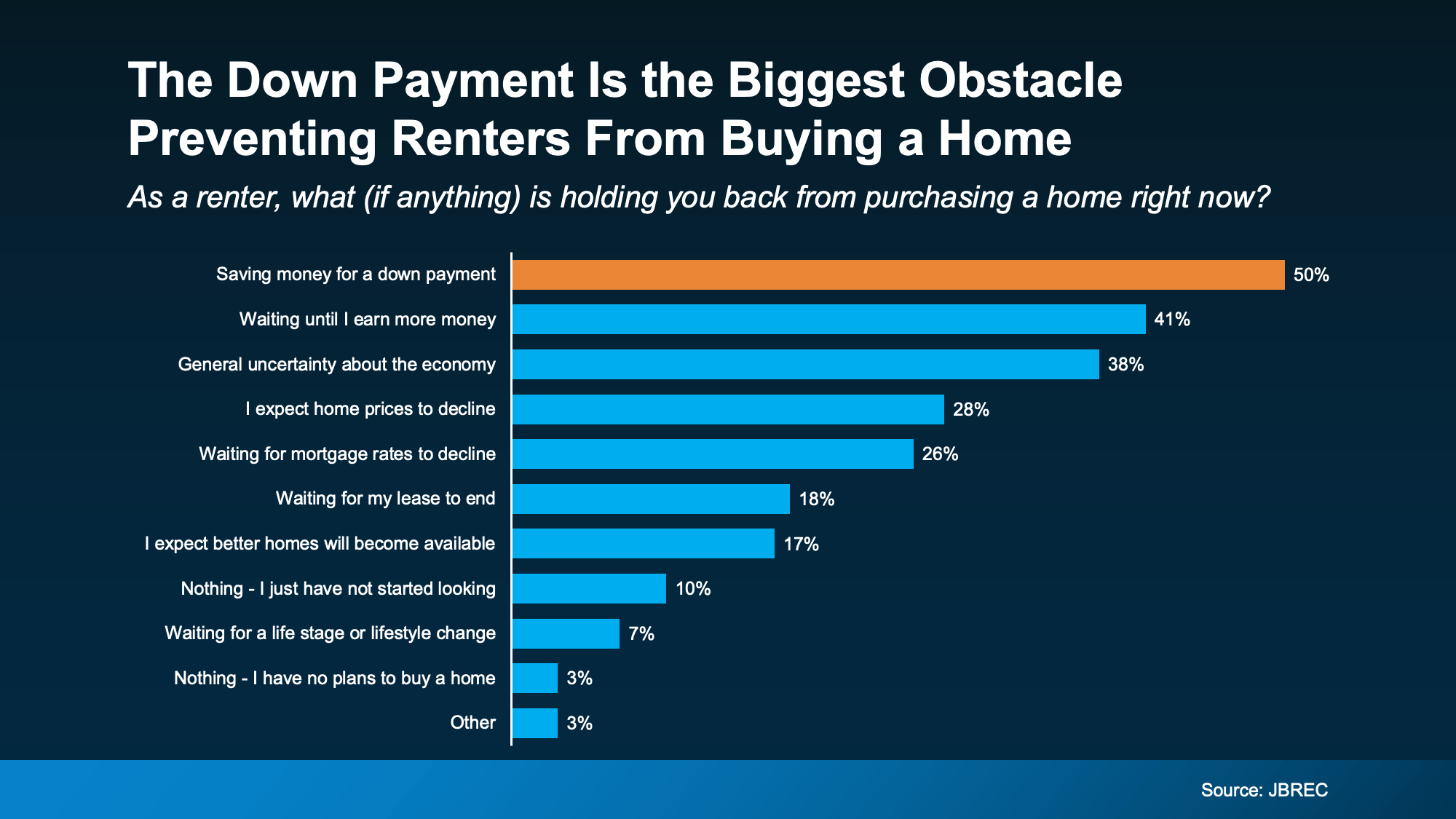
When John Burns Research & Consulting (JBREC) asked renters what’s keeping them from buying, the top answer wasn’t mortgage rates or home prices. It was the upfront cost, particularly saving enough for their down payment (see graph below):

a graph of a home purchaseThat’s where you may be able to make more of a difference than you realize. You can’t control rates or prices. But you may be able to use your equity to help with this upfront expense. And giving money to your loved one so they buy a home doesn’t mean putting your own future at risk.

Even a small portion of your equity can put them in a position to finally get the keys to their first place – and, if you’re strategic about it, you’d still have a lot leftover for when you retire.

With an estimated $68 and $84 trillion of wealth expected to transfer from older generations to younger ones over the next two decades, many families are already thinking differently about when and how that wealth will be passed down. Maybe it makes sense for your family to think about too.

Help from Loved Ones Is Making a Move Possible for Many First-Time Buyers

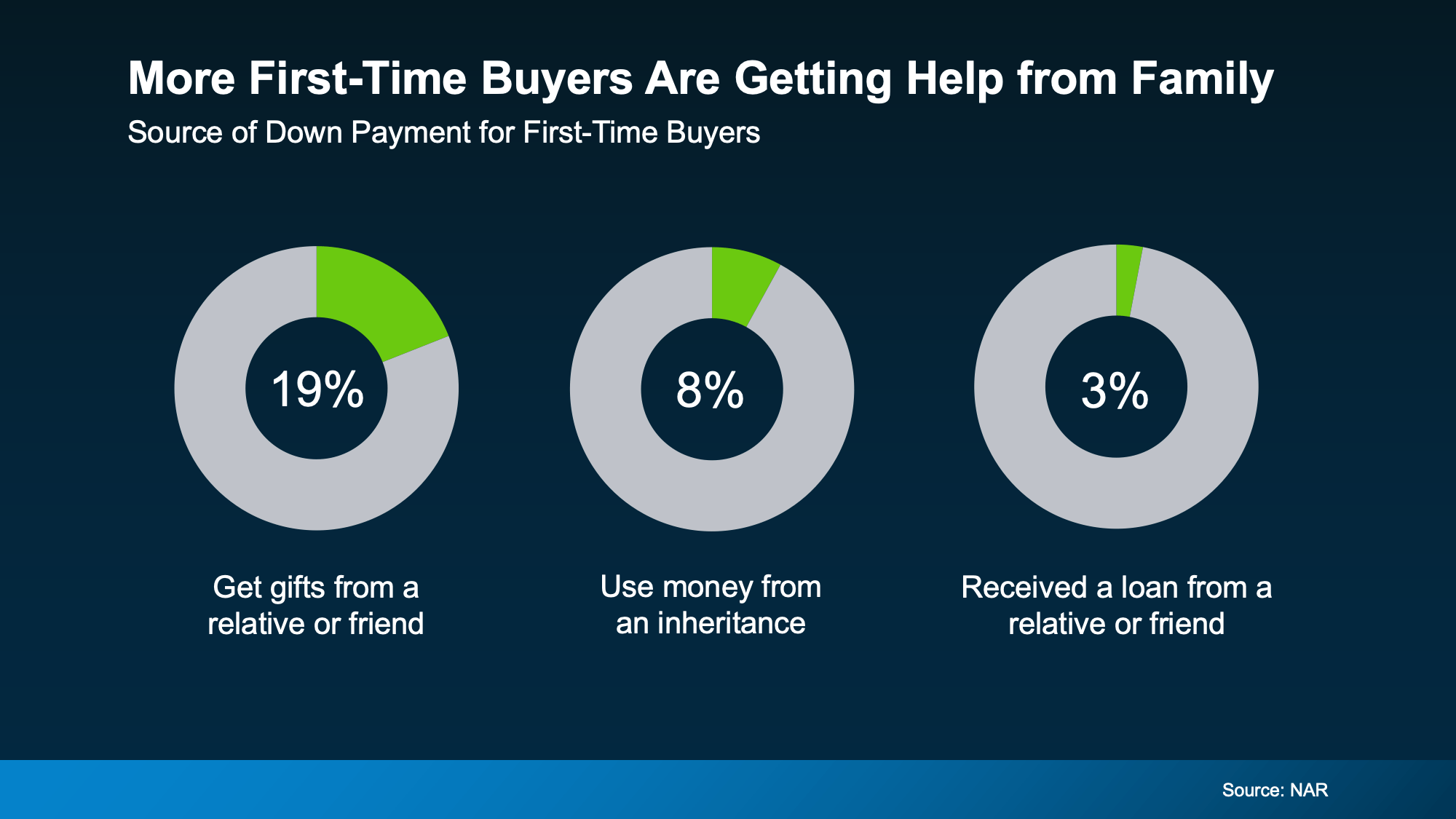
A growing share of young buyers are using gifts and loans from their loved ones to springboard into homeownership. According to the National Association of Realtors (NAR), nearly 1 in 5 first-time buyers use a cash gift from their family or loved ones for their down payment.

And other young buyers are using their inheritance or a loan from someone they know to finally break into the market (see charts below):

This Is About Opportunity, Not Obligation

Every family’s situation is different, and your decision should be made carefully. It’s just that, if you’ve built up a lot of equity, you may have more room to help than you think.

It’s not just a financial gift. It’s giving stability, security, and a foundation that could change their lives for the better – especially at a time when they may not be able to do it on their own.

Bottom Line

If you’re curious what your home equity could make possible, for you or for your loved ones, let’s start with a simple conversation. Because sometimes the most meaningful investment you can make is for the next generation.

The information contained, and the opinions expressed, in this article are not intended to be construed as investment advice. Keeping Current Matters, Inc. does not guarantee or warrant the accuracy or completeness of the information or opinions contained herein. Nothing herein should be construed as investment advice. You should always conduct your own research and due diligence and obtain professional advice before making any investment decision. Keeping Current Matters, Inc. will not be liable for any loss or damage caused by your reliance on the information or opinions contained herein.

Posted in Real Estate
March 18, 2026

Living in the Rincon Trails Vail Neighborhood

Craving big desert sky without giving up sidewalks and quick errands? Rincon Trails might be the fit you’ve been looking for. You get roomy lots, an easy neighborhood rhythm, and fast access to hiking and scenic drives. In this guide, you’ll learn where Rincon Trails sits, what the homes and lots are like, the trail and park options nearby, HOA basics, shopping and commute context, and how it compares to true acreage living in Rincon Valley. Let’s dive in.

Quick orientation

Rincon Trails sits in the Vail area of southeastern Pima County, within ZIP 85641. Vail is about 24 miles southeast of Tucson, so you’re close enough for work and entertainment while enjoying a more open desert setting (Vail overview).

The neighborhood feels spacious and orderly. Streets are paved, there are sidewalks, and small park areas and short walking paths are part of everyday life. Lots are larger than many suburban tracts, so you get room to breathe without heading deep into ranch country.

Trails and open space

In‑neighborhood strolls

Inside Rincon Trails, you’ll see sidewalks and short walking paths that loop through the subdivision. Many listings also note a small neighborhood park and courts for casual play. It’s convenient for a morning walk, quick post‑school spin, or an easy jog.

Colossal Cave Mountain Park nearby

For real trail time, head to Colossal Cave Mountain Park, just up the road in Vail. The park offers several public non‑motorized trails, including the Bundrick Trail, Path of the Ancestors, and a 3‑mile section of the Arizona Trail. Residents use it for hiking, mountain biking, and horseback rides. Find maps and current guidance on the park’s official trail page.

Saguaro National Park East access

Saguaro National Park’s Rincon Mountain District is a short drive from the Vail area. It features the paved Cactus Forest Drive, plus popular trailheads like Mica View and Desert Ecology, and longer backcountry routes for experienced hikers. Before you go, review current visitor info and tips from the National Park Service. The combination of neighborhood paths and nearby national park trails explains why “open sky and mountain views” are part of daily life here.

Homes and lots at a glance

Rincon Trails is primarily single‑family detached homes built in the mid‑2000s. Floor plans commonly run from about 2,000 to over 3,000 square feet, with a mix of single‑story and two‑story designs. You’ll see Southwestern and contemporary ranch influences in the architecture.

Typical lot sizes fall in the 0.30 to 0.45 acre range, often enough for a pool, extended patio, and outdoor living spaces. That size balance delivers privacy and room to spread out while keeping you in a connected subdivision with paved streets and neighborhood paths. If you are aiming for one acre or more, that is not typical inside Rincon Trails and you may want to explore nearby acreage communities.

Recent public MLS examples show closed sales in roughly the mid 500s to low 700s. Treat that as a high‑level snapshot rather than a live market report. For a precise read on today’s values, pull current comparables for your home or your target floor plan.

HOA and neighborhood vibe

Most addresses in Rincon Trails are part of a community association responsible for common‑area upkeep. Public listing fields often show modest periodic dues in the approximate 25 to 30 dollar range, sometimes reported monthly and sometimes quarterly. That variation reflects how sellers report fees at the time of listing. The HOA focus appears to be maintenance of neighborhood spaces rather than heavy amenity stacks.

Before you buy, review the current HOA disclosure packet. Confirm exact dues, CC&Rs, architectural guidelines, and any rules that may affect your plans for outdoor structures, pools, or pets.

Everyday errands and healthcare

Daily needs are close by. The Houghton Road corridor offers grocery, pharmacy, and a mix of retail and dining. Fry’s Marketplace at Houghton and Rita Ranch is a common stop for Vail‑area residents, and it anchors a larger shopping node with everyday essentials. Check the latest store details from Fry’s at Houghton and Rita.

Healthcare access in the southeast corridor includes the Northwest Medical Center Houghton campus and growing Tucson Medical Center facilities in the Rincon and Houghton area. If hospital proximity is a priority, map routes and drive times from your preferred homes so you know exactly what to expect.

Commute and drive times

Most routes use I‑10, Old Spanish Trail, and Houghton Road. Depending on where you are headed, typical drive times to central Tucson or the University of Arizona fall in the 25 to 40 minute range. Tucson International Airport is generally about 30 to 50 minutes from Vail‑area neighborhoods depending on traffic and route.

Always check a live map during the times you would normally travel. Commute feel can change day to day based on construction, weather, or time of year.

Schools and enrollment basics

Rincon Trails is served by the Vail Unified School District. Public listings commonly reference Ocotillo Ridge Elementary and Old Vail Middle as feeders for this part of Vail, with high school options that include Cienega High School and the newer Mica Mountain High. District resources are the best way to verify current boundaries and programs for a specific address. You can start with district communications from Ocotillo Ridge Elementary and then confirm attendance zones with VUSD directly.

Note: School assignments can change over time. Always verify your exact address with the district before you buy.

Suburban vs acreage living

Rincon Trails sits in the “spacious suburban” zone. You get larger subdivision lots, sidewalks, and quick access to Houghton Road and I‑10 for errands and work. If you are considering a more rural lifestyle, compare it with nearby large‑lot options like Coyote Creek.

  • Lot scale and privacy: Rincon Trails lots often range from about 0.30 to 0.45 acres, which supports outdoor living without major land management. By contrast, Coyote Creek markets minimum lot sizes of roughly 1.15 acres, with custom homes and a privacy‑focused feel. Review community details on the Coyote Creek site.
  • Streets and circulation: Rincon Trails features paved streets and typical subdivision patterns. Acreage communities often include longer private driveways and more separation between homes.
  • Services and convenience: Rincon Trails sits closer to the Houghton and Valencia retail corridors, which typically shortens errand time. In larger‑lot settings you trade some convenience for space and privacy. For a window into the broader southeast growth and trail connectivity near Vail, scan the Rocking K community overview.

Neither choice is “better.” It is about your lifestyle priorities, from daily commute to how much land you want to maintain.

Who Rincon Trails fits

Consider Rincon Trails if you want:

  • Roomy lots without a full ranch footprint.
  • Sidewalks, short walking paths, and a neighborhood park.
  • Quick access to I‑10, Houghton Road, and retail.
  • Fast trail time at Colossal Cave Mountain Park and Saguaro National Park East.
  • A mid‑2000s home with established landscaping and mature neighborhood character.

If you prefer one acre or more, a custom build, and maximum privacy, put nearby acreage communities on your list as a comparison point.

Buying or selling next steps

If Rincon Trails checks your boxes, your next move is simple. Map commute windows, walk the neighborhood paths at different times of day, and zero in on lot size and orientation that match your outdoor plans. Then pull current comparables and the HOA documents for any home you are considering. If you are selling, clarify your property’s lot size, improvements, and trail access in your listing story so buyers can picture life here.

Want a local sounding board as you decide between spacious suburban and true acreage living? Connect with Debbie G. Backus for neighborhood guidance, lot‑level insights, and a clear plan for your next move.

FAQs

Are there sidewalks for daily walks in Rincon Trails?

  • Yes. Sidewalks and short walking paths are part of the neighborhood, and there is a small park noted in many listings; check HOA materials for any leash or park rules.

How big are Rincon Trails lots and can I add a pool?

  • Lots often range from about 0.30 to 0.45 acres, which commonly supports pools, patios, and shade structures; confirm setbacks and design rules in the HOA CC&Rs before you build.

What hiking and biking options are close to Rincon Trails?

  • Colossal Cave Mountain Park offers several public trails, including an Arizona Trail segment, and Saguaro National Park East adds paved scenic drives and desert hikes; see the park pages for current guidance.

How far are groceries and services from Rincon Trails?

  • Most daily errands are a short drive on Houghton Road, including Fry’s Marketplace at Houghton and Rita Ranch; residents often estimate 5 to 15 minutes depending on start point and traffic.

Which schools serve Rincon Trails homes?

  • The neighborhood is within the Vail Unified School District; many addresses reference Ocotillo Ridge Elementary and Old Vail Middle, with high school options including Cienega and Mica Mountain; always verify assignments with VUSD.

How does Rincon Trails compare to one‑acre communities?

  • Rincon Trails delivers larger suburban lots with sidewalks and quick errands, while nearby communities like Coyote Creek offer 1.15 acre minimums, custom homes, and greater separation; choose based on the balance you want between convenience and space.

Posted in Real Estate
March 15, 2026

Move-Up Buyers Are Choosing New Construction

At some point, a house that once felt perfect just… doesn’t anymore.

Maybe you need more space.

Maybe working from home turned your dining room into a permanent office.

Maybe the layout just doesn’t match how you live now.

If your current house is starting to feel like it’s holding you back instead of supporting your life, it’s natural to think about making a move. But that brings up the next big question: once you sell, where do you go?

For a growing number of buyers, the answer is something brand new.

New Construction Is a More Popular Choice Lately

According to the National Association of Realtors (NAR), more people are buying new homes than they have in years. The latest annual data available shows 16% of homes purchased were newly built.

At first glance you may not see why that’s a big deal. But that’s actually the highest share of new home purchases in almost two decades.

Why More Buyers Are Choosing a Brand-New Construction

For many buyers, especially move-up buyers, new construction isn’t just about aesthetics. It’s about lifestyle, convenience, and peace of mind.

1. Everything Is Brand New

You’re not inheriting someone else’s projects. No wondering how old the roof is. No budgeting for a new HVAC right after move-in. No big surprises when the previous owners patch job fails. For move-up buyers who’ve been dumping money into updating their current house, that’s a win.

2. You Can Customize Before Move In

If you choose a home that's still under construction, you could have the chance to pick the flooring, counters, cabinets, hardware, lighting, and so much more. That level of personalization can be a draw for move-up buyers like you, because it allows you to hand pick the fit and finishes you've been wanting for so long.

3. A Home Designed for How People Live Today

Most new construction homes are built to current building standards and buyer preferences, which means you could see built-in smart home features, better energy efficiency (which can lower utility bills), and even more modern floor plans and features. And if your layout just isn’t working for you anymore, you may find exactly what you need now in a new home.

4. Neighborhood Amenities

New developments often include shared community spaces like walking trails, parks, playgrounds, or even pools and gyms. For families and active households, that’s a big bonus to have that just a few steps out of their front door.

5. Builder Incentives

Not to mention, since there are more new homes on the market than the norm, builders are motivated to sell what they have. So, you may find they’re more willing to negotiate than you’d expect on things like price, upgrades, and more.

Bottom Line

If your current house isn’t meeting your needs anymore, don’t assume your only choice is an existing home. New construction is becoming a real contender, especially for move-up buyers who want space, features, and a home that works for how they live now.

Curious whether new construction might be a fit for you? Let’s chat.

The information contained, and the opinions expressed, in this article are not intended to be construed as investment advice. Keeping Current Matters, Inc. does not guarantee or warrant the accuracy or completeness of the information or opinions contained herein. Nothing herein should be construed as investment advice. You should always conduct your own research and due diligence and obtain professional advice before making any investment decision. Keeping Current Matters, Inc. will not be liable for any loss or damage caused by your reliance on the information or opinions contained herein.

Posted in Real Estate