Area Real Estate News & Market Trends

You’ll find our blog to be a wealth of information, covering everything from local market statistics and home values to community happenings. That’s because we care about the community and want to help you find your place in it. Please reach out if you have any questions at all. We’d love to talk with you!

Nov. 12, 2025

How to Navigate Mortgage Options for Sahuarita, AZ Buyers

Navigating the world of mortgages can be a complex endeavor, especially for those looking to purchase a home in Sahuarita, AZ. This charming town, located just south of Tucson, offers a unique blend of suburban living with easy access to urban amenities. Understanding the mortgage options available is crucial for prospective buyers aiming to make informed decisions and secure the best possible terms for their home purchase. From understanding local market trends to exploring different loan types, there are several key factors to consider when navigating mortgage options in Sahuarita.

Understanding the Local Real Estate Market

Before diving into mortgage options, it's important to have a grasp of the local real estate market in Sahuarita. The town is known for its family-friendly neighborhoods and scenic views, making it an attractive location for homebuyers. Understanding current market trends, such as average home prices and the rate of new developments, can provide valuable insights into what to expect during the home-buying process. This knowledge can also help buyers determine how much they might need to borrow and what kind of mortgage terms would be most beneficial.

Exploring Different Types of Mortgages

There are several types of mortgages available to buyers in Sahuarita, each with its own set of terms and conditions. Fixed-rate mortgages offer stability with consistent monthly payments, making them a popular choice for those planning to stay in their home long-term. Adjustable-rate mortgages, on the other hand, may start with lower interest rates that can increase over time, which might be suitable for buyers who anticipate moving or refinancing in the future. Understanding the differences between these options is essential for selecting the mortgage that best fits one's financial situation and long-term goals.

Considering Government-Backed Loan Programs

For buyers in Sahuarita, government-backed loan programs can provide additional opportunities for homeownership. Programs such as FHA loans, VA loans, and USDA loans offer benefits like lower down payment requirements and competitive interest rates. These programs are particularly advantageous for first-time buyers or those with limited funds for a down payment. Exploring eligibility criteria and benefits of these programs can open doors to more affordable home financing options.

Evaluating Interest Rates and Terms

Interest rates play a significant role in determining the overall cost of a mortgage. In Sahuarita, as in other parts of the country, rates can fluctuate based on economic conditions and lender policies. Comparing rates from different lenders and understanding how they affect monthly payments and total loan costs is crucial. Additionally, evaluating the terms of the mortgage, such as the length of the loan and any prepayment penalties, can help buyers make informed decisions that align with their financial plans.

Working with a Local Real Estate Agent

Partnering with a knowledgeable real estate agent who is familiar with the Sahuarita market can be invaluable. A local agent can provide insights into neighborhood trends, recommend reputable lenders, and guide buyers through the complexities of the home-buying process. Their expertise can help buyers navigate negotiations and ensure they secure the best possible terms for their mortgage.

Getting Pre-Approved for a Mortgage

Obtaining pre-approval for a mortgage is a critical step for buyers in Sahuarita. Pre-approval not only provides a clear picture of how much a buyer can afford but also strengthens their position when making offers on homes. Lenders will assess credit history, income, and other financial factors to determine pre-approval status. Having this documentation ready can expedite the home-buying process and demonstrate to sellers that a buyer is serious and financially prepared.

Understanding Closing Costs and Fees

In addition to the down payment, buyers in Sahuarita should be prepared for closing costs and fees associated with finalizing a mortgage. These costs can include appraisal fees, title insurance, and loan origination fees, among others. Understanding these expenses upfront allows buyers to budget accordingly and avoid surprises at closing. Discussing these costs with a lender or real estate agent can provide clarity and help buyers plan for the financial aspects of closing on a home.

Considering Mortgage Insurance Requirements

Depending on the type of mortgage and the size of the down payment, buyers in Sahuarita may be required to pay mortgage insurance. This insurance protects the lender in case of default and is typically required for loans with down payments less than a certain percentage. Understanding when mortgage insurance is necessary and how it impacts monthly payments is important for buyers to accurately assess their financial obligations.

Refinancing Options for Future Considerations

While securing a mortgage is a significant step, it's also important for buyers in Sahuarita to consider future refinancing options. Refinancing can offer opportunities to lower interest rates, reduce monthly payments, or access home equity for other financial needs. Staying informed about market conditions and refinancing opportunities can help homeowners make strategic decisions to optimize their mortgage terms over time.

Building a Strong Credit Profile

A strong credit profile is essential for securing favorable mortgage terms in Sahuarita. Buyers should focus on maintaining a good credit score by paying bills on time, reducing debt, and avoiding new credit inquiries before applying for a mortgage. A robust credit profile not only increases the likelihood of loan approval but also positions buyers to negotiate better interest rates and terms, ultimately reducing the overall cost of homeownership.

Ready to Find Your Dream Home in Sahuarita, AZ?

Navigating mortgage options can be challenging, but with the right guidance, you can find the perfect fit for your needs. Whether you're a first-time buyer or looking to refinance, understanding your options is key to making a smart decision. If you're ready to explore the housing market in Sahuarita, AZ, Debbie G. Backus is here to help. Contact her today to get started on your home-buying journey!

Posted in Real Estate
Nov. 9, 2025

The Truth About Down Payments (It’s Not What You Think)

Buying a home is exciting… until you start thinking about the down payment. That’s when the worry can set in.

“I’ll never save enough.”

“I need a small fortune just to get started.”

“I guess I’ll just rent forever.”

Sound familiar? You’re not alone. And you’re definitely not out of luck.

Here’s the thing: a lot of what you’ve heard about down payments just isn’t true. And once you know the facts, you might realize you’re a lot closer to owning a home than you think.

Let’s break it all down and bust some big down payment myths while we’re at it.

Myth 1: “I need to come up with a big down payment.”

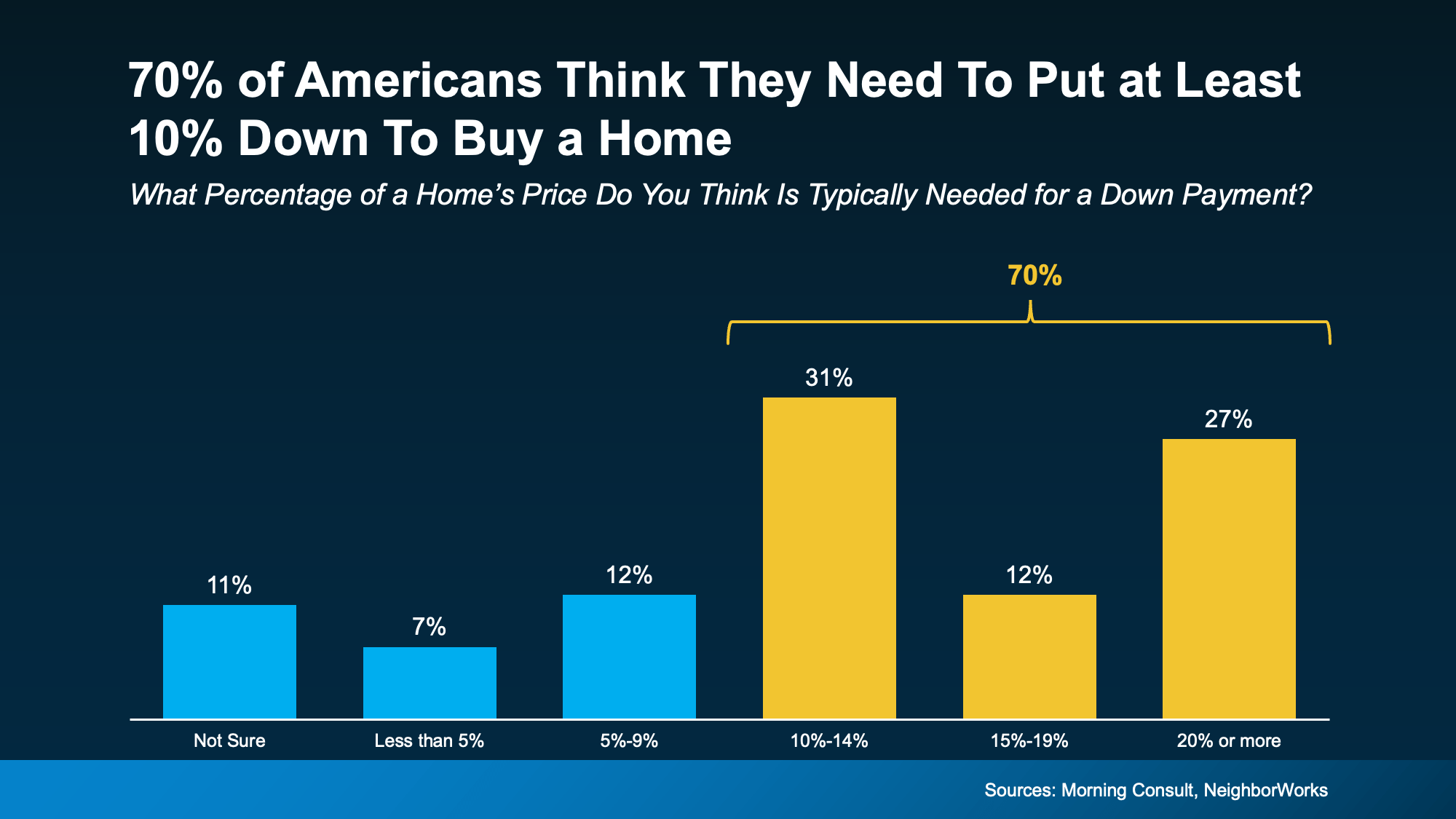
This one stops a lot of people in their tracks. A recent poll from Morning Consult and NeighborWorks shows 70% of Americans think they need to put at least 10% down to buy a home. And 11% aren’t sure what’s required at all (see graph below): 

a graph of a number of blue and yellow squaresThe truth? According to the National Association of Realtors (NAR), the typical down payment for first-time buyers has been between 6% and 9% since 2018. But there’s more to the story. If you qualify for an FHA loan, you may only need to put 3.5% down. And VA loans typically don’t require a down payment at all. So, there are options out there that can really make a difference for some buyers.

Myth 2: “It’ll take forever to save up for a down payment.”

Sure, saving can take time. But it may not have to be as long as you think. In many states, reaching your goal can happen faster than you might expect, especially when you know your budget and have a clear savings plan.

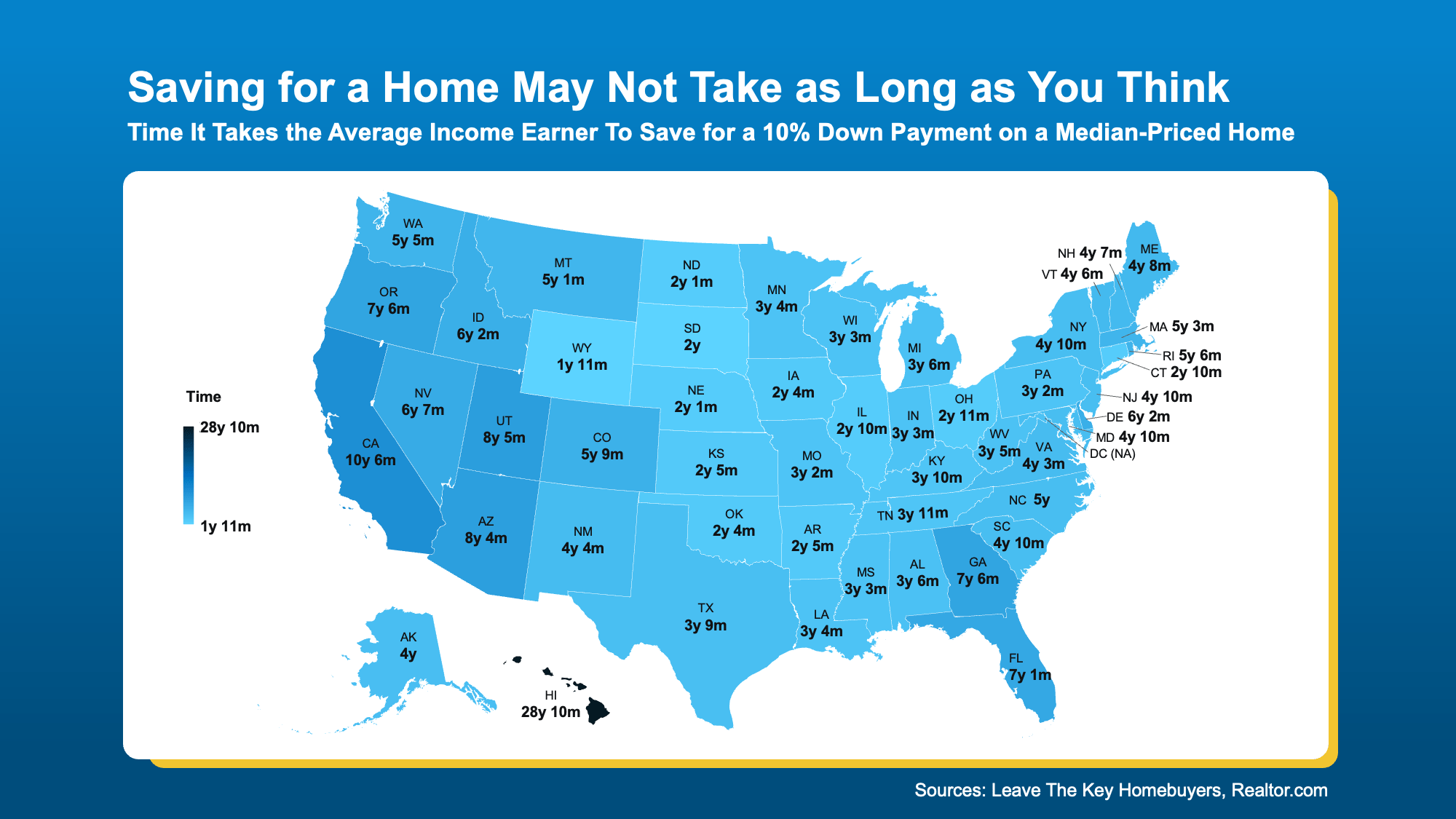
According to a new study, the amount of time varies depending on where you live. The map below shows, on average, how many years it takes to save up for a 10% down payment based on typical home values and income levels in each state (see map below):

But remember, in most cases you won’t even need a down payment as large as 10%. Plus, no matter how much money you end up putting down, it won’t all have to come out of your pocket. Here’s why.

Myth 3: “I have to do it all on my own.”

This is one of the biggest myths of all. The reality is, there are thousands of down payment assistance programs out there, and the same poll from Morning Consult and NeighborWorks shows 39% of people don’t even know about them. That means a lot of potential homebuyers could already be closer to homeownership – they just don’t realize it. 

These assistance programs are designed to help people like you who are ready to own a home but just need a little support getting started. As Miki Adams, President at CBC Mortgage Agency, explains:

“With high interest rates and soaring home prices, down payment assistance is more essential than ever.

Bottom Line

If you’ve been putting off buying a home because the down payment feels like too much to tackle, let’s talk. You may not need as much as you think, and there are plenty of resources out there, so you don’t have to do it alone. You just need an expert to point you in the right direction.

If a down payment wasn’t holding you back, would you be ready to start your home search?

The information contained, and the opinions expressed, in this article are not intended to be construed as investment advice. Keeping Current Matters, Inc. does not guarantee or warrant the accuracy or completeness of the information or opinions contained herein. Nothing herein should be construed as investment advice. You should always conduct your own research and due diligence and obtain professional advice before making any investment decision. Keeping Current Matters, Inc. will not be liable for any loss or damage caused by your reliance on the information or opinions contained herein.

Posted in Real Estate
Nov. 6, 2025

Today’s Tale of Two Housing Markets

Depending on where you live, the housing market could feel red-hot or strangely quiet right now. The truth is, local markets are starting to move in different directions. In some places, buyers are calling the shots. In others, sellers still hold the power. It’s a tale of two markets.

What’s a Buyer’s Market vs. a Seller’s Market?

In a buyer’s market, there are more homes for sale and not as many buyers. That means homes sit longer, buyers have more negotiating power, and prices tend to soften as a result. It’s simple supply and demand.

On the flip side, a seller’s market happens when there aren’t enough homes available for the number of people looking to buy them. Because buyers have to compete with each other to get the house they want, that leads to faster sales, multiple offers, and rising prices.

Right now, both of these scenarios are playing out, depending on where you are. So, how do you know what kind of market you’re in? Lean on a local real estate agent. They’ll explain what’s really happening in your area based on these key drivers.

The Number of Buyers and Sellers by Region

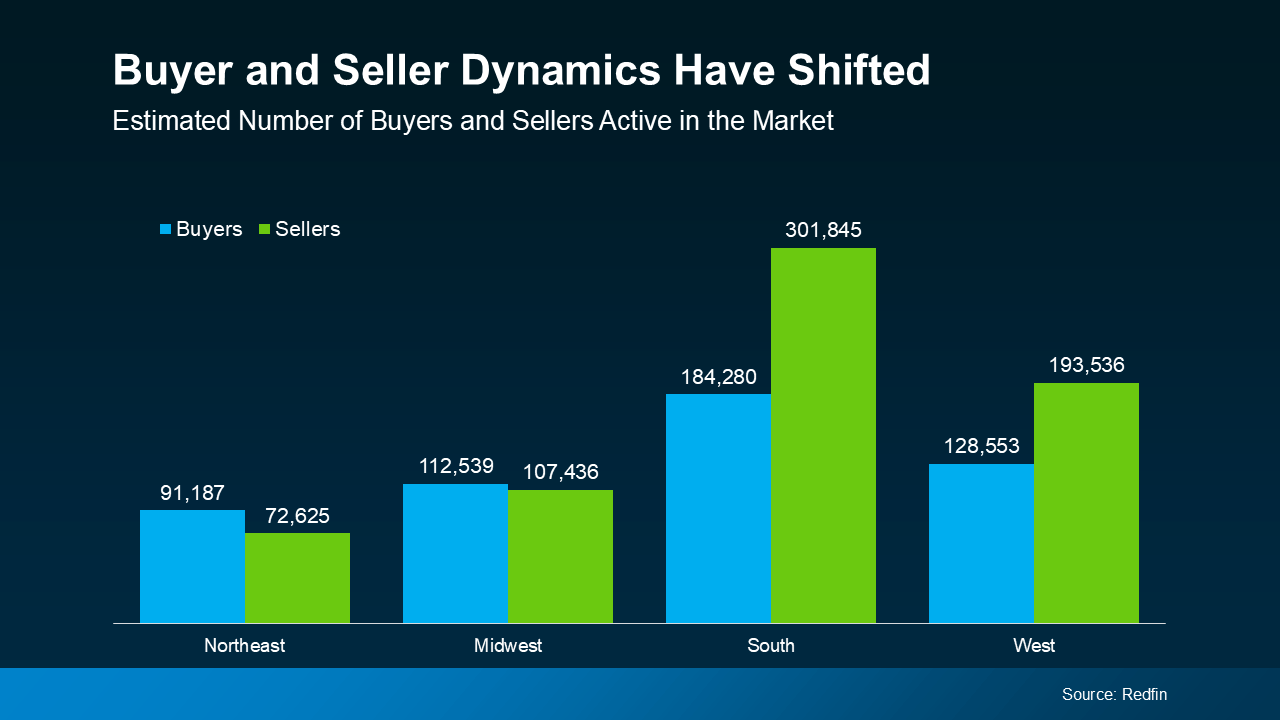
One of the biggest factors impacting each market is the number of active buyers and sellers. According to Redfin, here’s what that looks like by region (see graph below):

a graph of sales

Today, the Northeast and Midwest are more likely to be seller’s markets. Buyers still outnumber sellers there, and that keeps things tilted in favor of homeowners. Generally speaking, homes are selling faster and prices are rising in those areas.

But the South and West are leaning more toward buyer’s markets. There are more sellers than buyers, which means more listings to choose from and less competition among buyers.

That’s a major shift from a few years ago when sellers had the advantage almost everywhere. Today, your local conditions matter more than ever – and they can vary even from one neighborhood to the next.

Price Trends Mirror the Buyer/Seller Divide

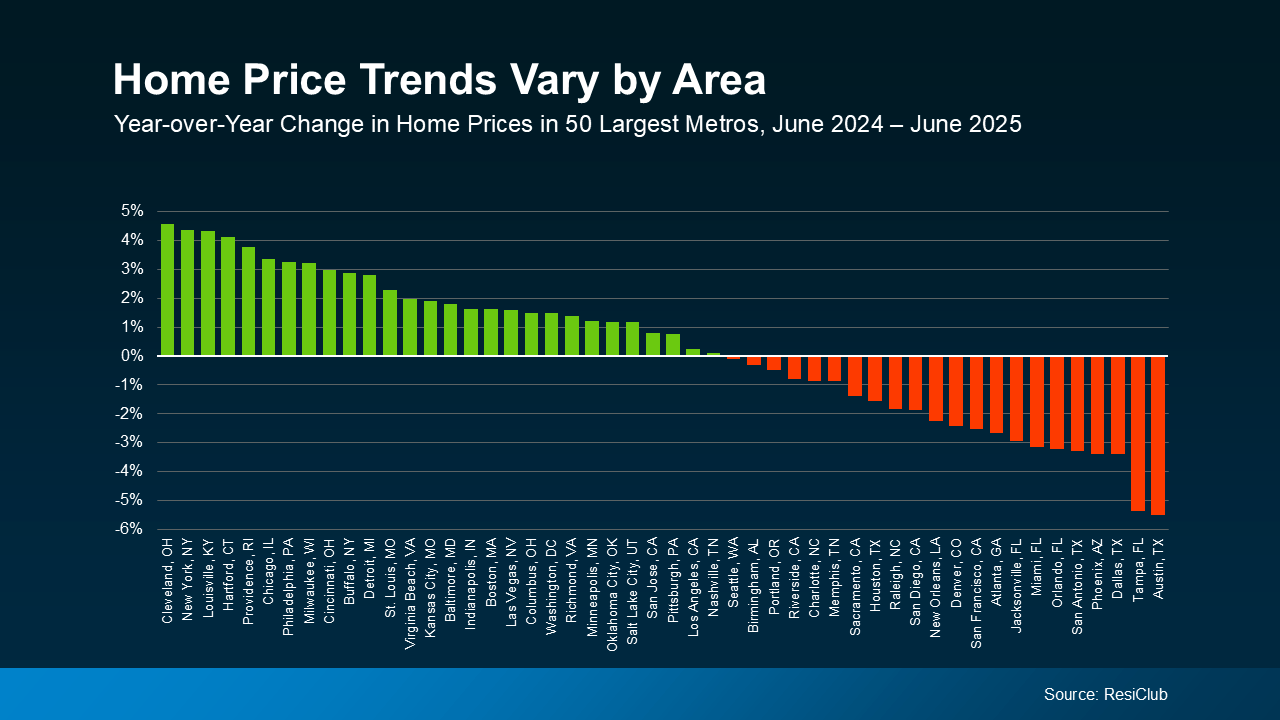
When inventory and buyer activity shift, so do prices. In places where demand still outpaces supply, like much of the Northeast and Midwest, prices are continuing to climb.

But in parts of the South and West where inventory is up and demand has cooled, prices are softening. And that’s a plus for buyers looking to negotiate in those areas.

Here’s the latest price data from ResiClub to show how this divide is shaking out across the top metros in the country (see graph below):

a graph of different colored lines

This is why it’s the tale of two markets. Roughly half of the top 50 metros are up, and half are relatively flat or down.

That said, don’t panic if you own a home in a market where prices are dipping. Most homeowners have built up significant equity over the past few years, and chances are you have too. So, you’re likely still come out way ahead when you sell.

Why Local Insights Matter

Even in regions that lean more buyer-friendly right now, there will be cities, towns, and even neighborhoods that don’t follow the regional trends. That’s why an agent’s local market expertise is so important. They can help you understand what’s happening all the way down to a zip code level, including:

  • Whether your area is favoring buyers or sellers
  • How to set the right price or craft an offer strategy based on local trends
  • The best way to make your move happen, no matter what’s happening in the market

Bottom Line

In a market where conditions vary this much from place to place, success starts with understanding every aspect of your local area. Let’s connect so you’ve got an expert in your corner who knows exactly how to guide you through your market, wherever you are.

The information contained, and the opinions expressed, in this article are not intended to be construed as investment advice. Keeping Current Matters, Inc. does not guarantee or warrant the accuracy or completeness of the information or opinions contained herein. Nothing herein should be construed as investment advice. You should always conduct your own research and due diligence and obtain professional advice before making any investment decision. Keeping Current Matters, Inc. will not be liable for any loss or damage caused by your reliance on the information or opinions contained herein.

Posted in Real Estate
Nov. 3, 2025

Don’t Make These Mistakes When Selling Your House

Are you thinking about selling your house? Some common mistakes today can make the process more stressful or even cost you money.

Fortunately, they’re easy to avoid, as long as you know what to watch for. Let’s break down the biggest seller slip-ups, and how an agent helps you steer clear of them.

1. Overpricing Your House

It’s completely natural to want top dollar for your house, especially if you’ve put a lot of work into it. But in today’s shifting market, pricing it too high can backfire. Investopedia explains:

“Setting a list price too high could mean your home struggles to attract buyers and stays on the market for longer.

And your house sitting on the market for a long time could lead to price cuts that raise red flags. That’s why pricing your house right from the start matters.

A great real estate agent will look at what other homes nearby have sold for, the condition of your house, and what’s happening in your market right now. That helps them find a price that’s more likely to bring in buyers, and maybe even more than one offer.

2. Spending Money on the Wrong Upgrades

The housing market has nearly a half million more sellers than buyers according to Redfin. That means you have more competition as a seller and may have to do a bit more to get your house ready to sell. But not all projects are going to be worth it. If you spend money on the wrong projects, it could really cut into your profit.

A local real estate pro knows what buyers in your area are really looking for, and they can help you figure out which projects are worth it, and which ones to skip. Even better, they’ll know how to highlight any upgrades you make in your listing, so your house stands out online and gets more attention.

3. Refusing To Negotiate

Now that inventory has grown, it’s important to stay flexible. Buyers have more options – and with it comes more negotiating power. U.S. News explains:

“If you’ve received an offer for your house that isn’t quite what you’d hoped it would be, expect to negotiate . . . make sure the buyer also feels like he or she benefits . . . consider offering to cover some of the buyer’s closing costs or agree to a credit for a minor repair the inspector found.”

That’s where your agent comes in. They’ll help you understand what buyers are asking for, what’s normal in today’s market, and how to find a win-win solution. Sometimes making a small compromise can keep the deal moving and help you move on to your next chapter faster.

4. Skipping Research When Hiring an Agent

All of these mistakes are avoidable with the help of a skilled agent. So, you want to be sure you're working with the right partner. Still, according to the National Association of Realtors (NAR), 81% of sellers pick the first agent they talk to.

Many homeowners may skip basic steps like reading reviews, checking sales history, and interviewing a few agents. But that’s a mistake. You want someone you know you can rely on – someone with a good track record. The right agent can help you price your house right, market it well, and sell it quickly (and maybe for more money).

Bottom Line

Selling a house doesn’t have to be stressful, especially if you have an experienced agent by your side. Let’s connect so you have an expert to help you avoid these common mistakes and make the most of your sale.

What’s one thing you’d want expert advice on before putting your house on the market?

The information contained, and the opinions expressed, in this article are not intended to be construed as investment advice. Keeping Current Matters, Inc. does not guarantee or warrant the accuracy or completeness of the information or opinions contained herein. Nothing herein should be construed as investment advice. You should always conduct your own research and due diligence and obtain professional advice before making any investment decision. Keeping Current Matters, Inc. will not be liable for any loss or damage caused by your reliance on the information or opinions contained herein.

Posted in Real Estate
Oct. 31, 2025

Latest Home Design Trends in Vail, AZ

Nestled in the picturesque landscape of southern Arizona, Vail offers a unique blend of natural beauty and modern living. As more people discover this charming locale, home design trends in Vail are evolving to reflect both the area's distinct environment and the desires of its residents. From embracing sustainable materials to incorporating indoor-outdoor living spaces, these trends are shaping the way homes are designed and built in this vibrant community.

Embracing Sustainable Materials

Sustainability is at the forefront of home design in Vail. Homeowners are increasingly opting for eco-friendly materials that minimize environmental impact. This includes the use of reclaimed wood, recycled metal, and energy-efficient windows. These materials not only reduce the carbon footprint but also add a unique character to homes. The use of solar panels is also gaining popularity, as Vail's sunny climate provides an ideal setting for harnessing solar energy. By integrating sustainable materials, homeowners contribute to environmental conservation while enjoying lower utility bills.

Indoor-Outdoor Living Spaces

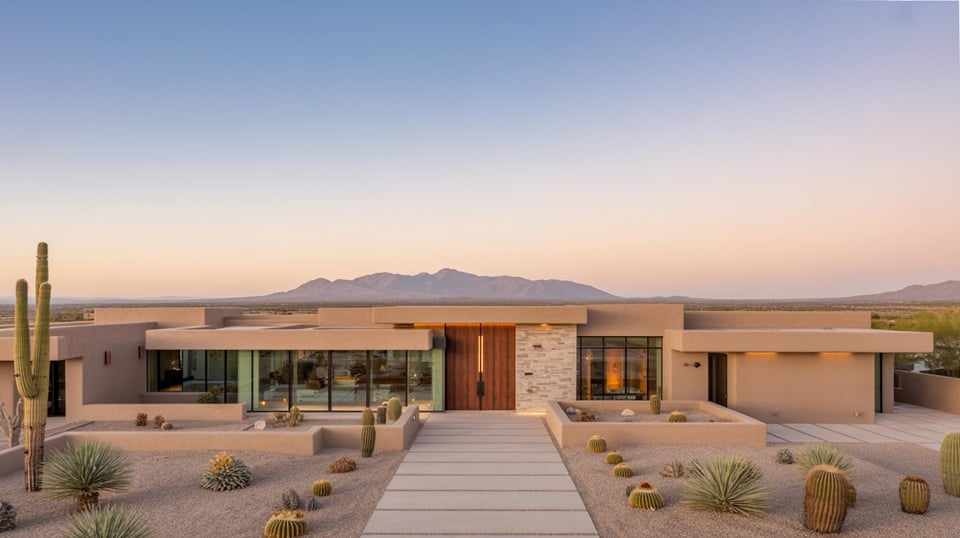
The natural beauty of Vail encourages the integration of indoor and outdoor living spaces. Homeowners are designing patios, decks, and gardens that seamlessly connect with the interior of their homes. Large sliding glass doors and expansive windows are common features that enhance this connection, allowing residents to enjoy the stunning desert views from the comfort of their living rooms. Outdoor kitchens, fire pits, and comfortable seating areas are also popular additions, providing perfect settings for entertaining guests or relaxing under the Arizona sky.

Open Floor Plans

Open floor plans continue to be a favored design choice in Vail. This layout promotes a sense of spaciousness and facilitates easy movement between different areas of the home. By eliminating unnecessary walls, open floor plans create a more inviting atmosphere, making it easier for families to interact and entertain. In Vail, these designs often incorporate elements that reflect the surrounding landscape, such as natural stone accents and earthy color palettes, further enhancing the connection to the environment.

Smart Home Technology

Incorporating smart home technology is becoming increasingly common in Vail. Homeowners are embracing automation systems that allow them to control lighting, climate, security, and entertainment with ease. Smart thermostats, security cameras, and voice-activated assistants are just a few examples of the technology being integrated into modern homes. This trend not only adds convenience but also enhances energy efficiency, aligning with the growing emphasis on sustainability.

Minimalist Design Aesthetics

Minimalism is making its mark on home design in Vail. This trend focuses on simplicity, clean lines, and a clutter-free environment. By prioritizing functionality and eliminating unnecessary decor, minimalist design creates a serene and calming atmosphere. Neutral color schemes, sleek furniture, and ample natural light are key elements of this aesthetic. In Vail, minimalist design often incorporates natural materials like wood and stone, which complement the surrounding desert landscape.

Personalized Home Offices

With the rise of remote work, personalized home offices have become a significant trend in Vail. Homeowners are dedicating spaces that are both functional and inspiring, tailored to their specific needs. This includes ergonomic furniture, ample storage, and personalized decor that reflects individual style. Large windows that offer natural light and views of the outdoors are also popular features, creating a pleasant and productive work environment.

Energy-Efficient Designs

Energy efficiency is a priority for many homeowners in Vail. In addition to sustainable materials and smart technology, energy-efficient designs include proper insulation, energy-efficient appliances, and strategic landscaping to provide natural shade. These elements work together to reduce energy consumption and lower utility costs. The emphasis on energy efficiency aligns with the broader trend of sustainable living, which is becoming increasingly important in the Vail community.

Multi-Functional Spaces

As lifestyles evolve, the demand for multi-functional spaces is growing. Homeowners in Vail are designing rooms that serve multiple purposes, such as guest rooms that double as home gyms or playrooms that can be converted into study areas. This flexibility is particularly valuable in maximizing the use of space, especially in homes with limited square footage. By creating adaptable spaces, homeowners can easily adjust their living environments to accommodate changing needs.

Natural Light and Ventilation

The abundant sunshine in Vail makes natural light an essential element of home design. Large windows, skylights, and open layouts are used to maximize the flow of natural light throughout the home. This not only reduces the need for artificial lighting but also enhances the overall ambiance. Proper ventilation is also a key consideration, with designs that promote airflow and maintain indoor air quality. These elements contribute to a healthier and more comfortable living environment.

Desert-Inspired Landscaping

Landscaping in Vail often draws inspiration from the surrounding desert environment. Homeowners are incorporating native plants, such as cacti and succulents, that thrive in the arid climate and require minimal water. This approach not only conserves water but also creates a harmonious connection between the home and its natural surroundings. Xeriscaping, which focuses on drought-resistant plants and efficient irrigation systems, is a popular choice for creating beautiful and sustainable outdoor spaces.

Discover Your Dream Home in Vail, AZ

As you explore the latest home design trends in Vail, AZ, you'll find that this vibrant community offers a perfect blend of style and comfort. From modern open floor plans to eco-friendly features, there's something for everyone. Whether you're looking to buy or simply gather inspiration, staying updated on these trends can help you make informed decisions. For personalized guidance and to find your dream home in Vail, reach out to Debbie G. Backus today.

Posted in Real Estate
Oct. 28, 2025

What Rising Forecasts Reveal About Home Prices Ahead

There are plenty of headlines these days calling for a housing market crash. But the truth is, they’re not telling the full story. Here’s what’s actually happening, and what the experts project for home prices over the next 5 years. And spoiler alert – it’s not a crash.

Yes, in some local markets, prices are flattening or even dipping slightly this year as more homes hit the market. That’s normal with rising inventory. But the bigger picture is what really matters, and it’s far less dramatic than what the doom-and-gloom headlines suggest. Here’s why.

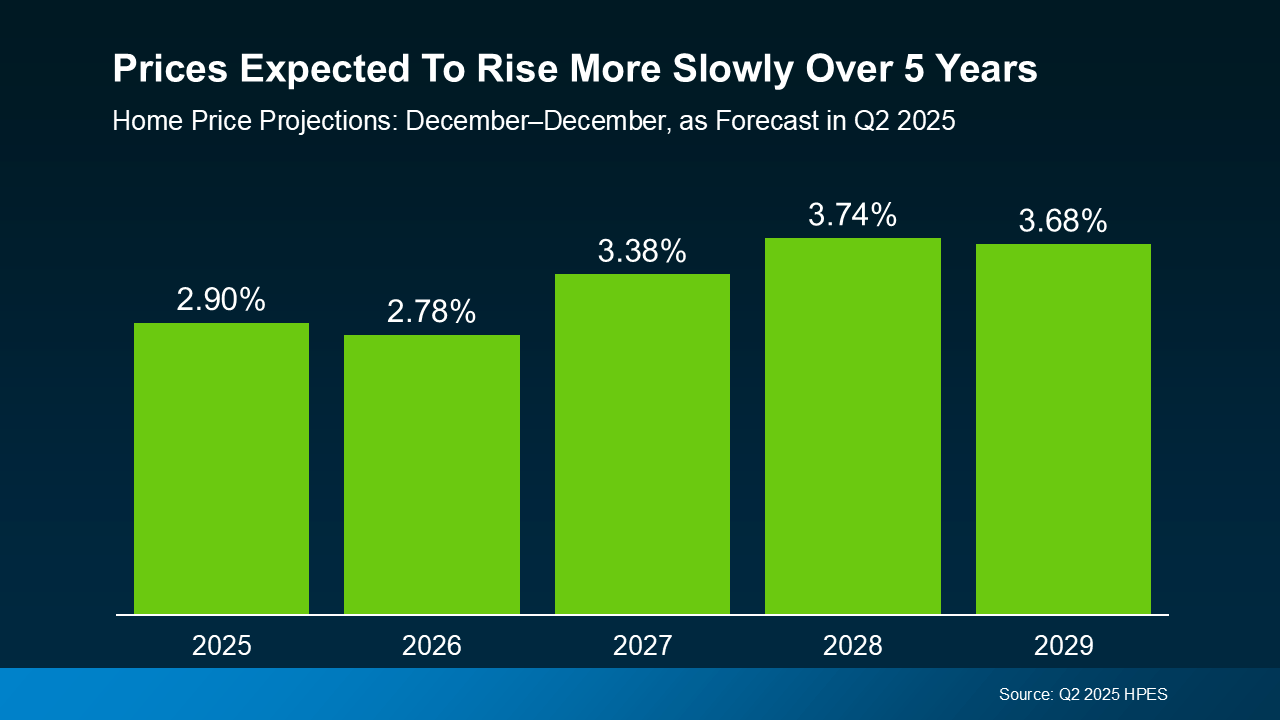
Over 100 leading housing market experts were surveyed in the latest Home Price Expectations Survey (HPES) from Fannie Mae. Their collective forecast shows prices are projected to keep rising over the next 5 years, just at a slower, healthier pace than what we’ve seen more recently. And that kind of steady, sustainable growth should be one factor to help ease your fears about the years ahead (see graph below):

a graph with green bars

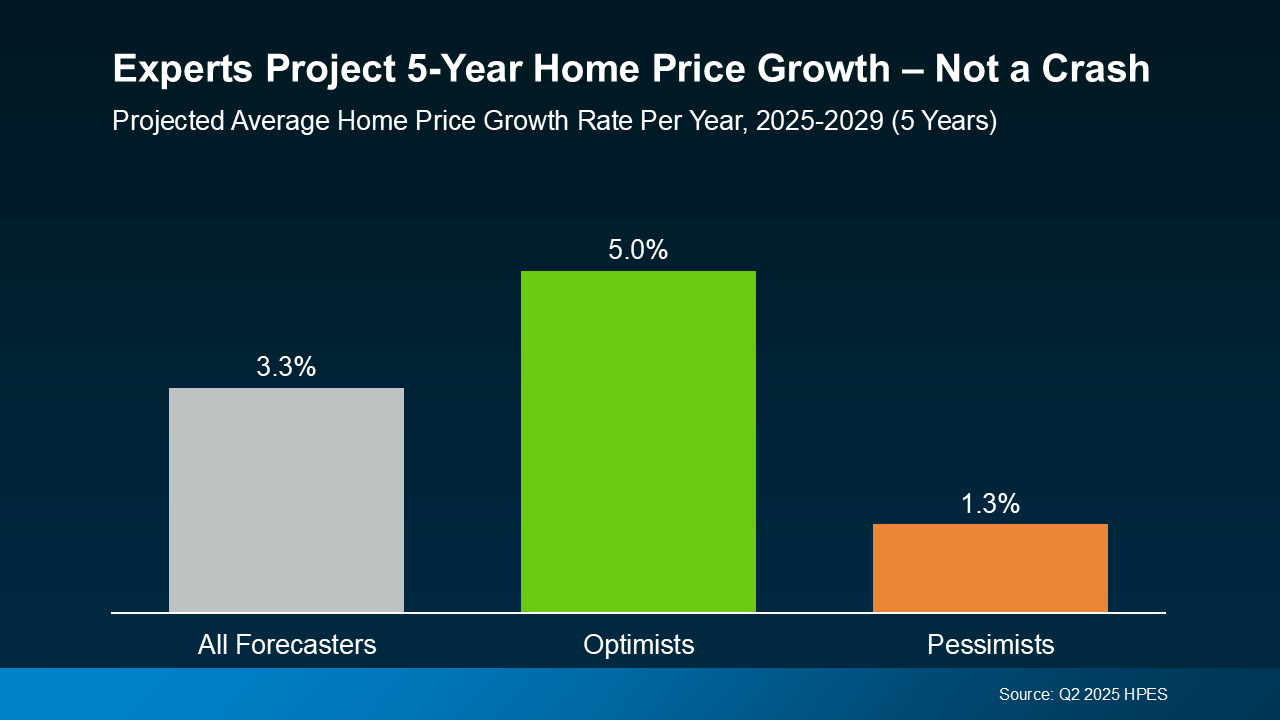
And if you take a look at how the various experts responded within the survey, they fall into three main categories: those that were most optimistic about the forecast, most pessimistic, and the overall average outlook.

Here’s what the breakdown shows:

  • The average projection is about 3.3% price growth per year, through 2029.
  • The optimists see growth closer to 5.0% per year.
  • The pessimists still forecast about 1.3% growth per year.

Do they all agree on the same number? Of course not. But here’s the key takeaway: not one expert group is calling for a major national decline or a crash. Instead, they expect home prices to rise at a steady, more sustainable pace.

That’s much healthier for the market – and for you. Yes, some areas may see prices hold relatively flat or dip a bit in the short term, especially where inventory is on the rise. Others may appreciate faster than the national average because there are still fewer homes for sale than there are buyers trying to purchase them. But overall, more moderate price growth is cooling the rapid spikes we saw during the frenzy of the past few years.

And remember, even the most conservative experts still project prices will rise over the course of the next 5 years. That’s also because foreclosures are low, lending standards are in check, and homeowners have near record equity to boost the stability of the market. Together, those factors help prevent a wave of forced sales, like the kind that could drag prices down. So, if you’re waiting for a significant crash before you buy, you might be waiting quite a long time.

Bottom Line

If you’ve been on the fence about your plans, now’s the time to get clarity. The market isn’t heading for a crash. It’s on track for steady, slow, long-term growth overall, with some regional ups and downs along the way.

Want to know what that means for our neighborhood? Because national trends set the tone, but what really matters is what’s happening in your zip code. Let’s have a quick conversation so you can see exactly what our local data means for you.

The information contained, and the opinions expressed, in this article are not intended to be construed as investment advice. Keeping Current Matters, Inc. does not guarantee or warrant the accuracy or completeness of the information or opinions contained herein. Nothing herein should be construed as investment advice. You should always conduct your own research and due diligence and obtain professional advice before making any investment decision. Keeping Current Matters, Inc. will not be liable for any loss or damage caused by your reliance on the information or opinions contained herein.

Posted in Real Estate
Oct. 25, 2025

What You Should Know About Getting a Mortgage Today

If you’ve been putting off buying a home because you thought getting approved would be too hard, know this: qualifying for a mortgage is starting to get a bit more achievable, but lending standards are still strong.

Lenders are making it slightly easier for well-qualified buyers to access financing, which is opening more doors for people ready to make a move.

So, if strict requirements were holding you back, this shift could be the opportunity you’ve been waiting for, without repeating the risky lending practices that led to the housing crash back in 2008.

Lenders Are Opening More Doors

Banks are offering credit to more people in an effort to boost activity in the housing market, including buyers who have lower credit scores or smaller down payments. And that means more people are getting approved for mortgages.

But it doesn’t mean we’re heading for another crash like 2008. Even with the slight easing lately, lending standards today are still much tighter than they were back then.

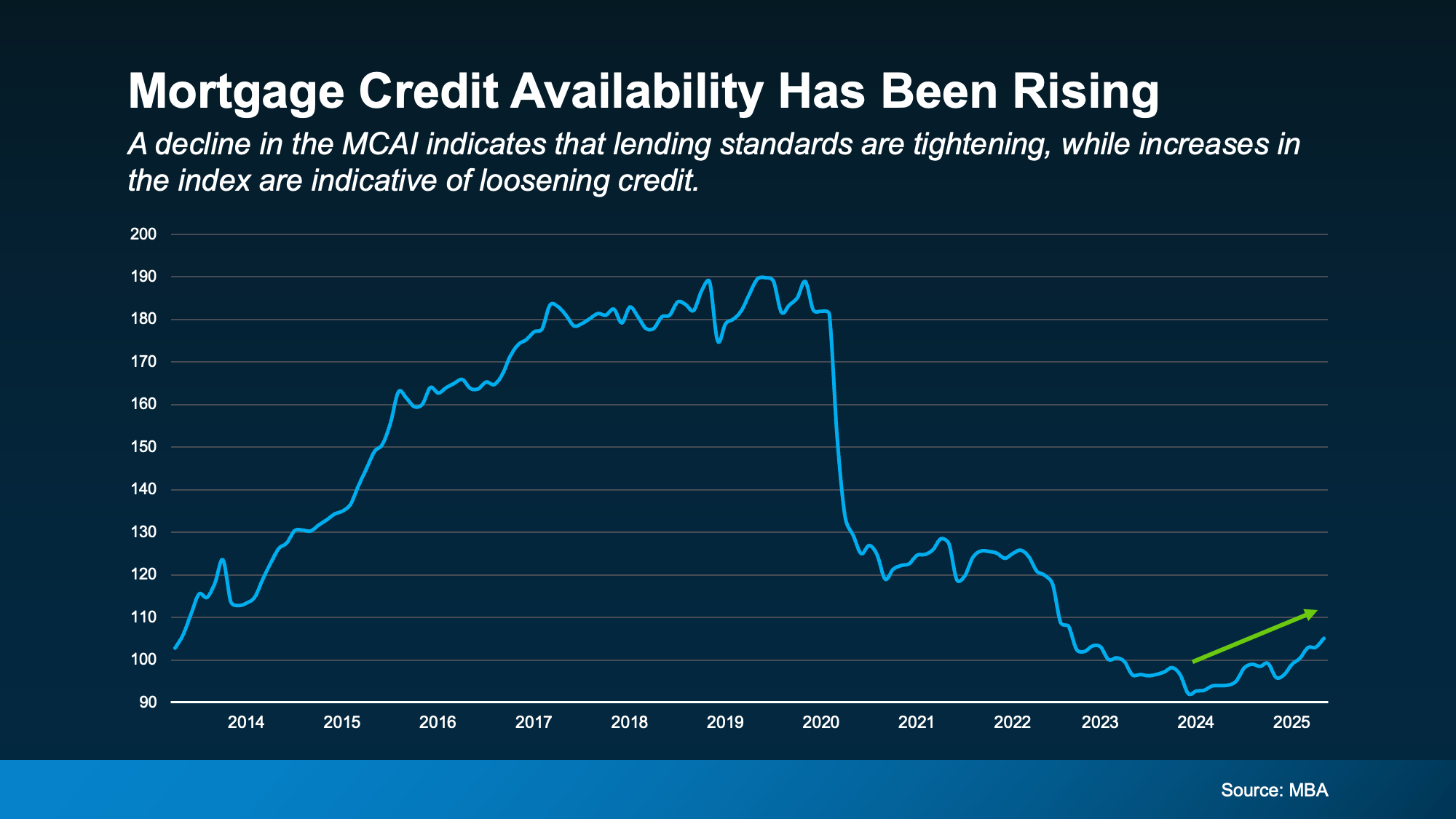
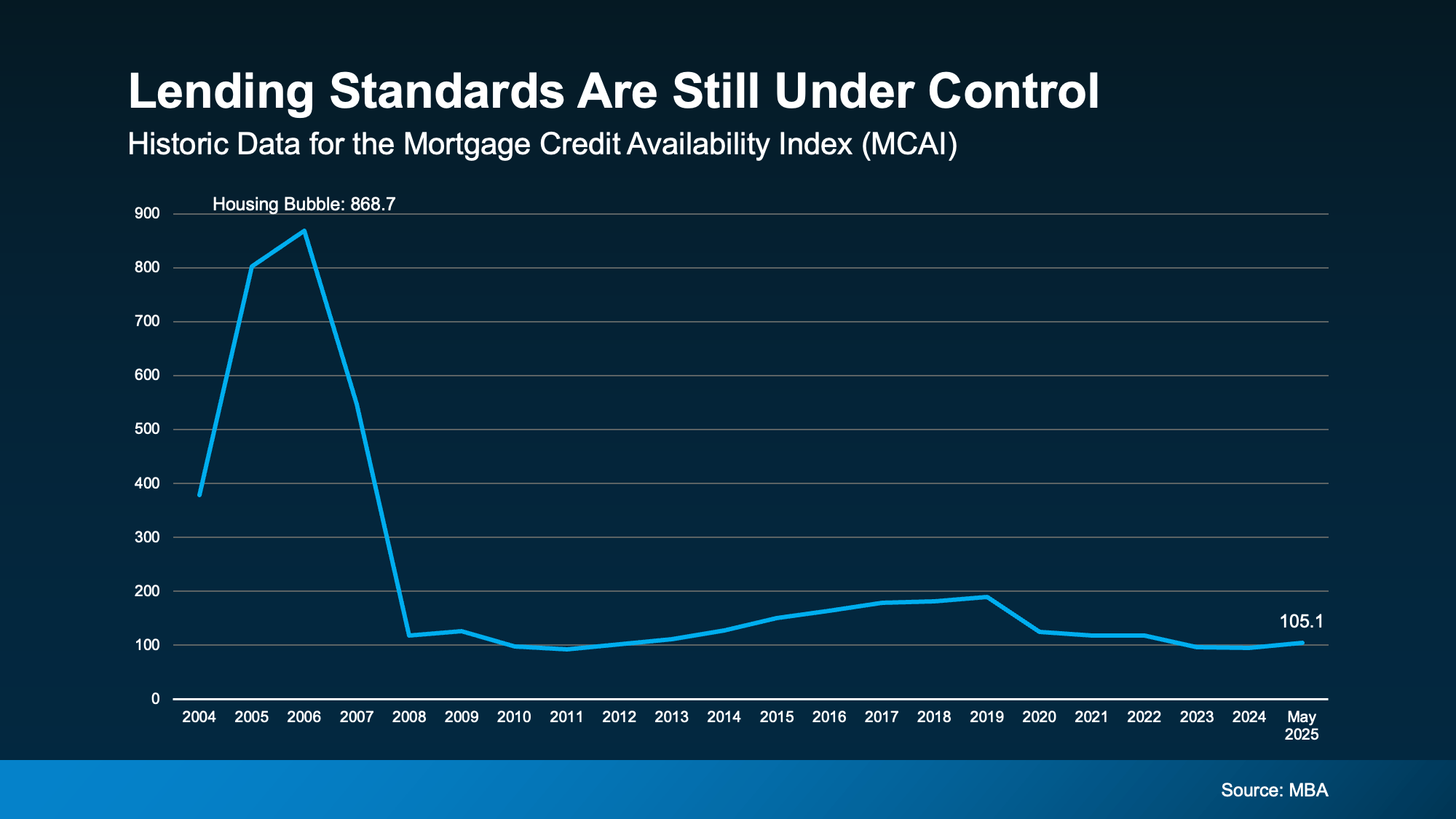
According to the Mortgage Bankers Association (MBA), the Mortgage Credit Availability Index (MCAI) has been going up. This index shows how easy or hard it is for people to get a mortgage.

When the index rises, it means banks are easing their lending standards. And in May, credit availability hit its highest point in almost three years (see graph below):

a graph showing a line graphWhy does this matter to you? It means you may now be able to qualify for a mortgage that you wouldn’t have just a few months ago. The National Association of Underwriters (NAMU) explains:

“Mortgage credit availability surged in May, reaching its highest level since August 2022. The uptick signals that lenders are increasingly willing to loosen underwriting standards, providing borrowers with greater access to financing options . . .

But What About 2008?

Now, you might be thinking, “Didn’t looser lending standards play a role in the 2008 housing crash?” That’s a smart question – and an important one. But here’s the difference. While credit availability is rising, lending standards are still under control.

Based on MCAI data going all the way back to 2004, today’s lending levels are still way below what they were leading up to the housing bubble (see graph below):

a graph showing the cost of a mortgageSo, increasing mortgage credit availability right now isn’t a concern. It’s just a good thing for anyone looking to buy a home. As Brett Hively, SVP of Mortgage, Finance, and Strategy at Ameris Bancorp, recently said:

“This uptick is opening the door for many borrowers to move forward with a home purchase or a refinance program.”

Bottom Line

So, if you’ve been holding back because you thought you couldn’t get approved for a mortgage, it’s worth finding out what’s possible today. Let’s talk with a lender about your options and see if you’re ready to take that next step toward homeownership.

The information contained, and the opinions expressed, in this article are not intended to be construed as investment advice. Keeping Current Matters, Inc. does not guarantee or warrant the accuracy or completeness of the information or opinions contained herein. Nothing herein should be construed as investment advice. You should always conduct your own research and due diligence and obtain professional advice before making any investment decision. Keeping Current Matters, Inc. will not be liable for any loss or damage caused by your reliance on the information or opinions contained herein.

Posted in Real Estate
Oct. 22, 2025

Multi-Generational Homebuying Hit a Record High – Here’s Why

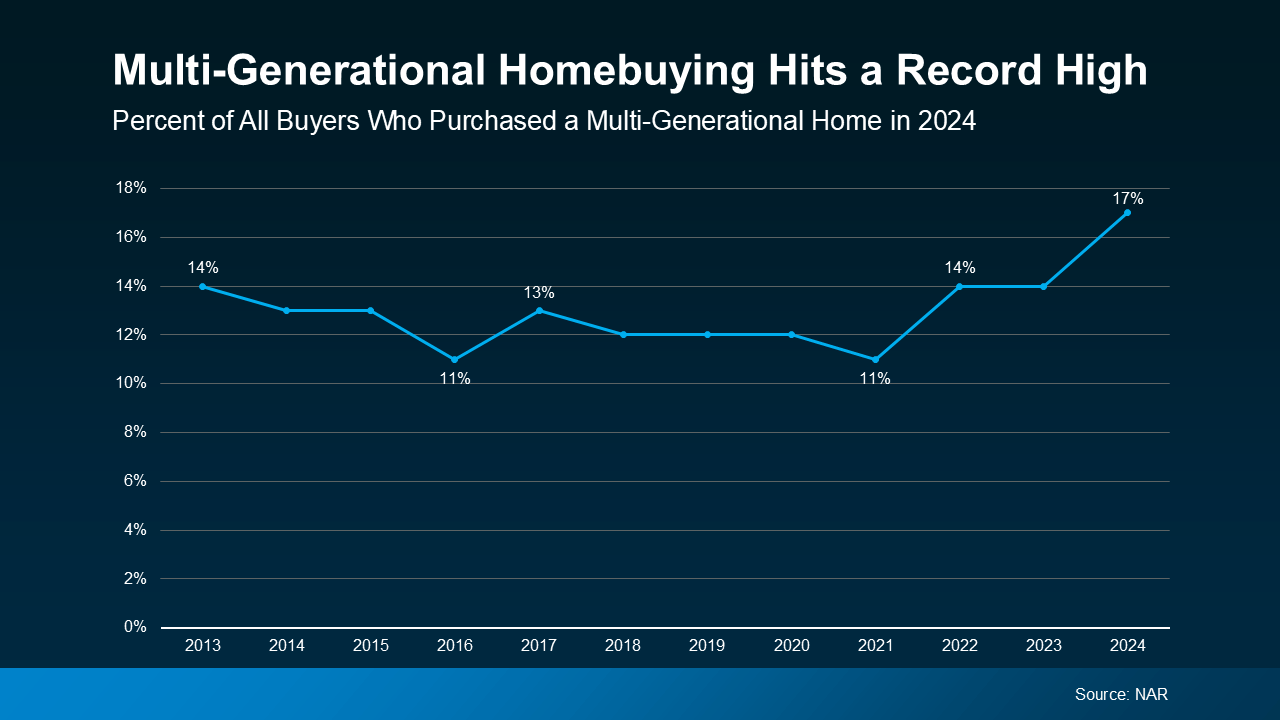
Multi-generational living is on the rise. According to the National Association of Realtors (NAR), 17% of homebuyers purchase a home to share with parents, adult children, or extended family. That’s the highest share ever recorded by NAR (see graph below):

a graph of sales growth

And what’s behind the increase? Affordability. NAR explains:

“In 2024, a notable 36% of homebuyers cited “cost savings” as the primary reason for purchasing a multigenerational home—a significant increase from just 15% in 2015.”

In the past, caregiving was the leading motivator – especially for those looking to support aging parents. And while that’s still important, affordability is now the #1 motivator. And with current market conditions, that’s not really a surprise.

Pooling Resources Can Help Make Homeownership Possible

With today’s home prices and mortgage rates, it can be hard for people to afford a home on their own. That’s why more families are teaming up and pooling their resources.

By combining incomes and sharing expenses like the mortgage, utility bills, and more, multi-generational living offers a way to overcome financial challenges that might otherwise put homeownership out of reach. As Rick Sharga, Founder and CEO at CJ Patrick Company, explains:

“There are a few ways to improve affordability, at least marginally. . . purchase a property with a family member — there are a growing number of multi-generational households across the country today, and affordability is one of the reasons for this.”

But this strategy doesn’t just help with affordability. It may even allow you to get a larger home than you’d qualify for on your own and that gives everyone a bit more breathing room. As Chris Berk, VP of Mortgage Insights at Veterans Unitedexplains:

“Multigenerational homes are more than a trend: They are a meaningful solution for families looking to care for one another while making the most of their homebuying power.”

And momentum may be growing. Nearly 3 in 10 (28%) of homebuyers say they’re planning to purchase a multi-generational home.

Maybe it’s a solution that would make sense for you too. The best way to find out? Talk to a local real estate agent who can help you decide if this option would work for you.

Bottom Line

If your budget feels tight, buying a multi-generational home could be a smart solution.

Would you ever consider buying a home with a family member? Why or why not? 

Let’s connect to talk through your options.

The information contained, and the opinions expressed, in this article are not intended to be construed as investment advice. Keeping Current Matters, Inc. does not guarantee or warrant the accuracy or completeness of the information or opinions contained herein. Nothing herein should be construed as investment advice. You should always conduct your own research and due diligence and obtain professional advice before making any investment decision. Keeping Current Matters, Inc. will not be liable for any loss or damage caused by your reliance on the information or opinions contained herein.

Posted in Real Estate
Oct. 19, 2025

Why Homeownership Is Going To Be Worth It

Life can feel a bit unpredictable these days. What’s happening with inflation? The economy? The housing market? But in the middle of all that uncertainty, there’s one thing a lot of people still crave – a place to call their own.

Because when everything else feels up in the air, home can be the thing that grounds you. As the experts at 1000WATT put it:

“Homeownership isn’t primarily financial anymore. . . Across all demographics, emotional and lifestyle factors consistently outrank wealth-building as motivators.”

Here’s what owning a home can mean for you, especially right now.

Freedom To Make It Yours

When you're a homeowner, you don’t need to ask permission to paint a wall, hang a gallery of your favorite art, or redo the floors. You have the freedom to create a space that reflects who you are, all the way from the light fixtures to the paint colors.

Pro Tip: Just be mindful about exterior changes, if you buy a home in a community that has a homeowner’s association (HOA). There may be some approvals you’d need to get for select outdoor changes.

More Privacy, More Peace

Owning your home can give you a sense of peace you didn’t even realize you were missing. It’s a comfortable place where you feel secure and can relax, enjoy your privacy, and unwind after a long day.

Room To Grow

Whether it’s starting a family, setting up a home office for your new career, or finally building that home gym in the garage so you can hit your fitness goals, owning gives you the space to live life on your terms.

A Stronger Sense of Community

When you own, you’re not just passing through, you’re putting down roots. That often leads to stronger ties with your community, more connection to your neighborhood, and a deeper feeling of belonging where you live. That’s very different from the temporary nature of renting.

A Feeling of Accomplishment

There’s something powerful about getting the keys and walking into your own front door for the first time. It’s more than pride, it’s personal satisfaction. A quiet and meaningful sense of “I did this.”

Sure, it’s not always easy for first-time homebuyers right now. The market today requires patience, strategy, and sometimes a little creative problem-solving. But it’s still worth it. As Realtor.com says:

“Buying a home is a major commitment, but it’s also incredibly rewarding.”

When you get those keys in your hand, when you realize this place is where your life gets to unfold, it clicks. The stress, the waiting, the planning – all of it led you home.

Bottom Line

There are a lot of things out of your control right now. But building a life in a space that’s truly yours? That’s still possible with the right strategy and expert help. Let’s talk about how to make it happen.

What would it mean for you to finally have a place to call your own?

The information contained, and the opinions expressed, in this article are not intended to be construed as investment advice. Keeping Current Matters, Inc. does not guarantee or warrant the accuracy or completeness of the information or opinions contained herein. Nothing herein should be construed as investment advice. You should always conduct your own research and due diligence and obtain professional advice before making any investment decision. Keeping Current Matters, Inc. will not be liable for any loss or damage caused by your reliance on the information or opinions contained herein.

Posted in Real Estate
Oct. 16, 2025

Why Most Sellers Hire Real Estate Agents Today

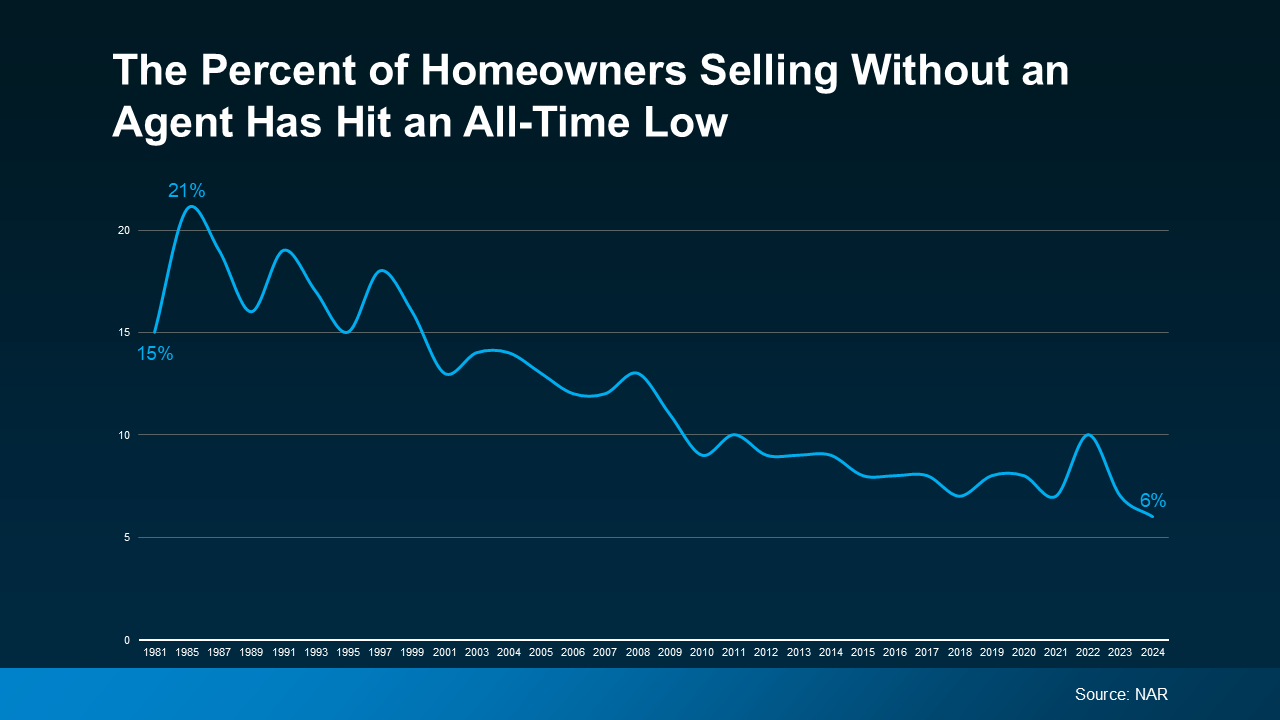
Selling your house without an agent as a “For Sale by Owner” (FSBO) may be something you’ve considered. But you should know that, in today’s shifting market, more homeowners are deciding that’s just not worth the risk.

According to the latest data from the National Association of Realtors (NAR), the number of homeowners selling without an agent has hit an all-time low (see graph below):

a graph showing a line of sales

And for the small number of homeowners who do decide to sell on their own, data shows they’re still not confident they’re making a good choice.

A recent survey finds three out of every four homeowners who don’t plan to use an agent have doubts about whether that’s actually the right decision.

And here’s why. The market is changing – not in a bad way, just in a way that requires a smarter, more strategic approach. And having a real estate expert in your corner really pays off.

Here are just two of the ways an agent's expertise makes a difference.

1. Getting the Price Right in a Market That’s Evolving

One of the biggest hurdles when selling a house on your own is figuring out the right price. It’s not as simple as picking a number that sounds good or selling your house for what your neighbor’s sold for a few years back – you need to hit the bullseye for where the market is right now. Without an agent’s help, you’re more likely to miss the mark. As Zillow explains:

“Agents are pros when it comes to pricing properties and have their finger on the pulse of your local market. They understand current buying trends and can provide insight into how your home compares to others for sale nearby.”

Basically, they know what’s really selling, what buyers are willing to pay in your area, and how to position your house to sell quickly. That kind of insight can have a big impact, especially in a market that’s balancing out.

2. Handling (and Actually Understanding) the Legal Documents

There’s also a mountain of documentation when selling a house, including everything from disclosures to contracts. And a mistake can have big legal implications. This is another area where having an agent can help.

They’ve handled these documents countless times and know exactly what’s needed to keep everything on track, so you avoid delays. And now that buyers are including more contingencies again and asking for concessions, your agent will guide you through each form step by step, making sure it’s done right and documented correctly the first time.

3. Selling Your House Quickly Even in a Shifting Market

Now that the number of homes for sale has grown, homes aren’t selling at quite the same pace they were. But you can still sell quickly if you have a proven plan to help your house stand out.

Just remember, homeowners don’t have the same network or marketing tools an experienced agent does. So, if you want the process to happen fast, you’ll likely want a pro by your side. 

Bottom Line

Having the right agent and the right strategy is key in a shifting market. Let’s connect so you don’t have to take this on solo – and so you can list with confidence, knowing you’ve got expert guidance from day one.

The information contained, and the opinions expressed, in this article are not intended to be construed as investment advice. Keeping Current Matters, Inc. does not guarantee or warrant the accuracy or completeness of the information or opinions contained herein. Nothing herein should be construed as investment advice. You should always conduct your own research and due diligence and obtain professional advice before making any investment decision. Keeping Current Matters, Inc. will not be liable for any loss or damage caused by your reliance on the information or opinions contained herein.

Posted in Real Estate